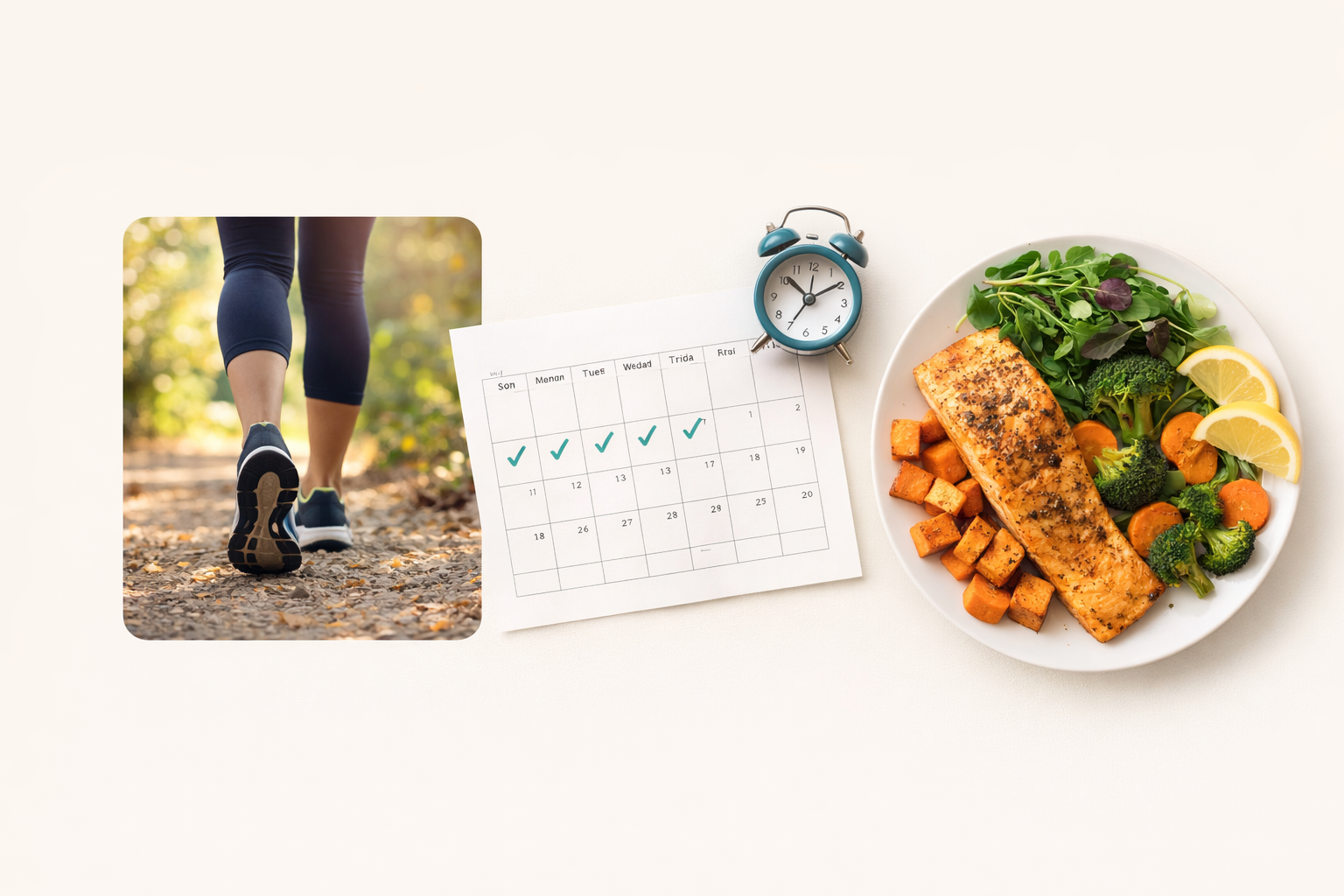
The Complete Guide to Prediabetes (2026): Symptoms, Diet & Reversal
The Complete Guide to Prediabetes (2026): Symptoms, Diet & Reversal
If you just heard the word “prediabetes” from your doctor, take a breath. It is not a sentence. It is a warning light on the dashboard, and the good news is that most people can turn that light off.
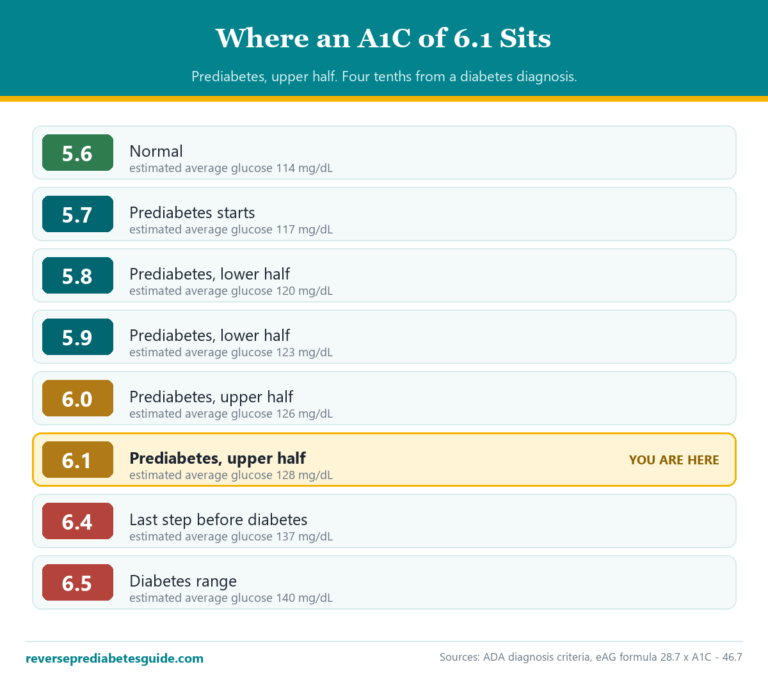
I am Sarah Mitchell, and I have stood exactly where you are. My A1C came back at 6.1%, firmly in the prediabetes range. Eighteen months later it read 5.4%: comfortably normal. No medication, no crash diet, no misery. This guide is the roadmap I wish someone had handed me on day one.

This is the longest, most complete article on the site. We will cover what prediabetes actually is, why it happens, the symptoms that often go unnoticed, the exact A1C numbers that matter, the real risks, and a full natural reversal plan built on diet, movement, sleep, stress, and supplements. Bookmark it.
Quick Answer
Prediabetes means your blood sugar is higher than normal (A1C 5.7 to 6.4%) but not yet diabetes. How do you reverse prediabetes naturally? Most people can return their A1C to normal by combining a lower-glycemic, whole-food diet, 150 minutes of weekly movement (especially a short walk after meals), 7 to 9 hours of sleep, lower stress, and: for some: targeted supplements. A landmark 2026 study found nearly 1 in 4 people reversed prediabetes through lifestyle changes even without losing weight, cutting their type 2 diabetes risk by up to 71%.
What Is Prediabetes, Exactly?
Prediabetes is the stage where your blood sugar sits above the healthy range but has not crossed the line into type 2 diabetes. Your body is still making insulin, but your cells have started to resist it: a condition called insulin resistance.
Think of insulin as a key that unlocks your cells so glucose (sugar) can move out of your bloodstream and become energy. With insulin resistance, the lock gets sticky. Your pancreas compensates by making more keys, but eventually it can fall behind, and blood sugar creeps up.
According to the CDC, roughly 1 in 3 American adults has prediabetes: tens of millions of people: and more than 80% of them do not know it. That is the scary part and the hopeful part at once: it is common, and it is catchable early.
Understanding Your A1C Numbers
The single most useful number in this whole conversation is your A1C (also written HbA1c). It reflects your average blood sugar over the previous two to three months, so it smooths out daily ups and downs.
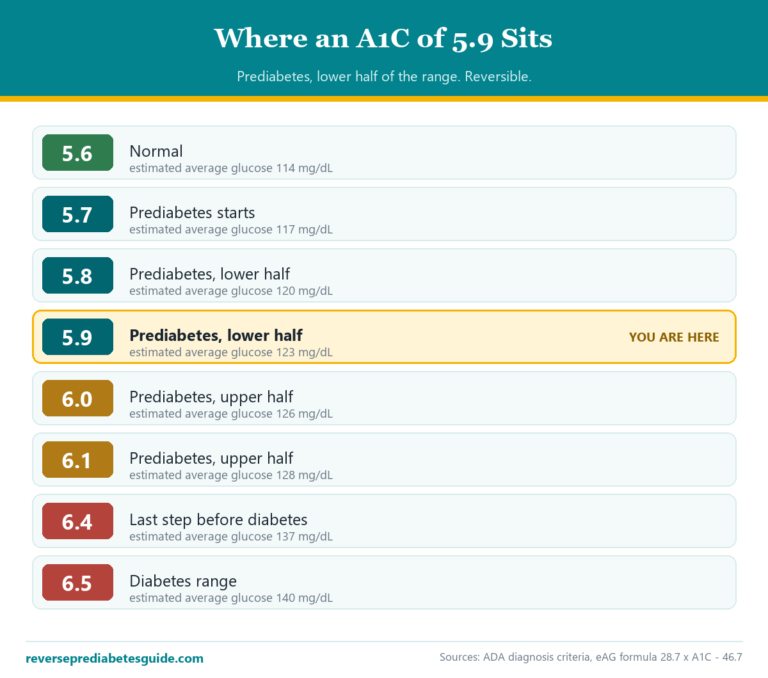
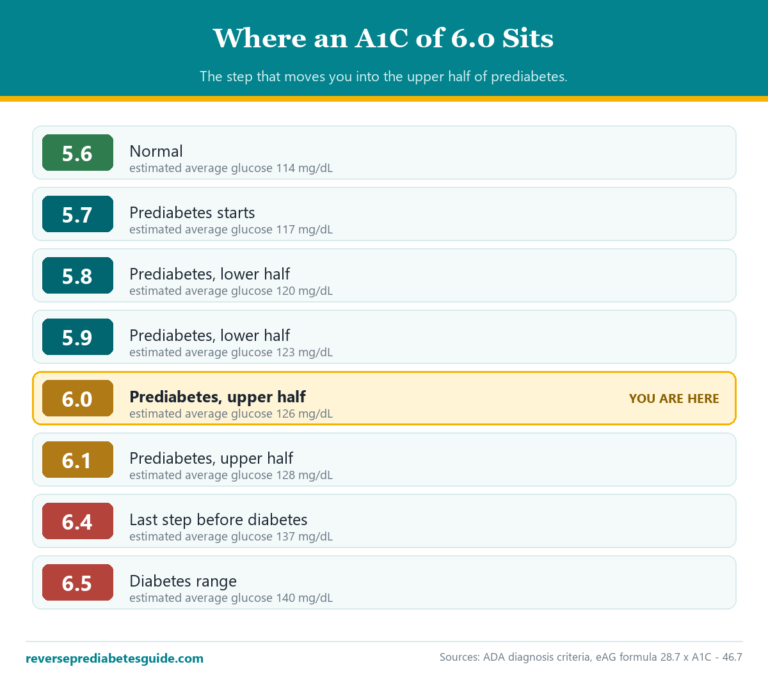
| Category | A1C Level | What It Means |
|---|---|---|
| Normal | Below 5.7% | Healthy blood sugar control |
| Prediabetes | 5.7% to 6.4% | Elevated, reversible with action |
| Diabetes | 6.5% or higher | Type 2 diabetes diagnosis |
My own journey from 6.1% to 5.4% lived entirely inside this table. I started in the upper-middle of prediabetes and walked my way back to normal. Want the full breakdown of what each decimal point means and how often to retest? We dig deep in prediabetes A1C levels explained and the best way to lower your A1C naturally.
Your doctor may also use a fasting glucose test (100 to 125 mg/dL signals prediabetes) or an oral glucose tolerance test. The A1C is just the most convenient because you do not have to fast for it.
Common Causes and Risk Factors
Prediabetes rarely has a single cause. It is usually the slow result of several factors stacking up over years.
- Insulin resistance: the central mechanism, often driven by excess fat stored around the abdomen and liver.
- Diet: a long-term pattern high in refined carbs, sugary drinks, and ultra-processed food.
- Inactivity: muscles that rarely contract burn far less glucose.
- Sleep and stress: chronic short sleep and high cortisol both raise blood sugar.
- Genetics and family history: a parent or sibling with type 2 diabetes raises your odds.
- Age: risk climbs after 45, though it is showing up younger every year.
Notice that most of these are within your influence. That is the entire premise of this guide.
Symptoms: The Silent Condition
Here is what makes prediabetes tricky: it usually has no obvious symptoms. That is precisely why more than 80% of people who have it are unaware. Many only find out through a routine blood test.
When subtle signs do appear, they can include increased thirst, more frequent urination, fatigue after meals, blurry vision, or darkened patches of skin on the neck or armpits (a sign of insulin resistance called acanthosis nigricans).
Because the condition is quiet, your annual checkup matters enormously. If you have not had your A1C checked and you are over 45 or carry extra weight, ask for it. Not sure what to bring up? Start with our 6 questions to ask your doctor about prediabetes and what doctors wish patients knew.
Why It Matters: The Real Risks
Left unaddressed, prediabetes often progresses to type 2 diabetes within a few years. But the risks begin even before that line is crossed. Elevated blood sugar quietly stresses your blood vessels, nerves, and kidneys.
Prediabetes is associated with higher risk of heart disease and stroke, and the longer blood sugar stays elevated, the more wear it causes. The NIDDK and American Diabetes Association both emphasize that this stage is the ideal window to act: before complications take root.
The flip side is genuinely encouraging. Catching prediabetes is a gift of time. You have been handed a chance most people with type 2 diabetes wish they had received.
Can Prediabetes Be Reversed Naturally?
Yes: and the evidence keeps getting stronger. For years the standard advice was “lose weight.” Weight loss helps, but a major 2026 study published in Nature Medicine reframed the picture entirely.
In that trial, nearly 1 in 4 participants reversed their prediabetes through diet and exercise even without losing weight, and doing so cut their risk of developing type 2 diabetes by as much as 71%. The mechanism appeared to involve where fat is stored (less around the abdomen) and improved insulin signaling: not the number on the scale.
This is liberating news. If the scale has been your enemy, you can stop fixating on it. We unpack the full study in you don’t need to lose weight to reverse prediabetes and can prediabetes be reversed naturally.
So how do you actually do it? The rest of this guide is your roadmap. There are five pillars: diet, movement, sleep, stress, and (optionally) supplements.
The Natural Reversal Roadmap
Pillar 1: Diet: Eat for Steady Blood Sugar
You do not need a rigid, joyless diet. You need a pattern that keeps blood sugar from spiking and crashing. The core principles:
- Build meals around fiber, protein, and healthy fat. These three slow digestion and blunt glucose spikes.
- Choose lower-glycemic carbs. Swap white bread, sugary cereal, and soda for whole grains, legumes, and whole fruit.
- Front-load protein and veggies. Eating them before your carbs flattens the post-meal rise.
- Cut liquid sugar first. Sodas and sweetened coffees are the easiest, highest-impact change.
For exactly what to put on your plate, see prediabetes diet: what to eat, our 7-day prediabetes meal plan, and the often-overlooked breakfast question in glycemic index breakfast foods and best breakfast ideas for prediabetes.
Breakfast deserves special attention. A sugary breakfast can set a high blood-sugar tone for the whole day; a protein-forward one does the opposite. This was one of the first changes I made, and the difference in my afternoon energy was immediate.
Pillar 2: Movement: Especially After Meals
You do not need a gym membership or a marathon. The aim is roughly 150 minutes of moderate activity per week, plus the single most underrated trick in blood-sugar management: a short walk after you eat.
When you walk after a meal, your contracting muscles pull glucose out of your bloodstream without needing much insulin. Even 10 to 15 minutes makes a measurable difference. I built this into my routine and it became the easiest habit to keep. The full how-to is in walking after meals and blood sugar.
Add some resistance training: even bodyweight squats and push-ups: a couple of times a week. More muscle means more places to store glucose, which directly improves insulin sensitivity.
Pillar 3: Sleep: The Forgotten Pillar
Most people are shocked to learn how much sleep affects blood sugar. A single night of poor sleep can measurably raise insulin resistance the next day. Chronic short sleep keeps cortisol elevated and pushes glucose up.
Aim for 7 to 9 hours. Protect a consistent bedtime, dim the lights an hour before, and keep the room cool and dark. We cover the science and practical fixes in stress, sleep, and prediabetes.
Pillar 4: Stress: Calm the Cortisol
Stress hormones tell your liver to dump glucose into your blood: useful if you are running from danger, counterproductive if you are sitting at a desk. Chronic stress keeps that tap open.
You do not need to meditate for an hour a day. A few minutes of slow breathing, a daily walk (which doubles as your post-meal habit), time outdoors, or simply guarding your downtime all lower cortisol. Pick the one you will actually do.
Pillar 5: Supplements: Helpful, Not Magic
Supplements are the smallest pillar, not the foundation: but a few have real evidence behind them. They work best alongside diet and movement, never instead of them. Always clear new supplements with your doctor, especially if you take medication.
- Berberine: a 2021 meta-analysis found it meaningfully lowers fasting glucose with a low risk of hypoglycemia. See berberine and glycemic markers and berberine vs. metformin.
- Cinnamon: a 2019 meta-analysis of 16 trials showed modest reductions in fasting glucose and insulin resistance. More in cinnamon and blood sugar evidence.
- Magnesium & chromium: involved in insulin signaling; deficiency is common. See magnesium and insulin resistance and chromium picolinate.
- Vitamin D: a 2020 cohort of 43,559 people linked higher vitamin D to lower diabetes risk. See the vitamin D prediabetes study.
- Alpha-lipoic acid: an antioxidant studied for insulin sensitivity; details in alpha-lipoic acid for prediabetes.
If you want a vetted, evidence-first overview, start with our pillar on the best supplements for prediabetes to lower A1C and the comparison hub best blood sugar supplements 2026. We also cover the realistic question of whether supplements can replace prediabetes medication (short version: they support, they don’t replace). And when your goal is specifically that three-month number, I break down the vitamins that support healthy A1C in plain English.
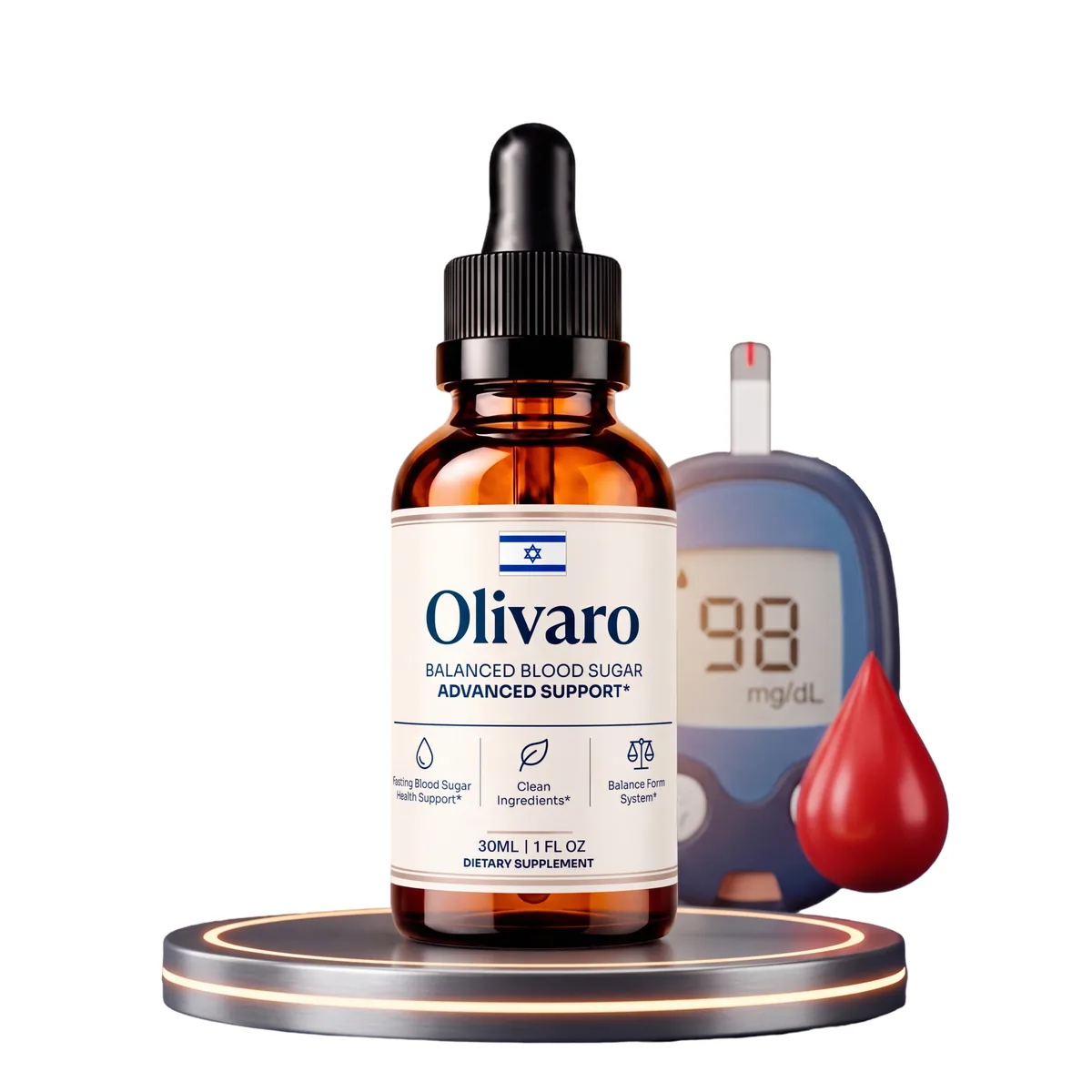
One combination product readers ask me about is Olivaro, a liquid with chromium picolinate and a 200 mg blend of 22 plant extracts, including gymnema and Panax ginseng, taken as 1 or 2 droppers a day. Our Olivaro review reads its full label, prices and refund terms. It is one option among many, not a magic bullet.
How These Pillars Work Together
It is tempting to look for the one magic lever. There isn’t one: and that is good news, because it means several small, doable changes add up to a bigger result than any single heroic effort.
Here is how the pillars reinforce each other. A protein-forward breakfast steadies your morning energy, which makes you more likely to take that post-meal walk. The walk lowers your blood sugar and tires you pleasantly, which improves your sleep. Better sleep lowers cortisol and curbs cravings, which makes the next day’s food choices easier. Round and round it goes: a virtuous cycle instead of a vicious one.
This is also why you should not panic over a single bad day. One pizza night or one short sleep will not undo your progress. Prediabetes responds to your average behavior over weeks and months, which is exactly what your A1C measures. Consistency beats perfection every single time.
When I was reversing my own prediabetes, the turning point was not a dramatic overhaul. It was stringing together ordinary days: a walk here, a better breakfast there: until the habits ran on autopilot. By the time my A1C hit 5.4%, the routine no longer felt like effort.
How to Track Your Progress
What gets measured gets managed. You do not need to become obsessive, but a few simple checkpoints keep you honest and motivated.
- Retest your A1C every 3 to 6 months. This is the gold-standard scorecard. Watching the number fall is powerful motivation.
- Notice your energy. Steadier afternoon energy is often the first sign your blood sugar is behaving, and it shows up well before lab results.
- Track habits, not just outcomes. Check off your post-meal walks and sleep window. Habits are what you control; the A1C follows.
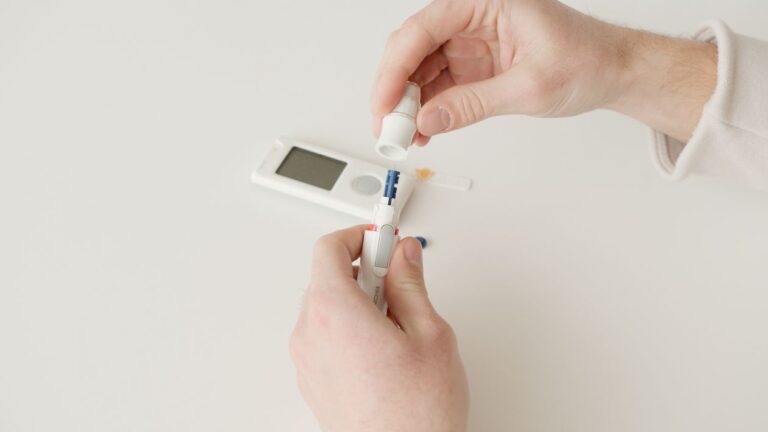
- Consider a glucose meter or CGM (optional). Some people find it eye-opening to see how specific meals affect them, though it is not required.
Bring your numbers to every appointment and use them to guide the conversation. Our guide to the 6 questions to ask your doctor pairs perfectly with a fresh A1C result in hand.
Your First 30 Days: Where to Start
Reading a guide this long can feel overwhelming. So here is permission to start small. You do not need to do everything at once: you need to do one thing consistently, then stack the next.
- Week 1: Cut sugary drinks and add a 10-minute walk after your largest meal.
- Week 2: Rebuild breakfast around protein and fiber.
- Week 3: Protect a consistent 7 to 9 hour sleep window.
- Week 4: Add two short strength sessions and one stress-lowering habit.
For a day-by-day version, follow our just-diagnosed 30-day plan and reverse prediabetes naturally in 30 days. These are the exact frameworks that took my A1C from 6.1% to 5.4%.
Key Takeaways
- Prediabetes means A1C 5.7 to 6.4%: elevated but reversible.
- Roughly 1 in 3 US adults has it; over 80% are unaware.
- It is usually silent, so get your A1C checked, especially after 45.
- A 2026 study showed ~1 in 4 people reversed it without weight loss, cutting diabetes risk up to 71%.
- The five pillars: diet, movement (walk after meals), sleep, stress, and optional evidence-based supplements.
- Start with one habit, stay consistent, and stack from there.
Keep reading
Related review
Asked about supplements after a diagnosis?
Olivaro is a liquid formula sold for blood sugar support. Our review lays out its label, price and refund terms, plus the medicine cautions to raise with your doctor first.
Frequently Asked Questions
How long does it take to reverse prediabetes naturally?
It varies, but many people see meaningful A1C improvement within 3 to 6 months of consistent changes, since A1C reflects a 2 to 3 month average. My own move from 6.1% to 5.4% took about 18 months of steady habits, with early wins in the first few months.
Can I reverse prediabetes without losing weight?
Yes. A 2026 study in Nature Medicine found nearly 1 in 4 people returned blood sugar to normal through diet and exercise without weight loss, largely by shifting where fat is stored and improving insulin sensitivity. Weight loss helps but is not strictly required.
What is the single most effective change I can make?
If you can only do one thing, take a 10 to 15 minute walk after your largest meal. It pulls glucose into your muscles with minimal insulin and is remarkably effective for after-meal spikes. Cutting sugary drinks is a close second.
Do I need medication for prediabetes?
Many people manage prediabetes with lifestyle alone, and reversal without medication is common. Some patients are prescribed metformin based on risk factors. This is a personal decision to make with your doctor: bring your questions to your appointment.
Are supplements enough to reverse prediabetes on their own?
No. Supplements like berberine, cinnamon, magnesium and vitamin D have supporting evidence, but they work as helpers alongside diet, movement, and sleep: not as replacements. Treat them as the smallest pillar, and always consult your doctor first.
The Bottom Line
Prediabetes is a wake-up call, not a life sentence. You have caught your blood sugar at the most reversible stage there is, and the science of 2026 is clearer than ever: you have real power here, scale or no scale.
Pick one pillar. Start this week. Get your A1C rechecked in a few months. I rooted for myself through 6.1% to 5.4%, and I am rooting for you.: Sarah Mitchell
See also: Prediabetes A1C Range 5.7 to 6.4: What Your Numbers Really Mean (2026)