Vitamin D and Prediabetes: What a Study of 43,000 People Found
Vitamin D and Prediabetes: What a Study of 43,000 People Found
When I was sitting in my doctor’s office staring at an A1C of 6.1%, vitamin D was nowhere on my radar. I thought of it as the “bone vitamin”, something for older folks worried about fractures. Then I started reading the research, and one number stopped me cold: a cohort of more than 43,000 people showing that those with higher vitamin D levels had a meaningfully lower risk of slipping from prediabetes into full type 2 diabetes.
That single data point changed how I thought about a nutrient I’d been ignoring for years. So let’s unpack exactly what that vitamin D and prediabetes study found, why it matters for the roughly 98 million American adults living with prediabetes, and, most importantly, what you can actually do with the information. I’m Sarah Mitchell, and I write this blog because I walked this road myself, taking my A1C from 6.1% down to 5.4%.
The 43,000-Person Study, Explained
The headline number comes from large prospective cohort research tracking tens of thousands of adults over time, measuring their blood vitamin D, technically 25-hydroxyvitamin D, or 25(OH)D, and watching who developed diabetes.
The pattern was consistent: people in the prediabetes range who carried higher vitamin D levels were less likely to convert to type 2 diabetes than those who were deficient. In one analysis, prediabetic adults with the highest 25(OH)D (≥75 nmol/L) had roughly a 36% lower risk of developing diabetes compared with the most deficient group (<25 nmol/L).
That’s an association, not proof of cause, a crucial distinction we’ll come back to. But it’s not an isolated finding. It echoes earlier work and later randomized trials, which is exactly the kind of convergence that makes a nutrient worth taking seriously.
Why prediabetes is the right place to look
Prediabetes is the window where intervention works best. Your A1C sits between 5.7% and 6.4%, above normal, but below the 6.5% diabetes threshold. If you’re fuzzy on those numbers, my deep dive on A1C levels explained breaks down exactly where you stand.
The encouraging news is that this stage is reversible. As I cover in can prediabetes be reversed naturally, the right combination of diet, movement, and targeted nutrients can move your numbers back toward normal, and vitamin D appears to be one supporting player in that mix.
How Vitamin D Affects Blood Sugar
This is the part that surprised me most: vitamin D isn’t just about bones. It behaves more like a hormone, and it has direct ties to how your body handles glucose.
Researchers point to a few overlapping mechanisms:
- Insulin secretion. The beta cells in your pancreas, the cells that release insulin, carry vitamin D receptors. Adequate vitamin D appears to help them respond properly when blood sugar rises.
- Insulin sensitivity. Vitamin D may improve how responsive your muscle and fat cells are to insulin, so your body needs less of it to do the same job. Low insulin sensitivity (insulin resistance) is the engine driving most prediabetes.
- Inflammation. Chronic low-grade inflammation worsens insulin resistance. Vitamin D has anti-inflammatory effects that may take some of that pressure off.
If insulin resistance is a new concept for you, it’s worth understanding because it connects nearly every prediabetes lever, from carbs to sleep to minerals like magnesium. My article on magnesium and insulin resistance is a good companion read, since magnesium and vitamin D actually work as a team in the body.
What the randomized trials actually show
Observational studies can only tell you so much, so the real test is randomized controlled trials (RCTs), where people are randomly given vitamin D or a placebo. Here’s the honest summary.
A 2024 meta-analysis pooling 11 RCTs of more than 5,000 people with prediabetes found vitamin D supplementation was associated with roughly a 10% reduction in progression to type 2 diabetes and a meaningfully higher chance of regressing back to normal blood sugar. The National Institute of Diabetes and Digestive and Kidney Diseases (NIDDK) and major endocrine groups now acknowledge this potential, with the 2024 Endocrine Society guideline even suggesting empiric vitamin D for some high-risk prediabetic adults.
The effect is real but modest. Vitamin D won’t outperform losing the insulin-resistant patterns in your diet and routine. It’s a supporting actor, not the lead.
Vitamin D Status: Deficiency Is the Common Thread
One reason this matters so much in the US: deficiency is widespread. Office jobs, sunscreen, northern latitudes, darker skin tones, and aging all reduce how much vitamin D we make. By the time many adults hit their prediabetes diagnosis in their 50s and 60s, low vitamin D is common.
And here’s the nuance the big study hints at: the benefit shows up mostly in people who were deficient to begin with. If your level is already healthy, piling on more vitamin D won’t necessarily lower your diabetes risk further. The win is in correcting a deficiency, not in megadosing.
| 25(OH)D Blood Level | Status (general guide) |
|---|---|
| < 20 ng/mL (<50 nmol/L) | Deficient |
| 20 to 29 ng/mL (50 to 74 nmol/L) | Insufficient |
| 30 to 50 ng/mL (75 to 125 nmol/L) | Generally sufficient |
| > 100 ng/mL (>250 nmol/L) | Potential toxicity risk |
Ranges vary slightly between labs and guidelines. Your doctor interprets your number in context.
How to Test Your Vitamin D Level
You can’t guess your vitamin D status, you have to measure it. The test is a simple blood draw called 25-hydroxyvitamin D, and it’s inexpensive and widely available.
Because vitamin D is so relevant to prediabetes, this is a great test to add when you’re already getting bloodwork done. If you’re not sure how to bring it up, my list of 6 questions to ask your doctor about prediabetes gives you the exact language to request it alongside your A1C.
A reasonable rhythm:
- Test your baseline 25(OH)D.
- If low, correct it with sun, food, and/or a supplement at an appropriate dose.
- Re-test in about 3 months to confirm you’ve reached the sufficient range.
Smart Dosing and Sunlight
Your body makes vitamin D when bare skin meets UVB sunlight. A bit of midday sun on your arms and legs several times a week genuinely helps, and it pairs beautifully with another blood-sugar win: a short post-meal walk. (The combined glucose benefit of walking after meals plus daylight is one of my favorite “free” prediabetes habits.)
But sun alone is unreliable for most American adults, especially in fall and winter or north of Atlanta. That’s where food and supplements come in.
Food sources
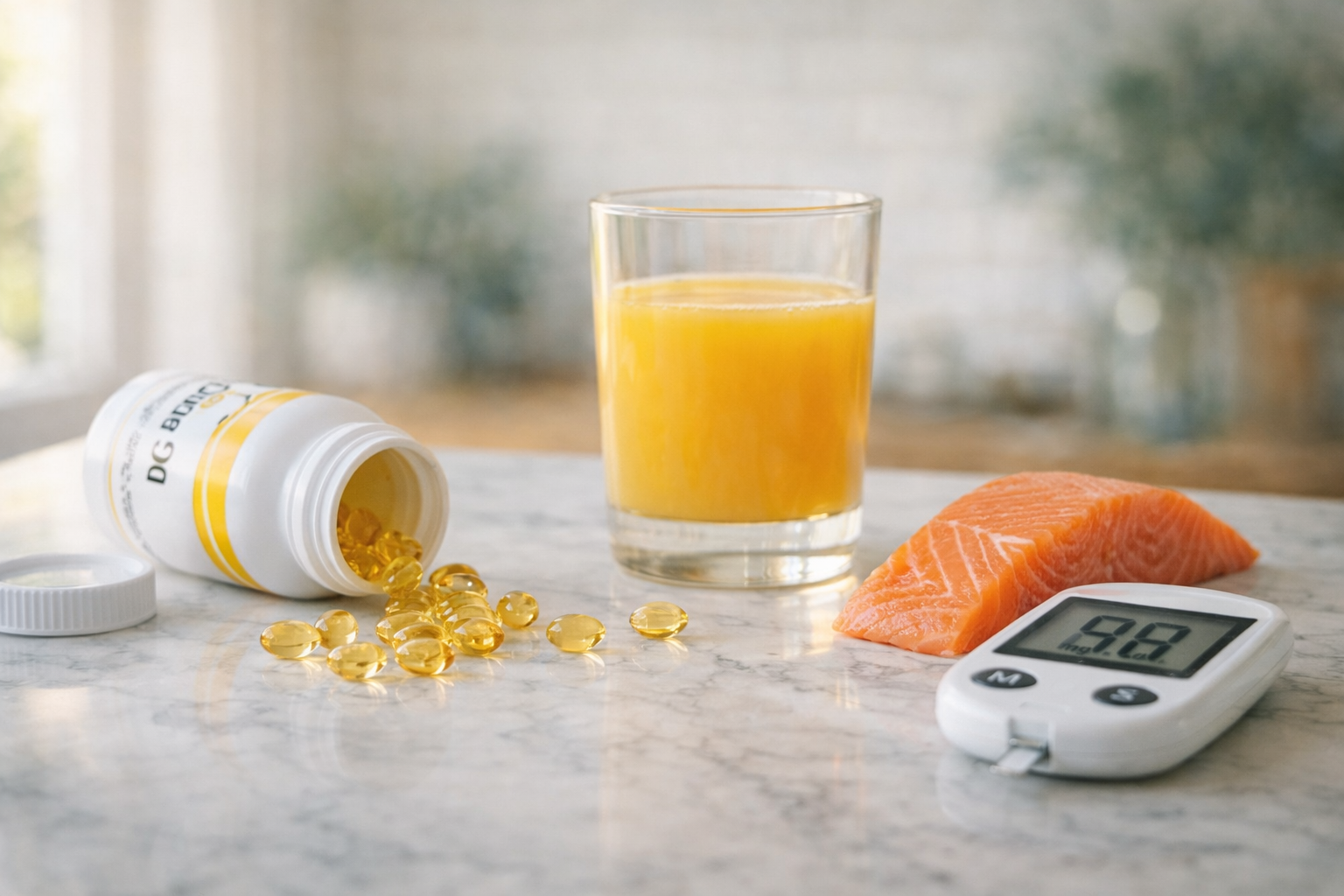
- Fatty fish (salmon, mackerel, sardines)
- Egg yolks
- Fortified milk and some fortified yogurts
- UV-exposed mushrooms
Supplement dosing
For correcting a deficiency, doses in studies have ranged widely, from 400 IU up to high weekly doses under medical supervision. A common maintenance range for adults is roughly 1,000 to 2,000 IU of vitamin D3 (cholecalciferol) daily, but the right dose depends entirely on your tested level. This is a case where you want a number to aim at, not a guess.
Vitamin D is fat-soluble, so take it with a meal that contains some fat for better absorption. And remember the magnesium connection, your body needs magnesium to activate vitamin D, another reason these two nutrients show up together in well-built supplement routines.
Where Vitamin D Fits in a Bigger Plan
Here’s the part I want to be brutally honest about: vitamin D is not a magic bullet for prediabetes. It’s one nutrient among several with supporting evidence, and it works best when the foundation is already solid, meaning your plate and your daily movement.
Think of it as one tile in a mosaic. Vitamin D, magnesium, and other targeted nutrients can each nudge insulin sensitivity in the right direction. If you want the full landscape of what’s worth taking and what’s hype, I lay it all out in the best supplements to lower A1C, one of the two pillar guides on this site, alongside the complete guide to prediabetes.
For readers who want a curated, current shortlist of formulas that combine several of these blood-sugar nutrients, my regularly updated roundup of the best blood sugar supplements for 2026 is the place to start.
But supplements never replace the basics. The single most powerful thing I did was overhaul what was on my plate, and you don’t even need to lose much weight to see results, as the latest 2026 research and my own experience both show. Start with what to eat with prediabetes and build from there.
- A cohort of 43,559 people linked higher vitamin D to lower diabetes risk in those with prediabetes, up to a 36% risk reduction in the highest vs. lowest groups.
- Randomized trials suggest supplementation reduces progression to type 2 diabetes by roughly 10% and boosts the odds of returning to normal blood sugar.
- The benefit centers on correcting a deficiency, not megadosing. Healthy levels offer no bonus from more.
- Test your 25(OH)D level, correct if low (often ~1,000 to 2,000 IU/day of D3), and re-test in 3 months.
- Vitamin D is a supporting player, diet, movement, sleep, and stress control remain the foundation.
Related review
Looking at a ready-made blend?
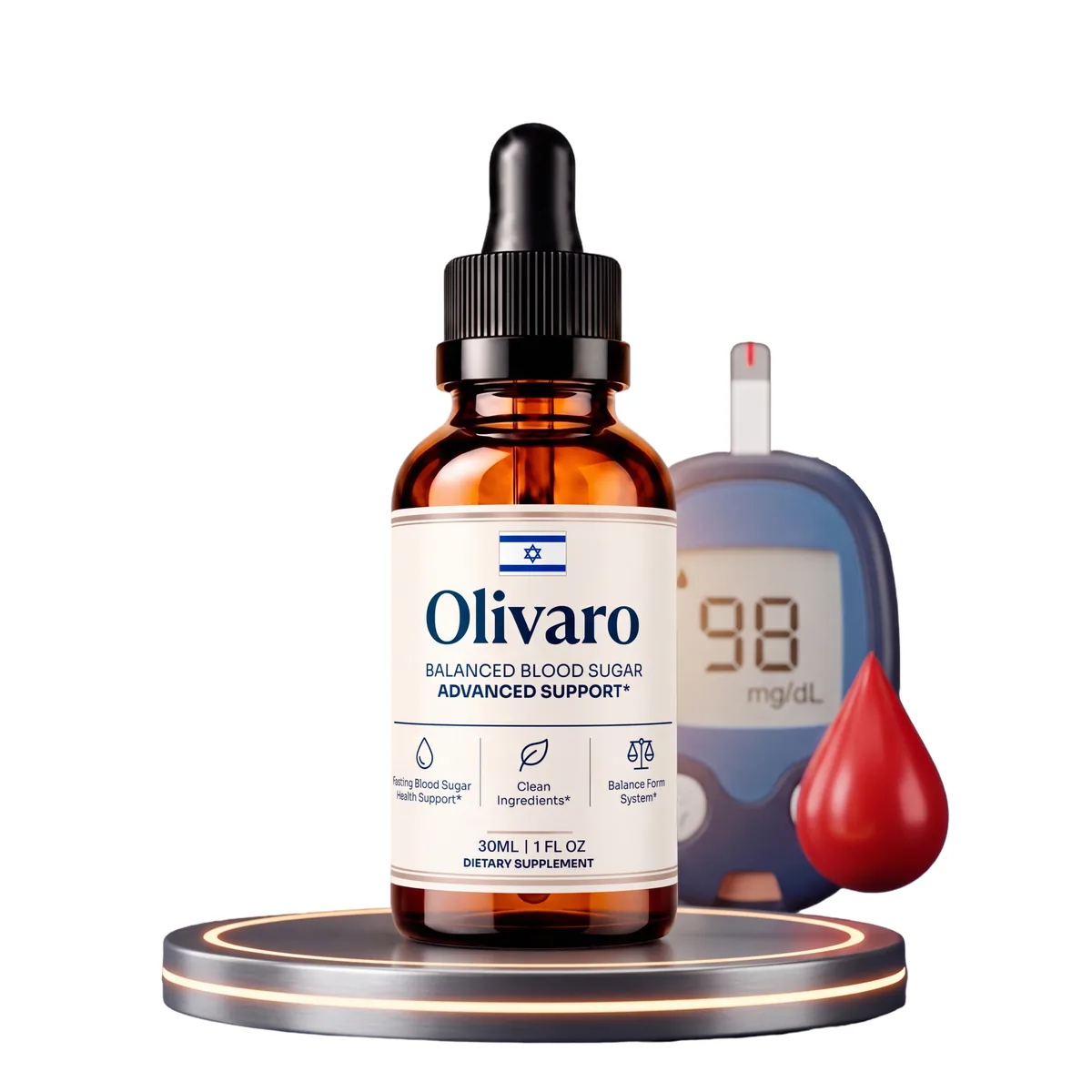
Olivaro is a liquid with chromium picolinate and a 200 mg blend of 22 plant ingredients. Our review reads its full label, the real kit prices and every version of its refund policy.
Frequently Asked Questions
Can vitamin D reverse prediabetes on its own?
No. Vitamin D can support healthier blood sugar, especially if you’re deficient, but it won’t reverse prediabetes by itself. The strongest results come from combining it with a better diet, regular movement, good sleep, and stress management. Think of it as one helpful piece of a complete plan.
How much vitamin D should I take for prediabetes?
There’s no single answer, it depends on your tested 25(OH)D level. Many adults use a maintenance dose of about 1,000 to 2,000 IU of D3 daily, while correcting a true deficiency may call for higher doses under medical supervision. Test first, then dose to your number, and always confirm with your doctor.
What blood test shows my vitamin D level?
The test is called 25-hydroxyvitamin D, or 25(OH)D. It’s an inexpensive, widely available blood draw. Ask for it alongside your A1C, it’s an easy add-on that gives you a real number instead of a guess.
Is it safe to take vitamin D every day?
For most adults, daily vitamin D in the typical 1,000 to 2,000 IU range is considered safe. Vitamin D is fat-soluble, so very high doses over long periods can build up and cause toxicity (high blood calcium). Stay within the dose your doctor recommends and re-test periodically rather than self-prescribing megadoses.
Can I just get vitamin D from sunlight instead of a supplement?
Sunlight genuinely helps your skin make vitamin D, and a little midday sun several times a week is great. But for most US adults, especially in winter, at northern latitudes, or with darker skin tones, sun alone is unreliable. Food and a supplement usually fill the gap, with testing to confirm you’ve reached a sufficient level.
Does vitamin D help if my level is already normal?
Probably not much. The research suggests the blood-sugar benefit comes mainly from correcting a deficiency. If your 25(OH)D is already in the sufficient range, adding more is unlikely to lower your diabetes risk further, and could push you toward unnecessarily high levels.
The Bottom Line
That 43,000-person study didn’t hand me a cure, but it did hand me a free, low-risk lever I’d been ignoring. I tested my level, found I was insufficient, corrected it, and folded vitamin D into the broader plan that ultimately took my A1C from 6.1% to 5.4%.
If you take one action from this article, make it this: ask for a 25(OH)D test at your next appointment. Know your number. Then build the rest of your prediabetes reversal, diet, movement, and the supporting nutrients, on top of a foundation that’s no longer running on empty.
For the full roadmap, start with the complete guide to prediabetes and the best supplements to lower A1C. You’ve got more control here than your diagnosis made you feel.
Authoritative sources worth your time: the CDC on preventing type 2 diabetes, the NIDDK on prediabetes and insulin resistance, the peer-reviewed literature on PubMed, and the American Diabetes Association.