
Fasting Blood Sugar High in the Morning? 9 Proven Fixes
Why fasting blood sugar runs high in the morning (dawn phenomenon and the Somogyi effect) and 9 practical things that actually help lower your morning number.
Blood sugar is not controlled by diet alone. Exercise, sleep quality, and daily stress levels each play a significant role in how your body processes glucose and responds to insulin. A single 20-minute walk after a meal can reduce postprandial blood glucose spikes by up to 12%. Chronic sleep deprivation raises cortisol and impairs insulin sensitivity within days. This category examines the lifestyle factors that matter most for people with prediabetes, with practical strategies for building movement into your day, improving sleep hygiene, and managing stress in ways that your blood sugar will actually reflect. Small, consistent habits compound into lasting metabolic change.
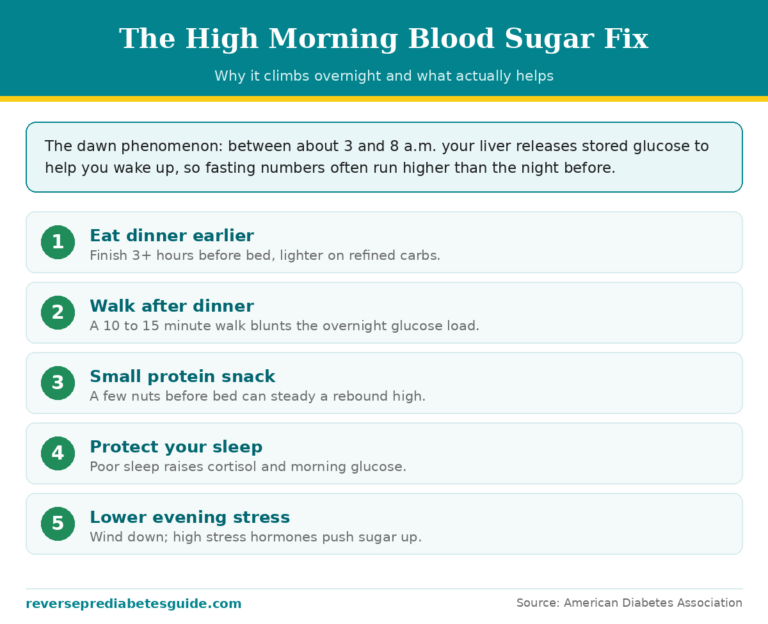
Why fasting blood sugar runs high in the morning (dawn phenomenon and the Somogyi effect) and 9 practical things that actually help lower your morning number.

A simple, gym-free weekly exercise plan to lower blood sugar and A1C. Walking after meals, light strength training, safety tips, and a day-by-day schedule.

Affiliate Disclosure: This article contains affiliate links. If you purchase through these links, I may earn a small commission at no extra cost to you. I only recommend products I’ve personally researched. Quick Answer: Most people see their first real A1C drop within 3 months of consistent lifestyle changes. A landmark NIH study found that…

Can intermittent fasting reverse prediabetes? See what 2025 studies show about fasting, A1C, and blood sugar, plus how to start a 14:10 window safely.

Research shows a 10-minute walk after eating can lower post-meal blood sugar by 22%. Here’s how to make it work for prediabetes.

Chronic stress and poor sleep raise cortisol, spike blood sugar, and accelerate progression to type 2 diabetes. Here’s what to do.