
Fasting Blood Sugar High in the Morning? 9 Proven Fixes
Fasting Blood Sugar High in the Morning? 9 Proven Fixes
If you test at home, you already know the feeling. You eat clean all evening, you go to bed proud of yourself, and then the meter flashes a higher number in the morning than it showed the night before. It feels backwards, and it is enough to make anyone want to throw the thing across the room.
A high fasting number is one of the most confusing parts of prediabetes. You have not eaten in ten or twelve hours, so how could it possibly be up? Once you understand what is actually happening while you sleep, the panic turns into a plan. That plan is what I want to walk you through today.
None of this is medical advice, and I will point you to your doctor where it matters. But almost everything that lowers a morning number is gentle, free, and doable at 55 or 68. Let me show you why the number climbs and what genuinely moves it down.
Key Takeaways
- A high morning number is usually the dawn phenomenon, a normal hormone surge before you wake that nudges your liver to release sugar.
- The single biggest lever is your dinner: eat it earlier and lighter on starchy carbs, then walk for 10 to 15 minutes afterward.
- Poor sleep and high stress raise cortisol, which pushes your fasting sugar up, so rest and calm are not extras, they are treatment.
- Small helpers like a light protein snack, good hydration, and a spoon of apple cider vinegar before bed can each shave a little off the number.
- Give any change two to four weeks before you judge it. Morning numbers move slowly, and consistency wins.
Why Your Fasting Blood Sugar Is High in the Morning
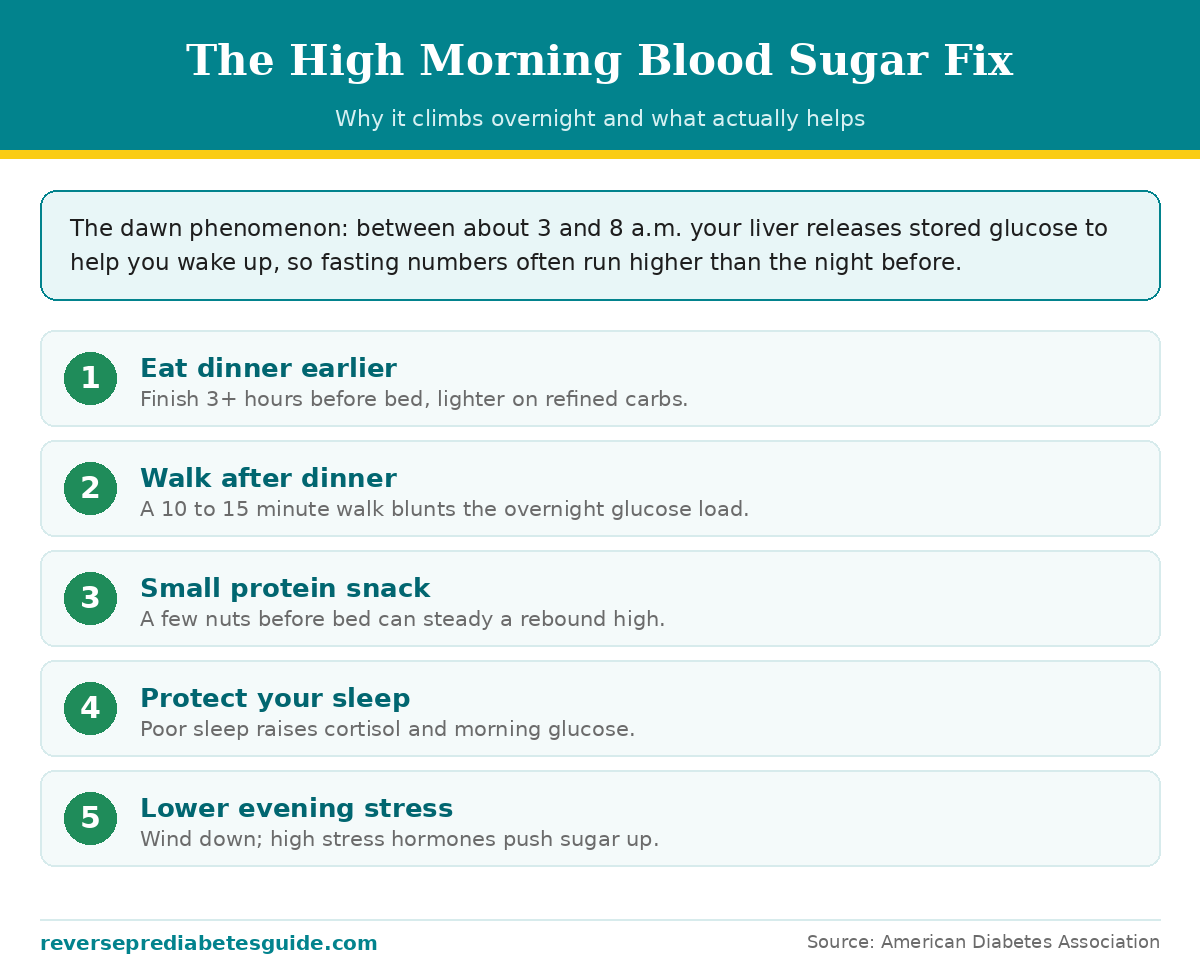
Here is the part that finally calmed me down. Your body does not go quiet while you sleep. In the early morning hours, it gets ready to wake you up, and part of that prep is releasing hormones like cortisol and growth hormone.
Those hormones send a signal to your liver: release some stored glucose so the body has fuel to start the day. In someone without blood sugar trouble, a little insulin quietly handles that extra sugar. With prediabetes, your insulin cannot keep up, so the glucose lingers in your blood and shows up on your morning meter.
This predawn rise is called the dawn phenomenon, and it is completely normal. The American Diabetes Association explains this morning blood sugar pattern in plain terms if you want their version. You did nothing wrong. Your liver is just doing its job a little too enthusiastically.
Dawn Phenomenon vs the Somogyi Effect
There is a second, rarer cause worth knowing, especially if you take blood sugar medication. It is called the Somogyi effect, and it works almost like a rebound.
If your blood sugar drops too low in the middle of the night, your body panics a little and dumps stress hormones to rescue you. Those hormones overshoot, and you wake up high. So a high morning number can, in some cases, actually be a bounce back from a low you slept right through.
How do you tell them apart? Set an alarm and test once around 2 or 3 a.m. for a couple of nights. If you are high at 3 a.m. and high at wake-up, that points to the dawn phenomenon. If you are low at 3 a.m. and high by morning, that looks more like the Somogyi effect. This one matters, because the fixes are opposite, so please loop in your doctor if your 3 a.m. numbers run low.
The Fastest Wins: Rethink Your Dinner

If you only change one thing, change dinner. For most of us who test at home, the evening meal has the biggest grip on the next morning’s number, and you have full control over it.
Eat Earlier
When you eat late, your body is still processing that meal while you sleep, right as the dawn hormones start firing. The two pile on top of each other. Finishing dinner by around 6 or 7 p.m., and leaving three or more hours before bed, gives your system time to clear the meal before the overnight surge.
This is one reason a gentle eating window helps so many people. I break down how that works, safely, in my guide to intermittent fasting for prediabetes. You do not need anything extreme, just an earlier finish line most nights.
Go Lighter on the Starchy Carbs
A big bowl of pasta, rice, bread, or potatoes at night gives your liver a full tank of glucose to draw from overnight. Shifting your plate toward protein, healthy fat, and non-starchy vegetables means less sugar sloshing around while you sleep.
You do not have to eat zero carbs. Just make the evening plate the lightest of the day on starch. If you want a longer list of what to lean on, I keep one in foods that lower blood sugar quickly. Trading half your rice for extra vegetables is the kind of small swap that shows up on the meter.
Walk After You Eat
This one is my favorite because it is so easy and works so fast. A 10 to 15 minute walk after dinner lets your muscles pull glucose straight out of your blood, so less of it is stored for the overnight release. It is the same reason walking blunts the spike right after any meal, which I cover in blood sugar after eating with prediabetes.
An easy, after-dinner stroll is plenty. No gym, no sweating. I explain the timing and the science in does walking after meals lower blood sugar, and it is one habit I never skip. A short walk before bed can meaningfully lower what you see at sunrise.
What Raises Morning Blood Sugar, and What to Do
Here is a quick map of the usual culprits behind a high fasting number, why each one does it, and the practical fix. Keep this handy while you experiment.
| Cause of the Morning High | Why It Happens | What to Do |
|---|---|---|
| Dawn phenomenon | Predawn cortisol and growth hormone tell the liver to release glucose. | Earlier, lower-carb dinner plus an evening walk; a light protein snack for some people. |
| Somogyi effect (rebound) | A middle-of-the-night low triggers stress hormones that overshoot. | Test at 3 a.m.; if low, talk to your doctor about meal timing or medication. |
| Late or heavy dinner | Food is still digesting as overnight hormones add more sugar. | Finish eating by 6 to 7 p.m. and go lighter on rice, bread, and potatoes. |
| Poor or short sleep | Sleep loss raises cortisol and lowers insulin sensitivity by morning. | Aim for 7 to 8 hours; keep a steady bedtime and a cool, dark room. |
| Stress and high cortisol | Stress hormones push the liver to release glucose day and night. | Wind down before bed with slow breathing, a walk, or a warm shower. |
| Dehydration | Less water means glucose is more concentrated in the blood. | Drink water through the day and a glass on waking. |
Sleep and Stress: The Overnight Multipliers
It is easy to think blood sugar is only about food. But sleep and stress matter too: a short, restless night can mean a higher fasting number.
It makes sense once you know the hormone story. When you sleep poorly, your body raises cortisol and becomes less sensitive to insulin the next morning. That is a double hit right when the dawn surge arrives. The CDC has a good plain-language piece on how sleep and blood sugar are tied together.
Stress works the same way. A tense mind keeps cortisol high, and cortisol tells your liver to keep glucose flowing. Winding down before bed is not a luxury here, it genuinely lowers what you see at sunrise. I go deep on both of these in how stress and poor sleep affect prediabetes, because for a lot of my readers this is the missing piece.
Simple Ways to Protect Your Night
- Keep a steady bedtime, even on weekends, so your hormone rhythm settles.
- Make the room cool, dark, and quiet, and put the phone down 30 minutes early.
- Try five minutes of slow breathing in bed to bring cortisol down before sleep.
- Skip the late glass of wine, which fragments sleep even when it helps you doze off.
Small Helpers That Add Up
Once dinner, sleep, and stress are handled, a few small tools can shave off a bit more. None of these is magic on its own, but stacked on the basics they help.
A Light Protein Snack Before Bed
This sounds backwards, but for some people a small protein snack at night steadies blood sugar until morning and softens the dawn rise. Think a boiled egg, a few nuts, or a spoon of plain Greek yogurt. Keep it small and skip the sugar and starch. This is one to test on yourself, because it helps some folks and not others.
A Spoon of Apple Cider Vinegar
A small amount of apple cider vinegar, about a tablespoon in a large glass of water before bed, has been shown in small studies to nudge morning glucose down a touch. Always dilute it well to protect your teeth and throat. I cover the honest evidence in apple cider vinegar for blood sugar. Helpful, modest, not a cure.
Hydration
When you are low on water, the sugar in your blood is more concentrated, so the number reads higher. Drinking enough through the day, and a glass first thing when you wake, supports your kidneys in clearing extra glucose. It is the easiest habit on this whole list.
Consistent Timing
Your body loves rhythm. Eating, moving, and sleeping at roughly the same times each day keeps your hormones on a predictable schedule, and predictable hormones mean steadier mornings. The NIH points to this steady, whole-day approach in its overview of diet, eating, and physical activity for blood sugar. Wild swings in your schedule tend to show up as wild swings on the meter.
If you have already dialed in your diet and your sleep and you want a little extra support, a few targeted nutrients can be worth a careful look. I share how I think about that, without hype, in my honest guide to supplements for prediabetes and lowering A1C. Food, movement, and rest come first, always, and a supplement is only ever a small add-on to those. If prescription options are part of your conversation with your doctor, I also compared berberine vs metformin for prediabetes so you can see what the research shows.
What Not to Do About Your Morning Number
A few instincts feel right but backfire, so let me save you some trouble.
Do not skip breakfast to fix a high reading. Skipping food can keep your stress hormones elevated and does not fix the underlying rise. A protein-forward breakfast is usually better than none.
Do not over-restrict food at night. Going to bed hungry can trigger that middle-of-the-night low and the Somogyi rebound we talked about. Balanced and earlier beats tiny and late.
Do not judge one bad morning. A single high number tells you almost nothing. Look at the trend across a week or two, because that is where the real story lives. Reversing prediabetes is a slow build, and I lay out realistic timelines in how long it takes to reverse prediabetes.
How Long Until You See Your Morning Number Drop
Be patient with this one. Some people notice a lower reading within a week of eating dinner earlier and walking after it. For most, the steady change shows up over two to four weeks of consistency.
The reason it takes time is that fasting numbers reflect deeper things, your liver’s habits, your insulin sensitivity, your sleep debt, and those shift gradually. A large body of research backs the whole-lifestyle approach; this landmark study on lifestyle changes and blood sugar found that everyday habits meaningfully lowered the risk of progressing to diabetes.
So pick two or three changes from this article, hold them steady, and let the mornings come down on their own schedule. Chasing a perfect number every single day will only stress you out, and stress, as we saw, raises the very number you are trying to lower.
Keep reading
Frequently Asked Questions
Why is my fasting blood sugar higher than before I went to bed?
It is usually the dawn phenomenon. In the early morning your body releases cortisol and growth hormone, which tell your liver to put out stored glucose to fuel your day. With prediabetes your insulin cannot fully clear it, so the number rises overnight even though you have not eaten.
What is a normal fasting blood sugar for prediabetes?
Fasting blood sugar in the prediabetes range generally falls between 100 and 125 mg/dL. Below 100 is typical, and 126 or above on two tests points toward diabetes. Always confirm your own numbers and targets with your doctor, since context matters.
How do I know if it is the dawn phenomenon or the Somogyi effect?
Test once around 2 or 3 a.m. for a couple of nights. If you are high overnight and high at wake-up, it is likely the dawn phenomenon. If you are low overnight and high by morning, that suggests the Somogyi rebound. Bring these readings to your doctor, especially if you take medication.
Does eating a snack before bed lower morning blood sugar?
For some people a small protein snack, like a boiled egg or a few nuts, steadies blood sugar overnight and softens the morning rise. For others it makes little difference. Keep it small and free of sugar and starch, and test your own morning numbers to see if it helps you.
Can drinking water lower fasting blood sugar?
Staying well hydrated can help, because dehydration concentrates the glucose in your blood and makes the reading higher. Water also supports your kidneys in flushing out excess sugar. It will not cure a high number on its own, but it is an easy habit that supports everything else.
Should I stop eating carbs at dinner to fix my morning number?
You do not need to cut carbs entirely, just go lighter on starchy ones like rice, bread, and potatoes at night, and eat earlier. Balance the plate with protein, healthy fat, and non-starchy vegetables. Over-restricting at night can backfire by triggering an overnight low.
How long does it take to lower fasting blood sugar in the morning?
Some people see a lower reading within a week of eating dinner earlier and walking after it. For most, a steady drop takes two to four weeks of consistent habits. Morning numbers reflect deeper changes in your body, so watch the trend over weeks rather than any single day.
Before You Go
- A high morning number is almost always the dawn phenomenon, a normal hormone surge, not a sign you did something wrong.
- Your best lever starts tonight: an earlier, lighter-carb dinner followed by a 10 to 15 minute walk.
- Protect your sleep and calm your stress, because both quietly raise the fasting number you see at sunrise.
- Give any change two to four weeks and watch the trend, not one reading. If your 3 a.m. numbers run low, talk with your doctor before adjusting anything.