
Prediabetes A1C Range 5.7–6.4: What Your Numbers Really Mean (2026)

Quick Answer
Your A1C is in the prediabetes range if it falls between 5.7% and 6.4%. This means your average blood sugar over the past 2 to 3 months has been higher than normal, but not yet high enough for a type 2 diabetes diagnosis.
What it means: Prediabetes is a warning sign, not a life sentence. Your next step: talk to your doctor about a repeat test, and start the diet and movement changes below. Research suggests many people can bring an A1C in this range back toward normal with consistent lifestyle changes.
If you just got lab results back and saw the words “prediabetes” or an A1C number between 5.7 and 6.4, you probably have questions. What does that percentage actually measure? How worried should you be? And is it something you can change? This guide walks through exactly what your A1C number means, how the ranges work, and the evidence-based steps that may help you move it in the right direction.
This is for informational purposes only. Consult your healthcare provider before making changes to your diet, exercise routine, or medications.
What Is the A1C Test?
The A1C test (also called HbA1c, hemoglobin A1c, or glycated hemoglobin) is a simple blood test that gives a snapshot of your average blood sugar over roughly the past two to three months. Unlike a fasting glucose test, which captures a single moment, A1C reflects a longer trend, which is why doctors rely on it so heavily.
Here is how it works. Sugar (glucose) in your bloodstream naturally attaches to hemoglobin, the protein inside red blood cells that carries oxygen. The more glucose floating in your blood, the more of it sticks to hemoglobin. Because red blood cells live for about three months, measuring the percentage of hemoglobin that is “sugar-coated” tells you how high your blood sugar has been running over that period.
The result is reported as a percentage. A higher percentage means more glucose has been attaching to your red blood cells, which signals higher average blood sugar. According to the American Diabetes Association (ADA), the A1C test is one of the primary tools used to diagnose prediabetes and type 2 diabetes, and it does not require fasting, which makes it convenient.
Understanding A1C Ranges
The ADA defines three main categories based on your A1C percentage. Knowing where you fall is the first step to understanding your risk.
| Category | A1C Level | What It Means |
|---|---|---|
| Normal | Below 5.7% | Healthy average blood sugar. |
| Prediabetes | 5.7%-6.4% | Higher than normal; elevated risk of type 2 diabetes. |
| Diabetes | 6.5% or higher | Diagnostic for diabetes (usually confirmed with a second test). |
Notice how narrow the prediabetes window is. Just 0.7 percentage points separate normal from prediabetes, and another 0.1 separates the top of prediabetes from diabetes. Small changes in your daily habits can have a meaningful effect on where you land.
What Does 5.7% A1C Mean?
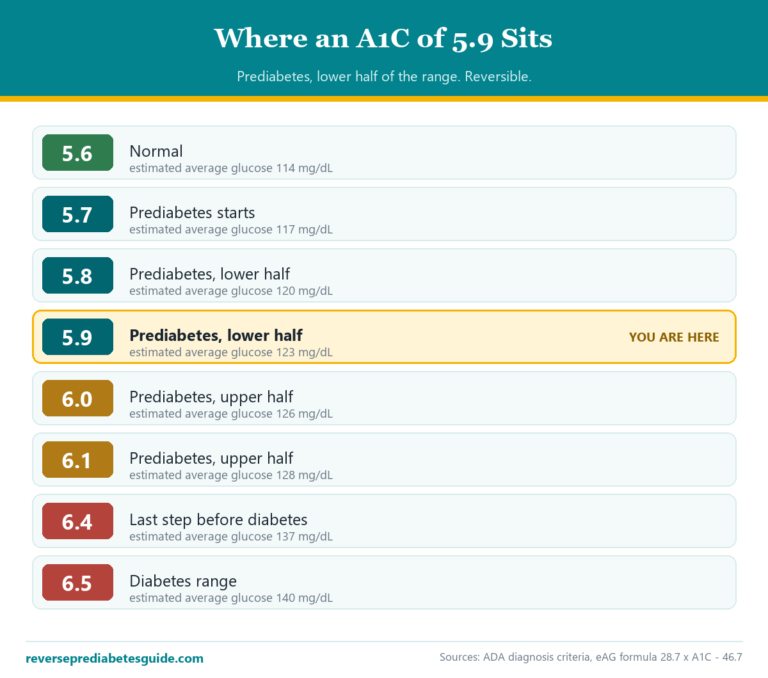
An A1C of 5.7% is the exact threshold where prediabetes begins. In practical terms, it corresponds to an estimated average glucose (eAG) of roughly 117 mg/dL. For comparison, an A1C of 5.6% (still normal) maps to about 114 mg/dL, and an A1C of 6.4% (the top of prediabetes) corresponds to roughly 137 mg/dL.
It helps to look at A1C alongside other markers your doctor may check:
- Fasting plasma glucose: Prediabetes is 100 to 125 mg/dL. Diabetes is 126 mg/dL or higher.
- Oral glucose tolerance test (2-hour): Prediabetes is 140 to 199 mg/dL. Diabetes is 200 mg/dL or higher.
- A1C: Prediabetes is 5.7% to 6.4%, as covered above.
If your A1C sits at 5.7%, you are at the very start of the range. That is actually good news, because it usually means there is more room to respond to lifestyle changes before things progress. It is also a reminder not to ignore the result. Studies cited by the CDC suggest that many adults with prediabetes go on to develop type 2 diabetes within several years if no action is taken.
The Critical Range: 5.7 to 6.4
Not every number inside the prediabetes range carries the same level of urgency. Here is a closer look at the sub-ranges and what they may signal.
5.7-5.9: Early Prediabetes
This is the entry zone. Your blood sugar is just above normal, and you likely have the best opportunity to reverse the trend. Many people in this range see their A1C drift back below 5.7% with modest, sustainable changes to diet and activity. Think of it as an early warning that is very responsive to action.
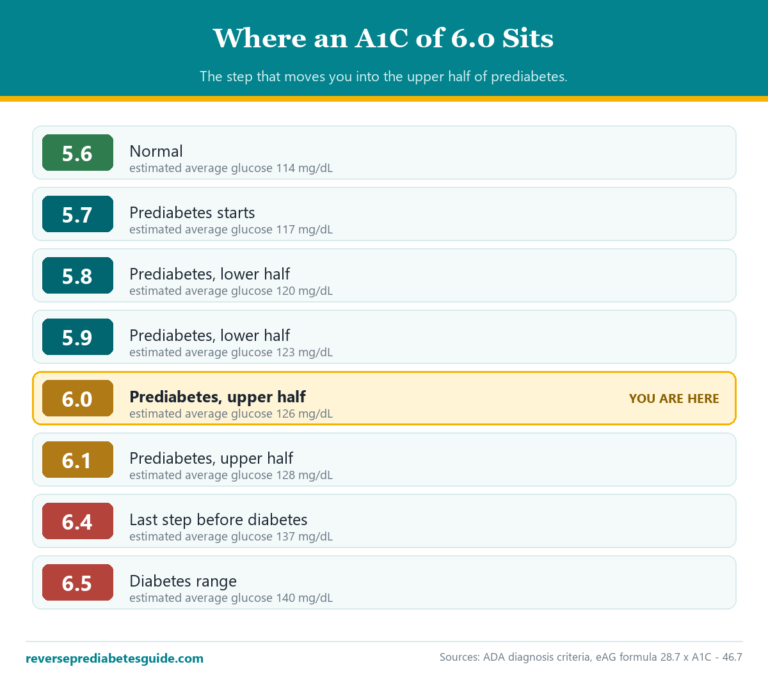
6.0-6.2: Moderate Prediabetes
In the middle of the range, your average blood sugar has been consistently elevated for a while. This is a signal to take things more seriously. Lifestyle changes still matter a great deal here, and your doctor may want to monitor you more closely or discuss whether a structured program like the CDC’s National Diabetes Prevention Program is right for you.
6.3-6.4: High-Risk Prediabetes
At the upper edge, you are close to the diabetes threshold of 6.5%. This range warrants prompt attention and a conversation with your healthcare provider. Aggressive (but doctor-guided) lifestyle changes are important, and your provider may evaluate whether medication is appropriate. The goal is to keep your A1C from crossing into the diabetes range.
A1C vs. Fasting Glucose: Why Your Two Numbers May Disagree
Many people leave the lab with two numbers, an A1C and a fasting glucose, and they do not always tell the same story. That is normal, because the two tests measure different things.
- Fasting glucose is a snapshot: your blood sugar at one moment, after 8 or more hours without food. Prediabetes is 100 to 125 mg/dL on this test.
- A1C is a movie: your average blood sugar over the past two to three months. Prediabetes is 5.7% to 6.4%.
So what if your fasting glucose looks fine but your A1C lands in the prediabetes range? That often means your blood sugar spikes after meals (postprandial spikes) even though your morning number is okay. The reverse can also happen. This is one reason doctors lean on A1C for the bigger picture. The NIH’s NIDDK has a clear breakdown of how the A1C test works if you want the technical detail.
One important caveat: A1C can read falsely high or low in people with certain conditions, including anemia, recent blood loss, some hemoglobin variants, and pregnancy. If your two numbers wildly disagree, ask your doctor whether one of these factors applies to you.
How Fast Does Prediabetes Progress?
This is the question that keeps people up at night, and the honest answer is reassuring: prediabetes moves slowly, and it is a fork in the road, not a one-way street.
Research suggests that, without any intervention, roughly 5 to 10% of people with prediabetes progress to type 2 diabetes each year. Over time that adds up, but “without intervention” is the key phrase. With consistent lifestyle change, a large share of people move back toward normal instead.
The direction your number moves depends far more on your habits over the next 6 to 12 months than on the exact tenth you started at. A 6.1% trending down beats a 5.8% trending up every single time. For a month-by-month picture of how long the turnaround usually takes, see how long it takes to reverse prediabetes.
If you are newly diagnosed and want a structured starting point, our just-diagnosed 30-day plan walks you through the first month step by step. And yes, many people do reverse prediabetes naturally; 2026 research even suggests it is possible without significant weight loss.
Can You Lower Your A1C Without Medication?
For many people, yes. Because A1C reflects your average blood sugar over time, consistently improving your daily glucose levels can lower the percentage over the following months. Landmark research, including the Diabetes Prevention Program study, found that intensive lifestyle changes reduced the risk of progressing to type 2 diabetes by about 58% compared with no intervention, an effect that was even stronger than the medication arm of the study in that trial.
The key word is consistency. Because red blood cells turn over roughly every three months, your A1C will not change overnight. Most people retest after three to six months to see the impact of their efforts. Below are the changes with the strongest evidence behind them.
Diet Changes That Lower A1C
What you eat has a direct, daily effect on your blood sugar. These five strategies are among the most evidence-based.
- Cut back on refined carbs and added sugar. Sugary drinks, white bread, pastries, and processed snacks spike blood glucose quickly. Replacing them with whole, minimally processed foods is one of the highest-impact changes you can make.
- Prioritize fiber. Soluble fiber from vegetables, legumes, oats, and fruit slows the absorption of sugar and helps blunt post-meal glucose spikes. Research suggests higher fiber intake is associated with better blood sugar control.
- Choose low-glycemic carbohydrates. Foods like beans, lentils, non-starchy vegetables, and whole grains raise blood sugar more gradually than their refined counterparts.
- Add protein and healthy fats to meals. Pairing carbs with protein (eggs, fish, poultry, tofu) and healthy fats (olive oil, nuts, avocado) slows digestion and reduces glucose surges.
- Watch portion sizes and meal timing. Even healthy carbs can raise A1C if portions are large. Spreading carbohydrates more evenly across the day, rather than in one big meal, may help smooth out blood sugar.
A Mediterranean-style eating pattern, rich in vegetables, legumes, fish, and olive oil, is frequently studied for blood sugar benefits and is endorsed by the ADA as one acceptable approach.
Exercise and A1C
Physical activity makes your cells more sensitive to insulin, which helps move glucose out of your bloodstream and into your muscles. The ADA recommends a combination of two types of exercise:
- Aerobic exercise: Aim for at least 150 minutes per week of moderate activity, such as brisk walking, cycling, or swimming. Even a 10 to 15 minute walk after meals may help reduce post-meal blood sugar spikes.
- Resistance training: Strength work (weights, resistance bands, or bodyweight exercises) two or more days per week builds muscle, and more muscle improves your body’s ability to use glucose.
Studies show that combining aerobic and resistance training tends to lower A1C more effectively than either one alone. The best routine is the one you can stick with consistently, since A1C responds to sustained change over weeks and months.
Supplements That Support Healthy Blood Sugar
Diet and exercise are the foundation, but some people also explore supplements to support their efforts. A few ingredients have research behind them for blood sugar support:
- Chromium: A mineral involved in how the body uses insulin. Some studies suggest it may support glucose metabolism, though results are mixed.
- Berberine: A plant compound that several studies have associated with improved blood sugar markers. It is one of the more researched natural options.
- Gymnema sylvestre: An herb used in traditional medicine that may support healthy blood sugar and reduce sugar cravings in some people.
Some blood sugar support formulas combine these ingredients in a single product. One example is Olivaro, a liquid that lists chromium picolinate and gymnema in a blend of 22 plant ingredients. If you are considering it, our Olivaro review covers the label, the prices and the refund terms. For a broader comparison, see our guide to the best supplements for prediabetes and lowering A1C.
Supplements are not a substitute for lifestyle changes or medical care, and they are not regulated like prescription drugs. Research on any single product is often limited, so the honest framing is that certain ingredients may support healthy blood sugar rather than treat or cure anything. Always talk to your doctor before starting a supplement, especially if you take other medications.
What to Ask at Your Next Appointment
Do not leave your next visit with one vague number and a “let’s keep an eye on it.” Bring questions. Ask what your exact A1C is, how it compares to your last result, whether your fasting glucose agrees with it, and when you should re-test. Our list of 6 questions to ask your doctor about prediabetes gives you a printable starting point.
Re-testing every three to six months is common while you are actively working on your number, since anything more frequent will not reflect a full A1C cycle. Mark your calendar so you actually see your progress.
When to See Your Doctor
An A1C in the prediabetes range is a reason to partner with your healthcare provider, not to panic. Reach out to your doctor if:
- Your A1C is 5.7% or higher and you have not yet discussed a plan.
- Your number is in the high-risk zone (6.3 to 6.4%) and creeping toward 6.5%.
- You notice symptoms like increased thirst, frequent urination, unusual fatigue, blurred vision, or slow-healing cuts.
- You have risk factors such as a family history of diabetes, high blood pressure, or being overweight.
Your provider may recommend a repeat A1C test (the ADA generally suggests retesting at least once a year for people with prediabetes, sometimes sooner) to confirm the result and track your progress. And because a single A1C reading can be skewed by the conditions covered earlier, your doctor may also use a fasting glucose or glucose tolerance test to get the full picture.
Keep reading
Frequently Asked Questions
Is an A1C of 5.7 bad?
An A1C of 5.7% is the starting point of prediabetes, so it is higher than ideal but at the very low end of the range. It is best viewed as an early warning. Many people respond well to diet and exercise changes at this level and can move their number back toward normal over the following months.
How long does it take to lower A1C?
Because A1C reflects your average blood sugar over about three months, meaningful changes usually take that long to show up. Most people retest after three to six months of consistent lifestyle changes to measure the impact.
Can prediabetes go away?
Yes, for many people. Research suggests that with sustained lifestyle changes, a significant share of people with prediabetes can return their A1C to the normal range. It is not guaranteed for everyone, and individual results vary, which is why working with your doctor matters.
What is the difference between A1C and a glucose test?
A fasting glucose test measures your blood sugar at a single moment after not eating, while A1C reflects your average blood sugar over the past two to three months. Doctors often use both together for a more complete view.
Does stress affect A1C?
Chronic stress can raise blood sugar through stress hormones like cortisol, which may contribute to a higher A1C over time. Managing stress through sleep, movement, and relaxation techniques is a reasonable part of an overall blood sugar plan, alongside diet and exercise.
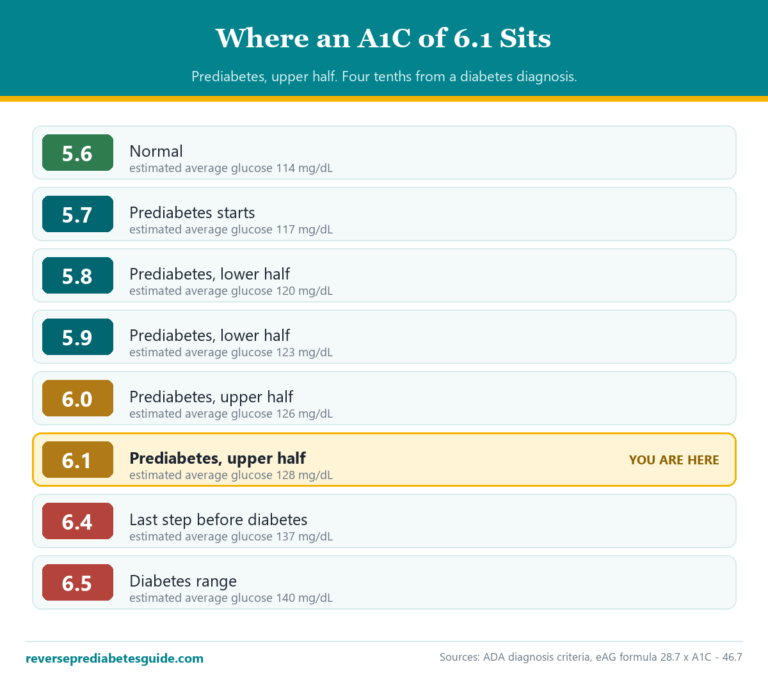
What does an A1C of 6.1 mean?
A 6.1% is mid-range prediabetes, roughly equivalent to an average blood sugar of about 128 mg/dL. It signals that it is time to act with diet, movement, and lifestyle changes, but for many people it is fully reversible. This is exactly where our author Sarah Mitchell started before bringing her A1C down to 5.4%.
Which is more accurate, A1C or fasting glucose?
Neither is “more accurate.” They measure different things: fasting glucose is a single-moment snapshot, while A1C is a two-to-three-month average. Doctors generally favor A1C for the bigger picture but often use both together. If your two numbers strongly disagree, ask your doctor whether anemia or another condition is affecting your A1C reading.
How often should I get my A1C tested with prediabetes?
Most doctors recommend re-testing every three to six months while you are actively working to lower your number, and at least once a year for anyone with prediabetes. Testing more often than every three months will not capture a full A1C cycle, so it will not accurately reflect your progress.
Disclaimer: This article is for informational purposes only and is not medical advice. It does not promise to cure, treat, or reverse any condition. Always consult your healthcare provider before making changes to your diet, exercise routine, supplements, or medications.
If your result came back at exactly 6.0, I broke that number down on its own page: what an A1C of 6.0 means and how to get below 5.7.