
Just Diagnosed with Prediabetes? Your Exact 30-Day Action Plan
Just Diagnosed with Prediabetes? Your Exact 30-Day Action Plan
If your doctor just said the word “prediabetes,” your stomach probably dropped. Maybe they handed you a pamphlet, said “watch your sugar,” and moved on, leaving you in the parking lot wondering what on earth to actually do on Monday morning.
Take a breath. You are not broken, and you are not too late. Prediabetes is the one stage where the door is still wide open, and the steps to walk back through it are far simpler than the internet makes them sound.
This is your exact 30-day plan, not a vague list of “eat better and exercise,” but a calm, week-by-week sequence of small changes that build on each other. No crash diets. No gym membership required.
First, Understand What a Prediabetes Diagnosis Actually Means
Your 30-day plan is the starting point. For the full picture on what to expect beyond the first month, including a month-by-month timeline to full reversal, read: How Long Does It Take to Reverse Prediabetes?
Prediabetes means your blood sugar is higher than normal, but not yet high enough to be type 2 diabetes. It’s a warning light on the dashboard, not engine failure.
According to the Centers for Disease Control and Prevention, roughly 98 million American adults have prediabetes, about 1 in 3, and more than 80% don’t even know they have it. The fact that you do know puts you ahead of millions of people.
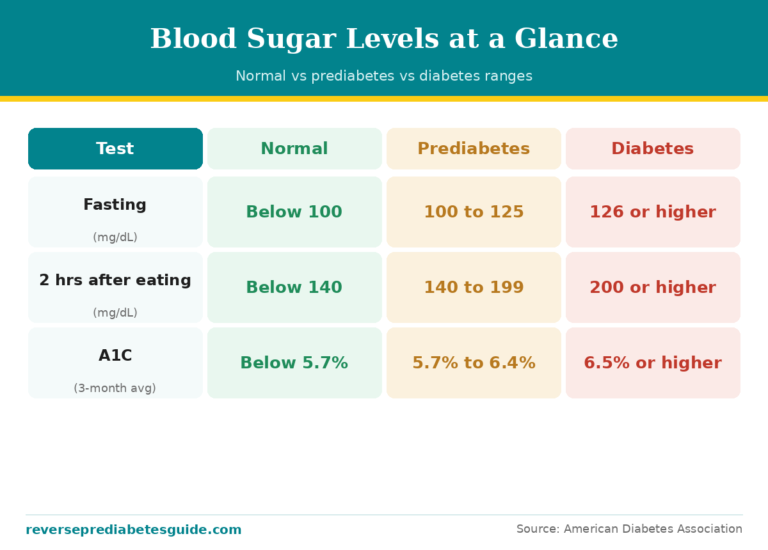
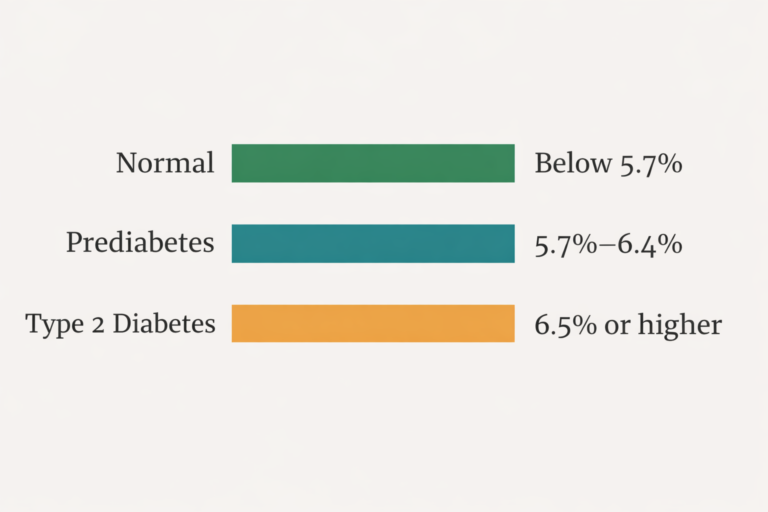
Doctors usually diagnose prediabetes with an A1C test, which reflects your average blood sugar over the past three months. Here’s how the numbers break down.
| A1C Level | What It Means |
|---|---|
| Below 5.7% | Normal |
| 5.7% to 6.4% | Prediabetes |
| 6.5% or higher | Type 2 diabetes |
If you want a deeper breakdown of what your specific number means, our guide on prediabetes A1C levels explained walks through it in plain English. And for the full picture of the condition itself, start with our complete guide to prediabetes.
Here’s the hopeful part. A landmark 2026 study published in Nature Medicine and covered by ScienceDaily found that about 1 in 4 people reversed their prediabetes through lifestyle changes without significant weight loss, and got the same protection against future diabetes as those who did lose weight. In other words, the scale is not the boss of you.
The 30-Day Plan at a Glance
We’ll add one focus area per week. You keep the previous week’s habits and stack the new one on top. By Day 30, you’ll be doing all four, and they’ll feel automatic, not exhausting.
- Week 1: Fix what you drink and swap a few key carbs.
- Week 2: Add short walks after meals.
- Week 3: Protect your sleep and dial down stress.
- Week 4: Track your progress and plan for the long game.
Sarah Mitchell, who created this blog after reversing her own prediabetes (her A1C dropped from 6.1 to 5.4), did it exactly this way, one layer at a time, not all at once. “The week I tried to change everything,” she says, “was the week I gave up. The slow stack is what actually stuck.”
Week 1: Change What You Drink and a Few Key Foods
The fastest win in your first week is liquid sugar. Sodas, sweet tea, fruit juice, flavored coffees, and energy drinks send your blood sugar spiking faster than almost anything you can chew.
Your Week 1 to-do list
- Swap every sugary drink for water, sparkling water, or unsweetened tea/coffee. This alone can drop your daily sugar load dramatically.
- Trade refined carbs for whole ones, white bread becomes 100% whole grain, white rice becomes brown rice or quinoa, sugary cereal becomes oats.
- Add protein and fiber to breakfast so you don’t start the day with a glucose roller coaster.
Breakfast is where many people accidentally sabotage themselves. A bagel and orange juice is essentially dessert. For better options, see our best breakfast ideas for prediabetes and why glycemic index matters for breakfast foods.
You don’t need a complicated meal plan yet, but if you like structure, our prediabetes diet: what to eat guide and the 7-day prediabetes meal plan give you a ready-made starting point.
Don’t aim for perfection this week. Aim for “noticeably better than last week.” That’s it.
Week 2: Walk After Your Meals
Now keep everything from Week 1 and add movement, specifically, walking after you eat.
When you walk after a meal, your muscles pull glucose out of your bloodstream to fuel the activity, which blunts the post-meal spike. You don’t need a workout. A gentle 10 to 15 minute stroll after your largest meals does the job.
How to make it stick
- Walk after dinner, it’s usually the biggest meal and the easiest to pair with a routine.
- Start with one walk a day, then build toward walking after two or three meals.
- Pace doesn’t matter much. Showing up does.
The science here is genuinely encouraging. Our deep dive on walking after meals and blood sugar explains why those 10 minutes punch so far above their weight. The National Institute of Diabetes and Digestive and Kidney Diseases also lists regular physical activity as a cornerstone of diabetes prevention.
And remember that 2026 research: you can make real progress without dramatic weight loss. If the scale becomes a source of stress, read why you don’t need to lose weight to reverse prediabetes and let yourself off that hook.
Week 3: Protect Your Sleep and Calm Your Stress
This is the part most diagnosis pamphlets skip entirely, and it’s a big one. Poor sleep and chronic stress raise cortisol, and cortisol raises blood sugar. You can eat perfectly and still struggle if you’re running on five hours of sleep and a constant adrenaline drip.
Sleep targets for Week 3
- Aim for 7 to 8 hours a night. Treat bedtime like an appointment you can’t cancel.
- Stop eating 2 to 3 hours before bed so your blood sugar isn’t working overtime while you sleep.
- Get morning sunlight and keep screens out of the last 30 minutes before bed.
Stress targets for Week 3
- Add one daily decompression habit: a 5-minute breathing exercise, a short walk (you’re already walking, count it twice), or simply stepping outside.
- Notice stress-eating triggers without judging them. Awareness comes before change.
Our article on stress, sleep, and prediabetes connects all the dots and gives you a simple wind-down routine. Many people are surprised that this week moves their numbers as much as the food changes did.
Week 4: Track, Measure, and Plan the Long Game
By now the habits are in place. Week 4 is about making them measurable so you can see your progress and stay motivated past Day 30.
What to track
| Metric | How / How Often | Why It Matters |
|---|---|---|
| A1C | Lab test every 3 months | The big-picture trend |
| Fasting glucose | Optional home meter, mornings | Day-to-day feedback |
| Post-meal response | Optional meter, 1 to 2 hrs after eating | Shows which meals spike you |
| Habits | Simple checklist or app | Keeps you consistent |
| Energy & sleep | Quick daily note | Early signs of progress |
You don’t need a continuous glucose monitor to succeed, but a basic home meter can be eye-opening, you’ll quickly learn which “healthy” foods actually spike you. Everybody is a little different.
This is also the week to prepare for your follow-up appointment. Come with questions, not just answers. Our list of 6 questions to ask your doctor about prediabetes makes sure you walk out with a real plan, and what doctors wish patients knew fills in the gaps your visit might miss.
Wondering whether all this effort actually pays off? It does, read can prediabetes be reversed naturally for the evidence, and the best way to lower A1C naturally for the long-term roadmap beyond Day 30.
Where Do Supplements Fit In?
Food, movement, sleep, and stress are the foundation, supplements are the optional roof, not the walls. But certain nutrients do have real research behind them for blood sugar support.
- Berberine, a 2021 meta-analysis found it lowers fasting glucose comparably to some oral medications, with low hypoglycemia risk. See berberine and glycemic markers.
- Vitamin D, a 2020 cohort of over 43,000 people linked higher vitamin D status to lower diabetes risk in people with prediabetes. More in the vitamin D prediabetes study.
- Cinnamon, a 2019 meta-analysis of 16 trials found it modestly reduces fasting glucose and insulin resistance. See the cinnamon blood sugar evidence.
- Magnesium & chromium, both play roles in insulin function; see magnesium and insulin resistance.
If you’d like a vetted overview before buying anything, our roundup of the best blood sugar supplements for 2026 compares the leading options so you can talk them through with your doctor. Never start a supplement without that conversation, especially if you take other medications.
- A prediabetes diagnosis (A1C 5.7 to 6.4%) is reversible, and you’re already ahead of the 80% who don’t know they have it.
- Week 1: cut liquid sugar and swap refined carbs for whole ones.
- Week 2: walk 10 to 15 minutes after your biggest meals.
- Week 3: protect 7 to 8 hours of sleep and add one daily stress-relief habit.
- Week 4: track your numbers and habits, and prep for your follow-up.
- You may not need significant weight loss, 2026 research shows reversal is possible without it.
- Supplements can support the plan but never replace the foundation.
Keep reading
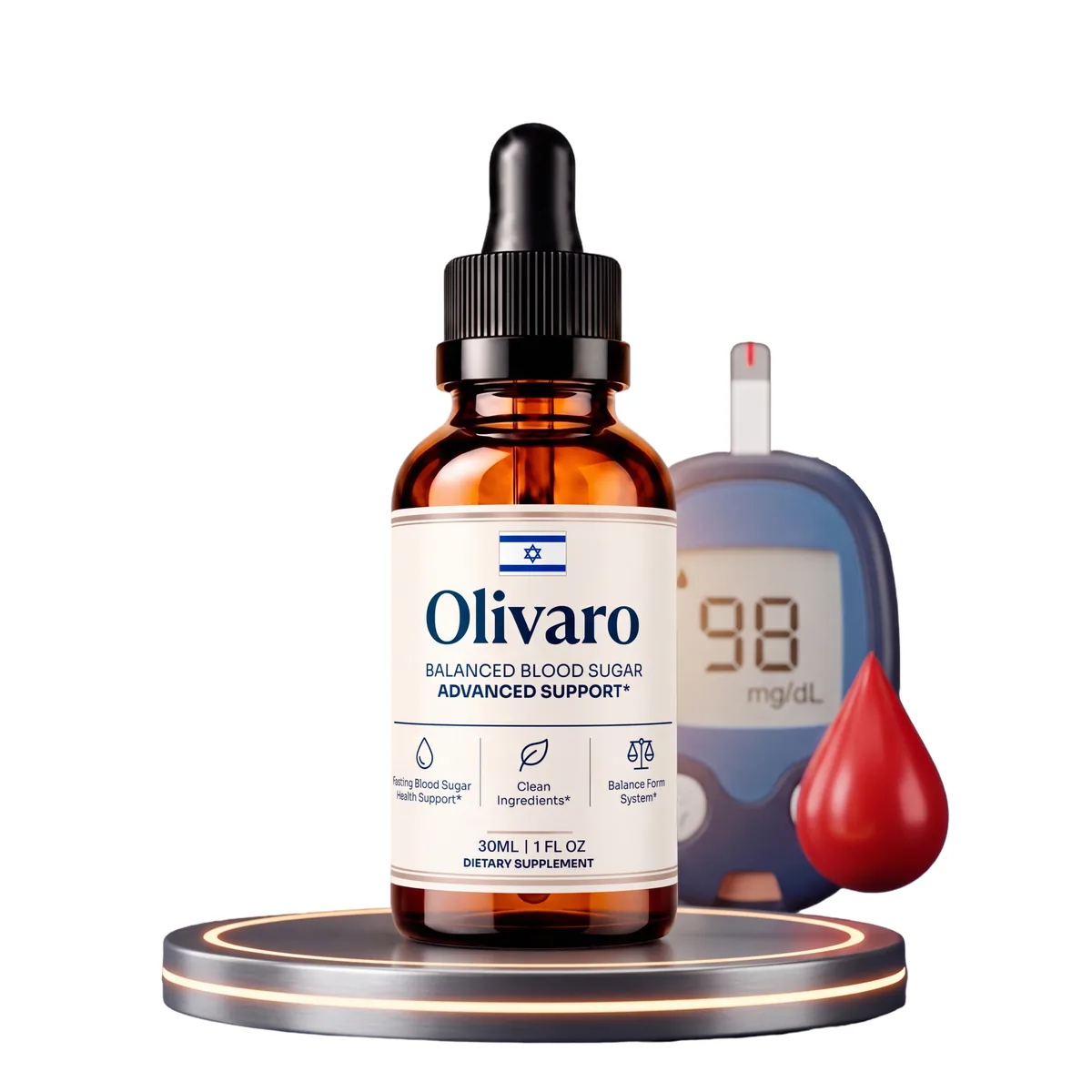
Related review
Asked about supplements after a diagnosis?
Olivaro is a liquid formula sold for blood sugar support. Our review lays out its label, price and refund terms, plus the medicine cautions to raise with your doctor first.
Frequently Asked Questions
I’ve been diagnosed with prediabetes, now what should I do first?
Start with the easiest, highest-impact change: stop drinking sugar. Replace sodas, juices, and sweetened coffees with water or unsweetened tea. Then swap refined carbs for whole grains and add a short walk after dinner. You don’t need to do everything at once, layer one new habit per week, as outlined in the 30-day plan above.
How long does it take to reverse prediabetes?
It varies, but many people see meaningful improvements in fasting glucose within weeks and a measurable A1C drop by their next test, usually around three months. Consistency matters far more than intensity. Sarah Mitchell moved her A1C from 6.1 to 5.4 through steady lifestyle changes, not an extreme overhaul.
Do I have to lose weight to fix my prediabetes?
Not necessarily. A 2026 study in Nature Medicine found about 1 in 4 people reversed prediabetes through lifestyle changes without significant weight loss, and gained the same protection against type 2 diabetes. Focus on the habits; for many people, healthier body composition follows on its own.
Can I still eat carbs with prediabetes?
Yes. The goal isn’t zero carbs, it’s better carbs. Choose whole grains, legumes, vegetables, and fruit over refined flour and added sugar, and pair carbs with protein, fat, or fiber to soften the blood sugar response. Our what to eat guide shows you how.
Should I buy a blood sugar meter?
It’s optional but helpful. A basic home glucose meter lets you see how specific meals affect your body and gives you feedback between lab tests. It’s not required to succeed, but many people find it motivating once they see their numbers respond to the changes they’re making.
Is prediabetes serious, or can I ignore it?
It’s a genuine warning sign, but it’s also the best possible time to act. Without changes, many people with prediabetes progress to type 2 diabetes. With the kind of lifestyle steps in this plan, a large share prevent or delay it, the NIDDK and American Diabetes Association both emphasize how effective early action can be.
Your Next 30 Days Start Today
You can’t change your diagnosis, but you have enormous power over what happens next. The plan above isn’t about willpower or perfection, it’s about stacking small, livable habits until your body quietly heals itself.
Pick Week 1’s first step right now: pour out the soda, fill the glass with water, and circle a follow-up date on your calendar. That’s the whole secret. You begin, then you continue. Welcome to the path back, Sarah and the rest of us have walked it, and so can you.