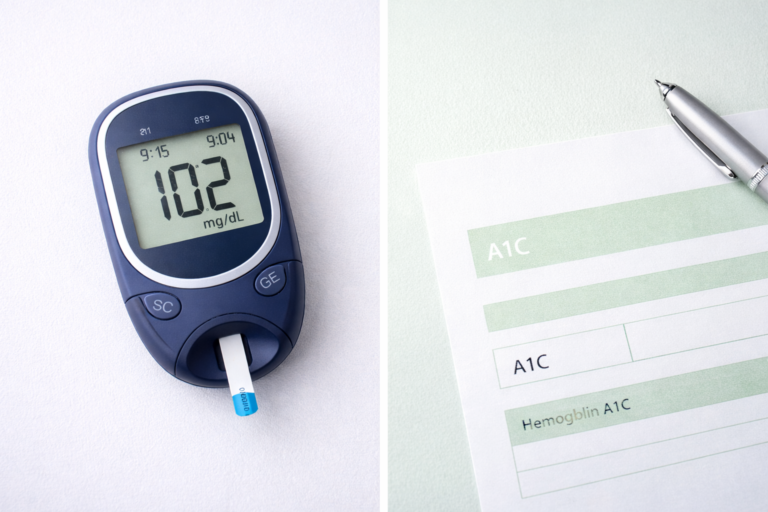

Prediabetes A1C Levels Explained: What Your Numbers Actually Mean
Prediabetes A1C Levels Explained: What Your Numbers Actually Mean
You walked out of your doctor’s office with one number and a vague sentence: “Your A1C is a little high. Let’s keep an eye on it.” Now you’re sitting in your car, staring at the lab printout, wondering what 5.9 or 6.1 actually means for your future.
I’ve been exactly where you are. When my own A1C came back at 6.1%, no one explained what each tenth of a point represented, how fast things could move, or what realistic target I should aim for. So I learned it the hard way — and then I brought it down to 5.4%.

This guide breaks the prediabetes A1C range down into plain English, so you leave understanding precisely what your numbers mean and what to do next.
Quick Answer: An A1C between 5.7% and 6.4% means you have prediabetes. Below 5.7% is normal; 6.5% or higher (on two tests) is type 2 diabetes. A1C reflects your average blood sugar over the past 2–3 months, so a 6.1% sits squarely in the middle of the prediabetes range and signals it’s time to act — not panic. With consistent diet, movement, and lifestyle changes, many people return to under 5.7% within a few months.
What Is A1C, and Why Doctors Use It
A1C (also written HbA1c) measures the percentage of your red blood cells that have sugar attached to them. Because red blood cells live about three months, your A1C is essentially a 90-day rolling average of your blood sugar.
That’s why doctors love it. A single fasting glucose test only shows your blood sugar at one moment — first thing in the morning, after you skipped breakfast. A1C can’t be gamed by one good night. It tells the longer story.
According to the CDC, about 98 million U.S. adults — roughly 1 in 3 — have prediabetes, and more than 80% don’t even know it. If you’re reading this, you’re already ahead of most of them, because you know your number.
The Prediabetes A1C Range: What the Numbers Mean
Here’s the framework the American Diabetes Association and most U.S. doctors use. Memorize these three bands and you’ll never be confused at a lab visit again.
| A1C Result | Category | What It Means |
|---|---|---|
| Below 5.7% | Normal | Healthy blood sugar control |
| 5.7% – 6.4% | Prediabetes | Higher-than-normal blood sugar; elevated risk for type 2 diabetes |
| 6.5% or higher | Diabetes | Type 2 diabetes (confirmed on two separate tests) |
Prediabetes is a wide range. A 5.7% and a 6.4% are both “prediabetes,” but they are very different starting points. That’s where understanding the tenths matters.
What Each Tenth of a Point Represents
A1C isn’t a pass/fail switch — it’s a slider. Each tenth of a percent roughly corresponds to a shift in your estimated average glucose (eAG). Here’s an approximate map:
| A1C | Estimated Average Glucose | Where You Stand |
|---|---|---|
| 5.6% | ~114 mg/dL | Just under the line — keep it there |
| 5.7% | ~117 mg/dL | Lower edge of prediabetes |
| 6.0% | ~126 mg/dL | Mid-range prediabetes |
| 6.1% | ~128 mg/dL | Mid-range (where my own journey started) |
| 6.4% | ~137 mg/dL | Upper edge — one step from diabetes |
The lesson: a 5.7% is a gentle nudge, while a 6.4% is a loud alarm. The closer you sit to 6.5%, the more urgency your plan needs. But every band is reversible with the right habits.
For a deeper look at the full diagnostic picture, see our complete guide to prediabetes.
A1C vs. Fasting Glucose: Why Your Two Numbers May Disagree
Many people leave the doctor with two numbers — an A1C and a fasting glucose — and they don’t always tell the same story. That’s normal, because they measure different things.
- Fasting glucose is a snapshot: your blood sugar right now, after 8+ hours without food.
- A1C is a movie: your average blood sugar over the past 2–3 months.
Here’s how the prediabetes ranges line up across the two tests:
| Test | Normal | Prediabetes | Diabetes |
|---|---|---|---|
| A1C | Below 5.7% | 5.7% – 6.4% | 6.5%+ |
| Fasting Glucose | Below 100 mg/dL | 100 – 125 mg/dL | 126+ mg/dL |
What if your fasting glucose looks fine but your A1C is high? That often means your blood sugar spikes after meals (postprandial) even though your morning number is okay. The reverse can also happen. This is why doctors rely more on A1C for the bigger picture. The NIH’s NIDDK has a clear breakdown of how the A1C test works if you want the technical detail.
One important caveat: A1C can read falsely high or low in people with certain conditions (anemia, recent blood loss, some hemoglobin variants, pregnancy). If your two numbers wildly disagree, ask your doctor whether one of these factors applies to you.
How Fast Does Prediabetes Progress?
This is the question that keeps people up at night, and the honest answer is reassuring: prediabetes is slow, and it’s a fork in the road, not a one-way street.
Research suggests that, without any intervention, roughly 5–10% of people with prediabetes progress to type 2 diabetes each year. Over time that adds up — but “without intervention” is the key phrase. With consistent lifestyle change, a large share of people move back toward normal instead.
The direction your number moves depends far more on your habits over the next 6–12 months than on the exact tenth you started at. A 6.1% trending down beats a 5.8% trending up every single time.
If you’re newly diagnosed and want a structured starting point, our just-diagnosed 30-day plan walks you through the first month step by step. And yes — you can absolutely reverse prediabetes naturally; 2026 research even shows it’s possible without significant weight loss.
Realistic Targets: Getting Back Under 5.7%
The finish line is simple to state: an A1C below 5.7%. But because A1C is a 90-day average, you won’t see change overnight. Here’s a realistic timeline.
A Sensible Timeline
- Weeks 1–6: Daily glucose starts improving, but your A1C hasn’t caught up yet. This is the “trust the process” phase.
- Month 3: Your first re-test can show meaningful movement — often 0.2–0.5 points if you’ve been consistent.
- Month 6: Many people see their A1C cross back under 5.7% with sustained changes.
When I was at 6.1%, it took me a few months of steady effort — not perfection — to reach 5.4%. The wins that moved my number most were the unglamorous ones: walking after meals, eating protein and fiber before carbs, and protecting my sleep.
The Habits That Move the Number
- Walk after meals. Even 10–15 minutes blunts the post-meal spike. See walking after meals and blood sugar.
- Build smarter plates. Fiber, protein, and healthy fats slow glucose absorption. Start with our prediabetes diet guide.
- Fix your breakfast. The first meal sets the tone; low-glycemic breakfast choices help.
- Sleep and stress. Poor sleep and chronic stress raise blood sugar directly — see stress, sleep, and prediabetes.
- Consider evidence-based support. Some people add targeted supplements alongside diet and movement; start with our evidence-based breakdown of the best supplements to lower A1C, then compare specific products in our roundup of the best blood sugar supplements for 2026.
Diet and movement are the foundation. Supplements like berberine, cinnamon, magnesium, and vitamin D show modest, evidence-backed benefits in some people — but they support a good plan, they don’t replace it. A 2021 meta-analysis found berberine can lower fasting glucose comparably to some oral agents with low hypoglycemia risk, and a 2020 cohort of over 43,000 people linked higher vitamin D status with lower diabetes risk in prediabetics. You can read the underlying studies on PubMed.
What to Ask at Your Next Appointment
Don’t leave the next visit with one vague number. Bring questions. Ask what your exact A1C is, how it compares to last time, whether your fasting glucose agrees, and when you should re-test. Our list of 6 questions to ask your doctor about prediabetes gives you a printable starting point.
Re-testing every 3–6 months is typical for prediabetes, because anything more frequent won’t reflect a full A1C cycle. Mark your calendar so you actually see your progress.
Key Takeaways
- 5.7%–6.4% A1C = prediabetes. Below 5.7% is normal; 6.5%+ is diabetes.
- A1C is a 90-day average, while fasting glucose is a single-moment snapshot — they can disagree.
- Each tenth matters: a 5.7% is a gentle nudge; a 6.4% is a loud alarm.
- Progression is slow and reversible — your habits over the next 6–12 months matter more than your starting number.
- The goal is back under 5.7%, often achievable in 3–6 months with consistent diet, movement, sleep, and stress management.
Frequently Asked Questions
Is an A1C of 5.7 bad?
An A1C of 5.7% sits at the very bottom edge of the prediabetes range. It’s not an emergency, but it is a clear early warning. The good news is that it’s the easiest band to reverse — small, consistent changes can often pull it back under 5.7% within a few months.
What does an A1C of 6.1 mean?
A 6.1% is mid-range prediabetes, roughly equivalent to an average blood sugar of about 128 mg/dL. It signals it’s time to act with diet, movement, and lifestyle changes — but it is fully reversible. This is exactly where Sarah Mitchell started before bringing her A1C down to 5.4%.
How quickly can I lower my A1C?
Because A1C reflects 2–3 months of blood sugar, you typically need at least 8–12 weeks of consistent change before a re-test shows real movement. Many people see a 0.2–0.5 point drop at the 3-month mark and cross back under 5.7% by month 6.
Which is more accurate, A1C or fasting glucose?
Neither is “more accurate” — they measure different things. Fasting glucose is a snapshot; A1C is a long-term average. Doctors generally favor A1C for the bigger picture, but they often use both together. If your two numbers strongly disagree, ask your doctor whether anemia or another condition is affecting your A1C reading.
Can prediabetes go away on its own?
Prediabetes rarely improves without changes — left alone, about 5–10% of people progress to diabetes each year. But with consistent diet, exercise, sleep, and stress management, a large share of people return to normal A1C levels. The trajectory is in your hands.
How often should I get my A1C tested with prediabetes?
Most doctors recommend re-testing every 3–6 months for prediabetes. Testing more frequently won’t capture a full A1C cycle, so it won’t accurately reflect your progress. Mark your re-test date so you can actually measure your improvement.
Written by Sarah Mitchell, who reversed her own prediabetes from an A1C of 6.1% to 5.4% through natural, sustainable changes.
Editor’s Recommendation
GlucoTrust users report supporting healthy A1C levels naturally — GlucoTrust is our top-rated blood sugar supplement.
15 research-referenced ingredients · 180-day money-back guarantee · GMP-certified
See also: Prediabetes A1C Range 5.7–6.4: What Your Numbers Really Mean (2026)