Prediabetes in Men: The Silent Signs Guys Ignore
Prediabetes in Men: The Silent Signs Guys Ignore

Quick Answer: Prediabetes in men means blood sugar is higher than normal but not yet diabetes, defined as an A1C of 5.7% to 6.4%. About 41% of U.S. men have it, yet only around 16% know. Early signs men often miss include low energy, stubborn belly fat, low libido, and erectile dysfunction. Most men can reverse it naturally.
Key Takeaways
- Men carry more risk and less awareness. About 41% of U.S. men have prediabetes versus 32% of women, but only ~16% of men know it.
- The first signs in men are often silent. Afternoon fatigue, belly fat, low drive, and erectile dysfunction can appear before any “classic” symptom.
- ED is a real early warning. In one study, 23% of men with erectile dysfunction had undiagnosed prediabetes.
- Testosterone and blood sugar are linked. Higher blood sugar is tied to lower testosterone, which feeds the same symptoms.
- The diagnosis is simple. A1C, fasting glucose, or an oral glucose tolerance test confirms it.
- Most men reverse it without medication through diet, strength training, walking, sleep, and stress control.
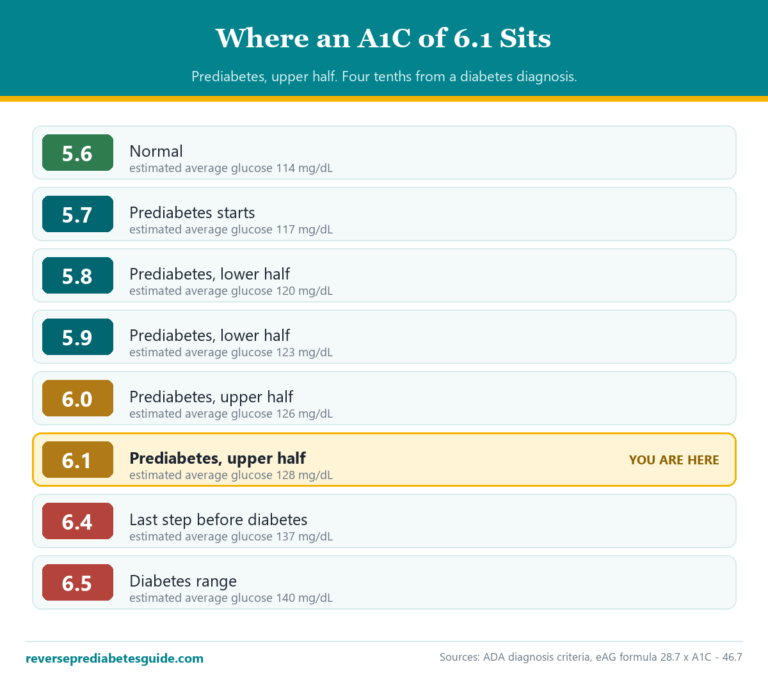
A reader named Greg wrote to me last year. He was 58. For two years he had brushed off the same things every busy man brushes off. The 3 p.m. crash he blamed on his job. The belly that stayed no matter what. The drop in his sex life he chalked up to “getting older.” Then his ED got bad enough that he finally saw a doctor, and the doctor ran a blood panel. His A1C came back at 6.1%. That is prediabetes in men in a nutshell: a quiet number doing loud damage. He had no idea the two things were connected.
I’ve been close to this story. When I reversed my own prediabetes, taking my A1C from 6.1% down to 5.4%, the men who emailed me asked the questions out loud that they would never ask their own doctor. So I want to be clear with you up front. If you’re a man reading this with a knot in your stomach, the problem is not you. Nobody ever taught us that the body’s metabolic alarms in men look different. This guide fixes that, calmly, with the numbers and the science to back it.
What Is Prediabetes in Men?
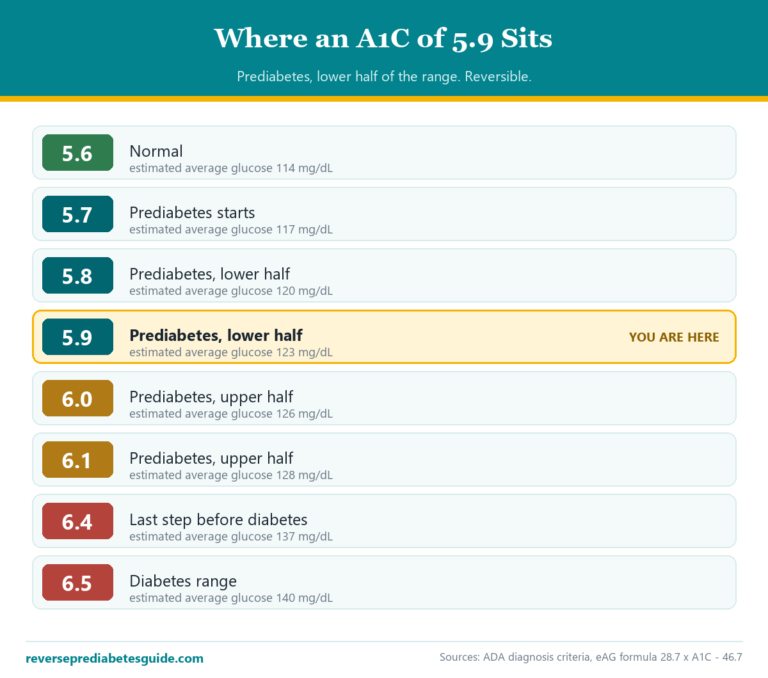
Prediabetes in men is a condition where blood sugar runs higher than normal but has not crossed into type 2 diabetes. Doctors define it as an A1C between 5.7% and 6.4%, a fasting glucose of 100 to 125 mg/dL, or a 2-hour glucose of 140 to 199 mg/dL. It is a warning stage, and for most men it is reversible.
The biology is the same in men and women. Your cells start resisting insulin, so sugar lingers in your blood instead of fueling your muscles. What differs is how the warning shows up and how often it gets caught. According to the CDC, roughly 1 in 3 American adults has prediabetes, and the large majority don’t know it. If you want the full diagnostic picture from the ground up, start with our complete guide to prediabetes.
Here is the part nobody emphasizes for men: prediabetes is a fork in the road, not a sentence. The number you have today tells you where you stand. What you do over the next six months decides where it goes.
Why Men Are at Higher Risk Than Women
Men are at higher risk of prediabetes than women, and they are also less likely to know they have it. CDC data shows about 41% of U.S. men have prediabetes compared to 32% of women, while only around 16% of men are aware of their condition versus roughly 19% of women. Men carry more of the risk and catch it later, a dangerous combination.
The 41% vs 32% gap
That gap is not a rounding error. It means a man walking into a room of his peers is meaningfully more likely to be sitting in the prediabetes range than a woman the same age. Part of it is where men store fat. Part of it is that men skip checkups. Here is how the numbers line up side by side.
| Metric | Men | Women |
|---|---|---|
| Prevalence of prediabetes | ~41% | ~32% |
| Aware they have it | ~16% | ~19% |
| Defined by fasting glucose | 100 to 125 mg/dL | 100 to 125 mg/dL |
| Defined by A1C | 5.7% to 6.4% | 5.7% to 6.4% |
Source: CDC National Diabetes Statistics Report and American Diabetes Association.
Belly fat, visceral fat, and insulin resistance
Men tend to store fat in the belly, and that specific fat is the problem. Visceral fat wraps around your liver and other organs and pumps out chemicals that drive insulin resistance. This is why a man can look “not that overweight” and still be prediabetic. The dad bod does real metabolic work. It pumps out inflammatory signals that push insulin resistance higher.
The encouraging flip side is that visceral fat is also the first fat to respond when you change your habits. You do not need to become lean to move your numbers. You can read why in our piece on why you don’t need to lose much weight to reverse prediabetes.
The awareness gap: why men find out later
Men go to the doctor less, screen less, and explain away symptoms more. The result is that prediabetes in men is often found by accident, during a visit for something else, or only once a real problem like ED forces the appointment. The longer it stays hidden, the more time it has to creep toward type 2 diabetes. Knowing your number is the single biggest advantage you can give yourself, and you already have it within reach.
Early Signs of Prediabetes in Men (The Ones Guys Ignore)
Signs of prediabetes in men include increased thirst, frequent urination, afternoon fatigue, and slow-healing wounds. Men also experience gender-specific signals that often appear first: erectile dysfunction, low libido, reduced energy, and stubborn belly fat linked to low testosterone. Many men dismiss these as normal aging, which delays diagnosis for years.

Here is the trap. The male-specific signs of prediabetes look exactly like the things we have all been told to expect from “just getting older.” So we accept them. Let me put the two lists next to each other.
| Signs men often dismiss | Classic signs of prediabetes |
|---|---|
| Erectile dysfunction or weaker erections | Increased thirst |
| Low libido and low drive | Frequent urination, especially at night |
| Afternoon energy crashes and brain fog | Slow-healing cuts and wounds |
| Belly fat that won’t budge | Blurred vision |
| Feeling “off” or unmotivated | Dark velvety skin patches (acanthosis nigricans) |
Erectile dysfunction as an early warning sign
Erectile dysfunction can be one of the earliest visible signs of prediabetes in men. High blood sugar quietly damages the small blood vessels and nerves that erections depend on, and those vessels are often the first to show stress. In one study, prediabetes was found in 23% of men with erectile dysfunction who had no idea they had it (PubMed).
Read that again. Nearly one in four men who walked in for an ED issue were carrying undiagnosed prediabetes. I want to say this plainly, because the shame around this keeps men silent: ED is not a personal failure. It is often a vascular and metabolic signal. Treating it as a health readout instead of a character flaw is what gets men to the doctor in time.
Low testosterone, low libido, low drive
Low testosterone often travels with prediabetes, and each one can worsen the other. Research links impaired blood sugar control to lower testosterone levels, which feed the exact symptoms men blame on age: low libido, low energy, low motivation, and more belly fat that in turn raises blood sugar further. It can become a loop.
That connection is well documented. A study in the NIH library found prediabetes was associated with an increased risk of testosterone deficiency (PMC). The good news in that loop is that it runs both directions. When men improve their blood sugar, many report their energy, drive, and mood improve alongside it.
Afternoon fatigue and brain fog
The mid-afternoon crash is one of the most ignored signals there is. When your cells resist insulin, your energy delivery gets erratic. You spike after lunch, then sag hard a couple of hours later, reaching for coffee or sugar to climb back out. If your 3 p.m. is a wall you hit every single day, that pattern is worth a blood test.
Belly weight that won’t budge
If you eat roughly the same as you did at 40 but the belly keeps growing and refuses to leave, insulin resistance is a likely culprit. High insulin tells your body to store fat, especially around the middle. This is why the belly often shrinks once blood sugar improves, even before the scale moves much.
The classic signs (thirst, frequent urination, slow healing, dark patches)
The textbook symptoms still matter. Increased thirst, peeing more often (especially getting up at night), cuts that heal slowly, blurry vision, and dark velvety patches of skin on the neck or armpits all point toward elevated blood sugar. For a complete printable rundown, use our prediabetes symptoms checklist. The catch is that in men these classic signs often arrive late, after the silent ones have already been knocking for a while.
Prediabetes, Testosterone, and Erectile Function: The Connection No One Explains
Prediabetes, low testosterone, and erectile dysfunction are linked through the same root cause: high blood sugar damages blood vessels and disrupts hormones. Elevated glucose harms the small vessels needed for erections and is associated with lower testosterone, which reduces libido and energy. Because these systems share one cause, improving blood sugar can improve all three together.
Think of it as one engine with three warning lights. Your cardiovascular system, your hormones, and your sexual function all run on healthy blood flow and stable blood sugar. When glucose stays high, all three lights start flickering. Most men only notice the light they’re most worried about and miss that they share a wire.
This is the empowering part. Because the cause is shared, the fix is shared too. The same habits that pull your A1C down also tend to support testosterone and circulation. You are not chasing three separate problems. You are treating one upstream issue.
How Men Get Diagnosed: The Tests That Matter
Men get diagnosed with prediabetes through three simple blood tests: an A1C, a fasting glucose test, or an oral glucose tolerance test (OGTT). An A1C of 5.7% to 6.4% indicates prediabetes, as does a fasting glucose of 100 to 125 mg/dL. No fasting is needed for the A1C, which makes it the easiest first step for most men.
You do not need to navigate this blindfolded. Here is what each test tells you:
- A1C. A 90-day average of your blood sugar. Prediabetes is 5.7% to 6.4%. This is the number most doctors lead with. We break it down fully in prediabetes A1C levels explained.
- Fasting glucose. A snapshot taken after 8+ hours without food. Prediabetes is 100 to 125 mg/dL.
- Oral glucose tolerance test (OGTT). You drink a sugar solution and get tested 2 hours later. A 2-hour result of 140 to 199 mg/dL signals prediabetes.
If you have any of the silent signs above, especially ED, ask your doctor directly for a blood sugar panel. You do not have to explain why in detail. You are allowed to simply say you want your A1C and fasting glucose checked. That one request is how Greg finally connected his dots.
Can Men Reverse Prediabetes Naturally?
Yes, most men can reverse prediabetes naturally without medication. Losing modest weight, cutting refined carbs, adding strength training and daily walking, improving sleep, and managing stress can return blood sugar to a normal range. Many men see their A1C drop below 5.7% within three to six months when they stay consistent.

Men actually have an advantage here, and it is muscle. The more muscle you carry and use, the more places your body has to park blood sugar instead of letting it float in your bloodstream. That single fact shapes the whole plan. You can dig deeper into the evidence in can prediabetes be reversed naturally.
Diet shifts that work for men
You don’t need a perfect diet. You need a steadier one. The moves that work best for men are simple and filling: lead your plate with protein and vegetables, push the refined carbs and sugary drinks to the side, and stop drinking your calories. Swap the soda and juice for water. Build meals around real food you actually like so the plan survives a Tuesday.
One honest add-on note. Diet and exercise do the heavy lifting, always. Some men choose to add a blood-sugar support supplement on top of those changes. If you are exploring that route, my Olivaro review reads one liquid formula’s full label, kit prices and refund terms, so you know what you would be buying. Treat any supplement as a possible complement, never a cure and never a replacement for food, movement, or your doctor. If you want the wider evidence first, read our breakdown of the best supplements to lower A1C before spending a dollar.
Strength training plus walking (men respond strongly to muscle)
This is where men have leverage. Strength training builds muscle, and muscle is a glucose sponge. Two or three short sessions a week of basic movements, push, pull, squat, carry, change how your body handles sugar. Pair that with walking, especially a 10 to 15 minute walk after your biggest meal, and you blunt the post-meal spike directly. Here is the science on walking after meals and blood sugar. You don’t need a marathon. You need consistency.
Sleep, stress, and testosterone
Short sleep and chronic stress raise blood sugar directly and drag testosterone down at the same time. If you are sleeping five hours and running on adrenaline, your numbers will fight you no matter how clean you eat. Protecting sleep is not soft advice. For men it is one of the highest-leverage moves there is, because it touches blood sugar, hormones, and hunger all at once. We cover the mechanics in stress, sleep, and prediabetes.
A Realistic 4-Week Starting Point for Men
A realistic first month focuses on a few repeatable habits rather than a total life overhaul. Walk after your largest meal, add two short strength sessions a week, lead each plate with protein and vegetables, cut sugary drinks, and aim for seven hours of sleep. Small, consistent wins move blood sugar more than a perfect week followed by quitting.
Here is a simple way to stage it so you don’t burn out:
- Week 1. One change only. Walk 10 to 15 minutes after dinner every night.
- Week 2. Keep the walk. Add protein and vegetables to the front of every plate and swap sugary drinks for water.
- Week 3. Keep both. Add two 20-minute strength sessions, even bodyweight at home.
- Week 4. Keep all of it. Protect your sleep and lock in a consistent bedtime.
For a fully mapped version with daily structure, follow our just-diagnosed 30-day plan. And if you’re worried about how long this takes, our guide on how long it takes to reverse prediabetes gives you honest timelines.
When to See Your Doctor
See your doctor if you have signs of prediabetes, a family history of diabetes, or risk factors like a larger waistline, high blood pressure, or persistent erectile dysfunction. Ask directly for an A1C and fasting glucose test. If you are already diagnosed, see your doctor before starting any supplement or making major changes, and re-test your A1C every three to six months.
This guide is education, not a diagnosis. Anything that feels sudden or severe, including chest symptoms, vision changes, or new numbness, deserves prompt medical attention rather than a wait-and-see approach. Your doctor is your partner in this, and the conversation is easier than the fear of it.
Frequently Asked Questions
What are the first signs of prediabetes in men?
The first signs of prediabetes in men are often the silent ones: afternoon fatigue, stubborn belly fat, low energy, low libido, and erectile dysfunction. Classic signs like increased thirst, frequent urination, and slow-healing wounds can appear later. Many men dismiss the early signals as normal aging, which delays diagnosis.
Is prediabetes more common in men than women?
Yes. According to CDC data, about 41% of U.S. men have prediabetes compared to 32% of women. Men are also less likely to know they have it, with only about 16% of men aware of their condition versus roughly 19% of women. Men carry more risk and catch it later.
Can prediabetes cause erectile dysfunction or low testosterone?
Yes. Prediabetes can contribute to both. High blood sugar damages the small blood vessels needed for erections and is linked to lower testosterone, which reduces libido and energy. In one study, 23% of men with erectile dysfunction had undiagnosed prediabetes, making ED a meaningful early warning sign.
What A1C level is prediabetes for men?
An A1C of 5.7% to 6.4% indicates prediabetes for men. Below 5.7% is normal, and 6.5% or higher on two tests is type 2 diabetes. The A1C reflects your average blood sugar over the past two to three months and needs no fasting, which makes it an easy first test.
Can men reverse prediabetes without medication?
Yes, most men can reverse prediabetes without medication. Diet changes, strength training, daily walking, better sleep, and stress management can return blood sugar to a normal range. Many men see their A1C drop below 5.7% within three to six months when they stay consistent with these habits.
How long does it take a man to reverse prediabetes?
Many men see meaningful change in three to six months, since A1C reflects roughly three months of blood sugar. Daily glucose can improve within weeks, but the A1C re-test usually shows real movement by month three. See our full timeline in how long it takes to reverse prediabetes.
Does prediabetes cause belly fat, or does belly fat cause prediabetes?
It works both ways. Visceral belly fat drives insulin resistance, which raises blood sugar, and high insulin in turn tells the body to store more belly fat. This loop is why the belly often shrinks once blood sugar improves, sometimes before the scale changes much.
I’ll be honest with you, man to reader. I’m Sarah Mitchell, and I reversed my own prediabetes from an A1C of 6.1% to 5.4% with the same unglamorous habits I just described. The men who write to me are almost never afraid of the work. They’re afraid no one will take their symptoms seriously, or that the ED conversation makes them less of a man. It doesn’t. Your body sent you a signal early, while you still have every tool to answer it. That’s not a failure. That’s a head start. Read your number, pick one habit this week, and start.