Blood Sugar After Eating: Normal Ranges and Chart
Blood Sugar After Eating: Normal Ranges and Chart
Last updated: June 30, 2026 · Fact-checked against published guidance from the ADA, CDC, and Mayo Clinic.
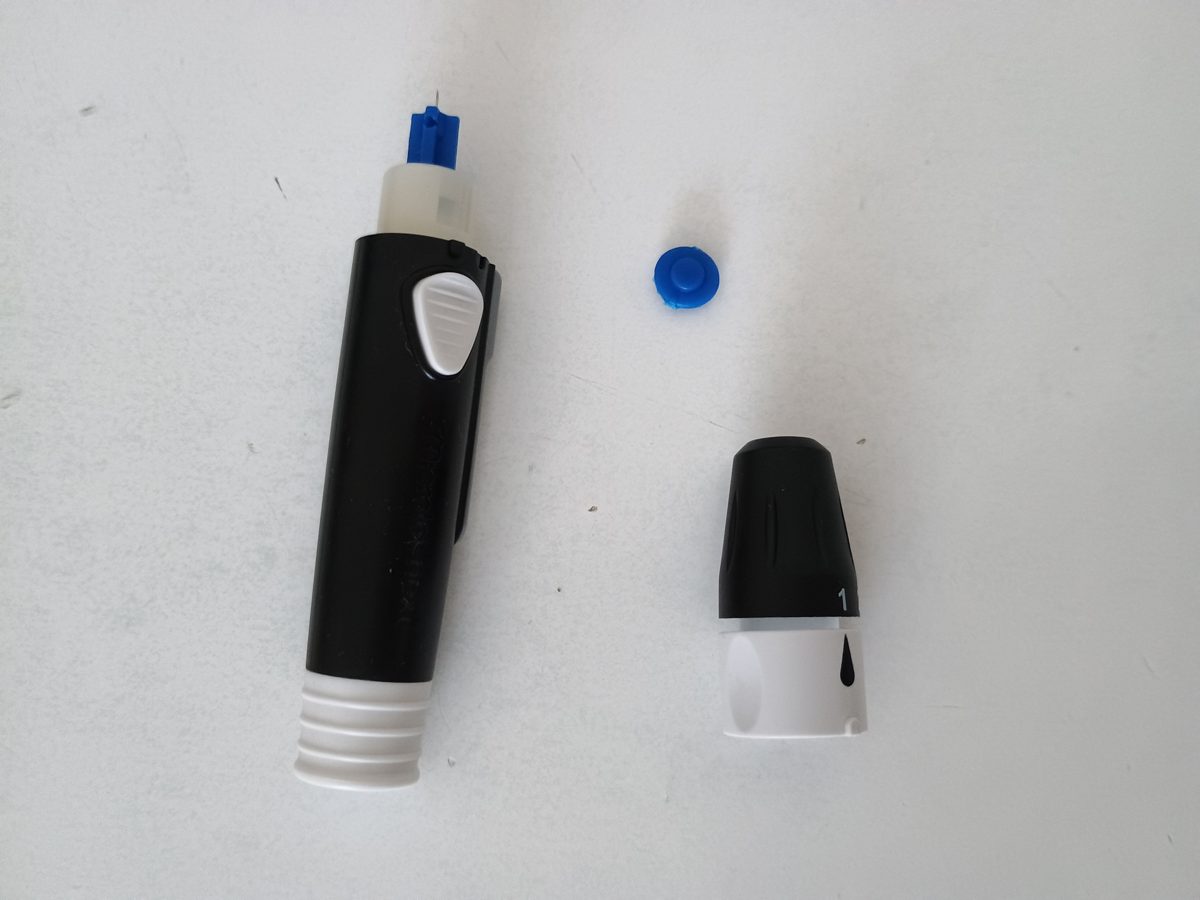
The morning I saw 180 on my meter is the morning everything changed for me. I had just eaten what I thought was a “healthy” breakfast, a bowl of oatmeal with a glass of orange juice on the side. Twenty minutes later I tested out of curiosity. The screen said 180, and my stomach dropped.
I had prediabetes, an A1C of 6.1% at the time, and I assumed I had done something wrong. I hadn’t. I had just eaten the right foods in the wrong order, with nothing to slow them down. Once I understood the physics of a post-meal spike, I could bend that number. The same breakfast, eaten differently and followed by a short walk, never spiked me like that again.
This guide gives you the exact ranges, what your reading actually means, and the three stackable moves that flattened my spikes. None of them cost a dollar.
Quick Answer: With prediabetes, normal blood sugar 2 hours after eating is below 140 mg/dL. A reading of 140 to 199 mg/dL falls in the prediabetes range, and 200 mg/dL or higher suggests diabetes, per the American Diabetes Association. Blood sugar usually peaks 30 to 60 minutes after you start eating, so a single high number means information, not failure.
Key Takeaways
- Normal is under 140 mg/dL at 2 hours. 140 to 199 is prediabetes; 200 or higher suggests diabetes (ADA).
- Blood sugar peaks 30 to 60 minutes after you eat, then should fall back under 140 within two hours.
- The order you eat your food changes the spike more than the food itself.
- A 10 to 15 minute walk after your biggest meal pulls glucose into your muscles and blunts the rise.
- Building a flatter plate (fiber plus protein plus fat alongside carbs) slows absorption.
- One high reading is not an emergency. Repeated spikes over 180 are worth addressing with diet, walking, and your doctor.
What Is Normal Blood Sugar After Eating With Prediabetes?
With prediabetes, blood sugar 2 hours after eating typically falls between 140 and 199 mg/dL. A normal reading is below 140 mg/dL, and 200 mg/dL or higher suggests diabetes, per ADA diagnostic criteria. One hour after eating, levels are usually higher and often peak around 30 to 60 minutes after your first bite.
The two-hour mark is the clinical standard for a reason. It is the point a healthy body has already cleared the meal and dropped back into a safe range. If your number is still high at two hours, that tells your doctor your body is slow to bring glucose down, which is the core problem behind prediabetes.
| Category | 2 hours after eating |
|---|---|
| Normal | Below 140 mg/dL |
| Prediabetes | 140 to 199 mg/dL |
| Diabetes | 200 mg/dL or higher |
These post-meal numbers are one half of the picture. Your A1C ties them together into a 90-day average, and the two are deeply connected. For how those spikes roll up into your long-term number, see our prediabetes A1C range explained guide.
1 hour after eating
One hour after eating, blood sugar is usually near its peak, so the number runs higher than the two-hour reading. There is no formal prediabetes cutoff for the one-hour mark, but many clinicians like to see it stay under roughly 160 to 180 mg/dL. A one-hour reading is most useful for spotting which specific meals spike you hardest.
| Timing | What a healthy response looks like | What suggests a problem |
|---|---|---|
| 1 hour after eating | Peaks, then starts falling; often under ~160 mg/dL | Climbing well past 180 mg/dL and staying there |
| 2 hours after eating | Back under 140 mg/dL | Still 140 to 199 (prediabetes) or 200+ (diabetes) |
2 hours after eating
The two-hour reading is the one your doctor cares about most, because it shows whether your body finished the job. A normal body clears the meal and sits below 140 mg/dL by then. With prediabetes, the peak is higher and the return is slower, which is exactly why the two-hour test is the official benchmark used in diagnosis.
Why Blood Sugar Spikes After Meals (The Simple Version)
Blood sugar spikes after meals because carbohydrates break down into glucose that floods your bloodstream faster than your insulin can move it into your cells. With prediabetes, your cells have grown resistant to insulin, so the glucose lingers in your blood longer. The result is a higher peak and a slower return to baseline.
Think of insulin as a key that unlocks your cells so sugar can get inside and become fuel. In prediabetes, the locks are stiff. Your pancreas still makes plenty of insulin, but the key turns slowly, so sugar piles up in the blood while it waits. That waiting room is your post-meal spike.
Recent research adds a useful twist. A 2025 study from Stanford Medicine found that people fall into different “spike subtypes,” meaning the same bowl of rice can spike two people very differently depending on their metabolism. The practical takeaway is empowering. Since your response is partly personal, your meter and a few habit changes can show you exactly what works for your body.
This matters because the spike is not a character flaw. It is physics and biology playing out in real time. And physics works in your favor the moment you know which levers to pull.
Is My Number Dangerous? How to Read Your Reading
A single high post-meal reading is rarely dangerous on its own. What matters is the pattern. An occasional number in the 140 to 199 mg/dL range after a heavy meal is expected with prediabetes. Repeated readings above 180, or any reading climbing toward 250 to 300, deserve a conversation with your doctor, not panic in the moment.
Here is how I learned to read my own numbers without spiraling. I stopped treating each reading as a grade and started treating it as feedback about that specific meal.
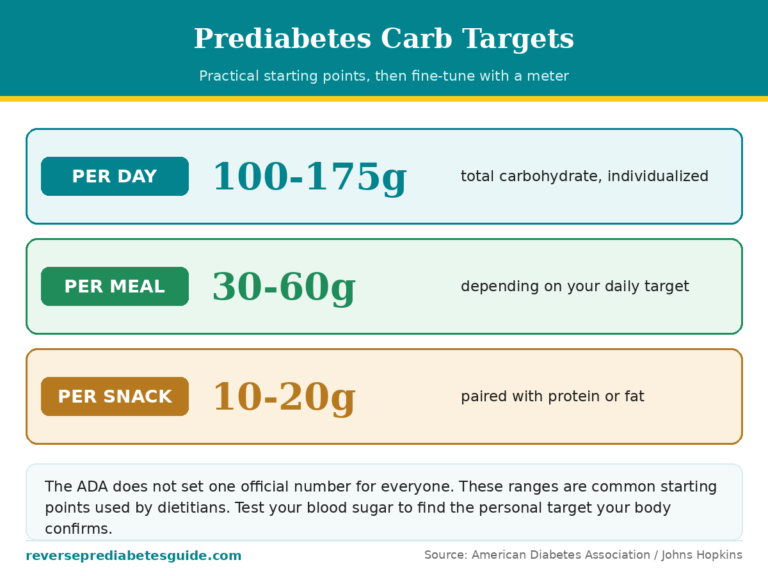
- Around 140 to 160 mg/dL at two hours: mild, common in prediabetes. A small tweak to the meal usually fixes it.
- Around 160 to 180 mg/dL: a real spike. This is the meal worth re-engineering with order, a walk, and better pairing.
- Around 180 to 199 mg/dL: a strong spike, still in range, but a signal to act consistently. This is where I started.
- 200 mg/dL or higher, repeatedly: this crosses into the diabetes range. Bring these readings to your doctor.
One number is a snapshot. Ten numbers are a story. Test the same meal a few times before you decide a food is “bad” for you, because variables like stress, sleep, and how fast you ate all move the needle.
How to Lower Your Blood Sugar Spike After Eating (3 Stackable Moves)
To lower a blood sugar spike after eating, eat fiber and protein before carbohydrates, then walk 10 to 15 minutes after your largest meal. Studies show meal order plus a short post-meal walk can cut a large glucose spike down to a mild rise. Pairing carbs with protein, fat, and fiber flattens the response even further.
The magic is that these three moves stack. Each one helps on its own, but together they can turn a sharp spike into a gentle bump without changing a single calorie. Here they are in the order of impact I felt.
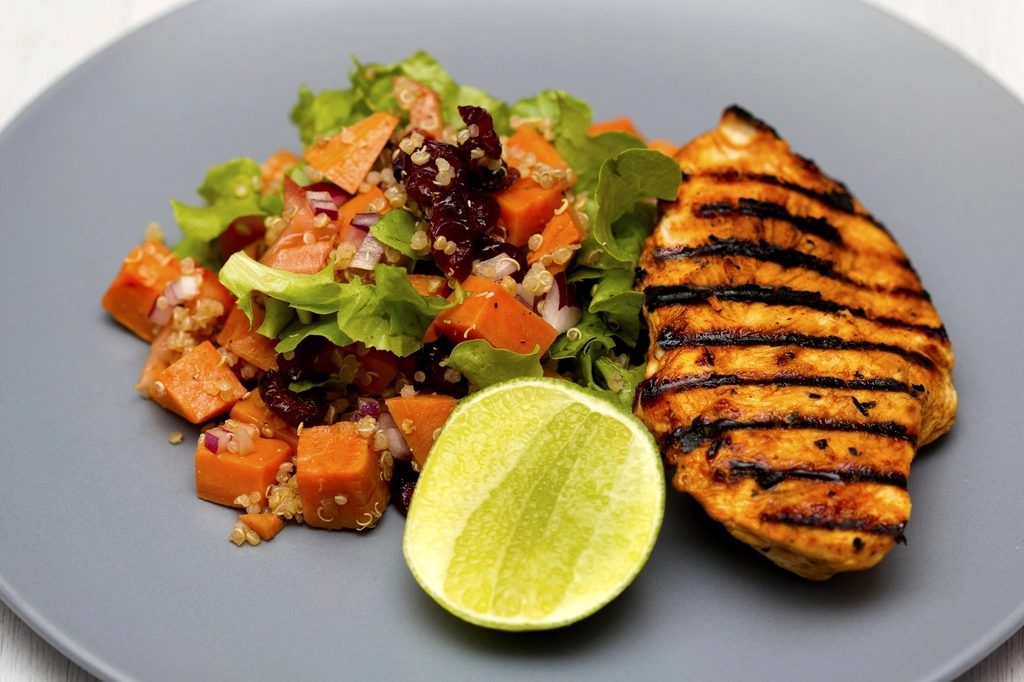
Move 1: Eat in the right order (fiber and protein before carbs)
Eating fiber and protein before carbohydrates can blunt your post-meal spike by a meaningful margin without removing any food from the plate. When vegetables and protein hit your stomach first, they form a kind of mesh that slows how quickly the carbs that follow are digested and absorbed. Slower absorption means a lower, gentler peak.
The practical version is simple. Start your meal with the salad or the vegetables. Then eat the protein, the chicken, fish, eggs, or beans. Save the rice, bread, or potato for last. You are eating the exact same meal, just in a sequence that gives your insulin time to keep up. This single change was the easiest win I ever made, because it asks nothing except patience for a few extra minutes.
If you want a deeper dive on which carbs are friendliest to begin with, our glycemic index breakfast foods breakdown shows you how to pick lower-impact options before order even comes into play.
Move 2: Walk 10 to 15 minutes after your biggest meal
A 10 to 15 minute walk after your largest meal lowers your blood sugar spike because contracting muscles pull glucose out of your bloodstream without needing insulin to do it. This is one of the most reliable, best-studied tricks in all of blood sugar management, and it is completely free.
The science here is strong. A review published in PMC found that even light walking after eating significantly reduced post-meal glucose compared to sitting still. UCLA Health reports that a short walk soon after a meal helps your body clear glucose right when it is flooding in. Timing matters. The walk works best within 15 to 30 minutes of finishing, while sugar is still rising.

You do not need a workout. A relaxed loop around the block counts. After dinner, the walk that I now treat as non-negotiable is the single habit I credit most for steadier numbers. For the full method and what the timing does, see our complete guide to walking after meals and blood sugar.
Diet order, walking, and plate building do the heavy lifting here, and they are where I would put your energy first. Some readers also add a glucose-support supplement on top of those habits. Treat it as a possible complement to the three moves above, never a replacement for them, and know that it will not erase a spike on its own.
Related review
Curious about a supplement too?
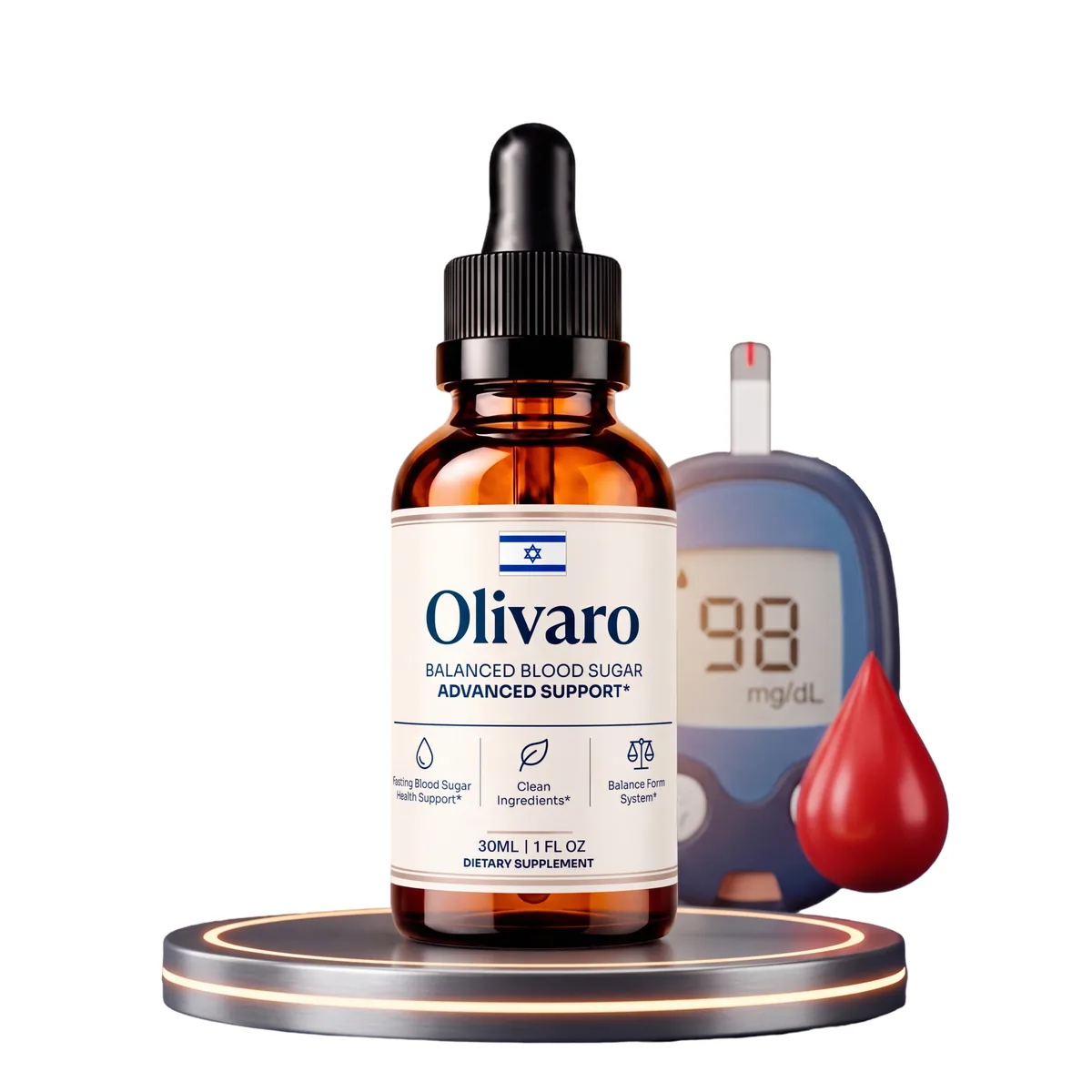
Food does the heavy lifting. If you also wonder about Olivaro, a liquid sold for blood sugar support, our review shows what its label lists, what it costs and how its guarantee works.
Move 3: Build a “flatter” plate (carb plus protein plus fat plus fiber)
Building a flatter plate means never letting a carbohydrate travel alone. When you pair carbs with protein, healthy fat, and fiber in the same meal, digestion slows across the board, and your blood sugar rises more gently. A naked carb, like juice or white toast by itself, spikes fastest because there is nothing to slow it down.
Picture your plate in quarters. Fill half with non-starchy vegetables for fiber, one quarter with protein, and one quarter with your carb, then add a thumb of healthy fat like olive oil, avocado, or nuts. That structure does the slowing for you, automatically, at every meal. My 180 breakfast became a gentle rise the day I added eggs and a handful of walnuts and swapped the juice for a whole orange.
For a week of plates already built this way, our 7-day prediabetes meal plan takes the guesswork out, and our prediabetes diet guide covers what to eat and what to avoid in plain language.
The Worst Foods for Post-Meal Spikes (and Easy Swaps)
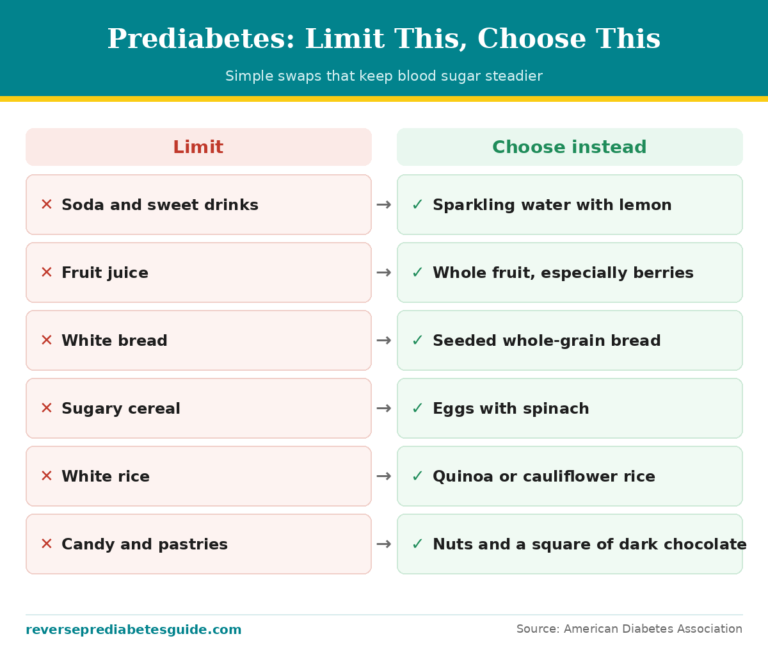
The worst foods for post-meal spikes are fast-digesting refined carbs eaten alone, like white rice, fruit juice, sugary cereal, and white bread. These flood your bloodstream with glucose almost immediately. The good news is that small swaps keep the meal you love while flattening the curve, and you rarely have to give anything up entirely.
Notice the pattern in the table below. The flatter swap is usually the same food with more fiber, more intact structure, or a protein partner attached. You are not banning carbs. You are slowing them down.
| Spikes more | Flatter swap |
|---|---|
| White rice | Quinoa or cauliflower rice, with protein first |
| Orange juice | A whole orange (the fiber stays intact) |
| Instant oatmeal with fruit on top | Steel-cut oats with nuts and cinnamon |
| White bread | Sourdough or seeded whole-grain, with eggs |
| Sugary cereal | Greek yogurt with berries and seeds |
One quiet pre-meal trick that some people swear by is a tablespoon of diluted vinegar before a carb-heavy meal, which a few small studies link to a slightly lower spike. It is no substitute for the three moves above, but if you want the evidence, see our look at apple cider vinegar and blood sugar.
Best Breakfasts and Meals That Don’t Spike
The best meals for steady blood sugar lead with protein, fat, and fiber, and treat carbs as a side rather than the star. Breakfast is the meal that sets the tone for the whole day, and it is also the one most people get wrong, because classic breakfast foods like cereal, toast, juice, and pastries are almost all fast carbs eaten alone.
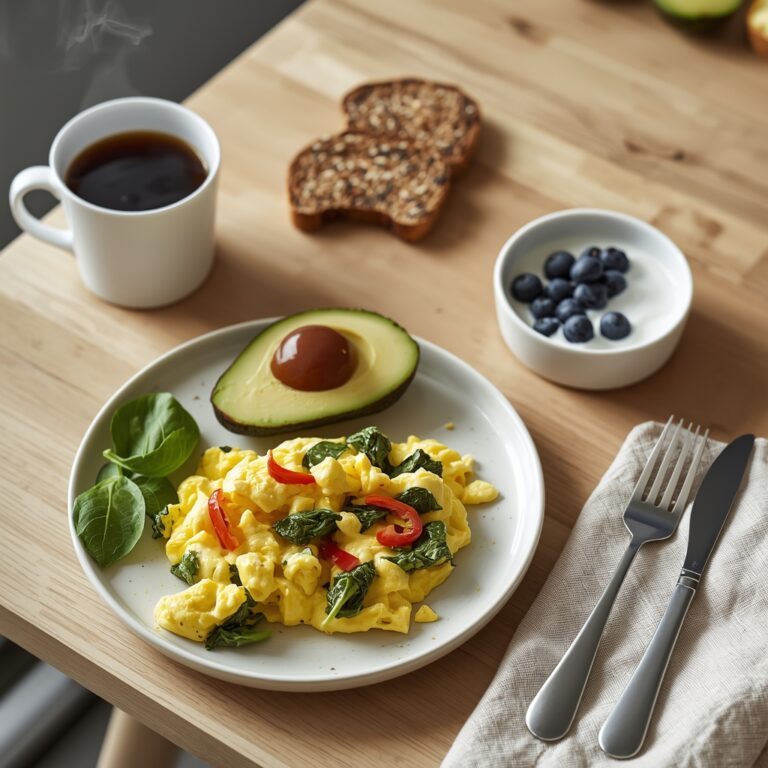
A spike-friendly breakfast might be eggs with sauteed spinach and half an avocado, or Greek yogurt with berries, chia, and a few walnuts. Both lead with protein and fat, so the small amount of carb that follows rides in gently. My old oatmeal-and-juice combo was a sugar delivery system in disguise. The fix was not cutting breakfast, it was rebuilding it.
For a full list of options that hold your numbers steady, see our best breakfast ideas for prediabetes. The timing of your meals can help too, which is why some readers explore intermittent fasting for prediabetes to give their bodies longer windows without a glucose load.
When to Test and What to Track
To catch your spikes, test your blood sugar 1 hour and 2 hours after the first bite of a meal, comparing the two to see how high you peak and how fast you recover. The one-hour reading shows your peak, while the two-hour reading shows your recovery. Tracking the same meal a few times reveals your true pattern, not a one-off fluke.
You have two main tools. A finger-stick meter is cheap and accurate at the moment you test, perfect for spot-checking specific meals. A continuous glucose monitor, or CGM, sits on your arm and shows the whole curve, including the peak you would otherwise miss between tests. Many people without diabetes now use a CGM for a few weeks just to learn which meals spike them, then go back to occasional finger sticks.
The Mayo Clinic has a clear primer on blood sugar testing if you want the technical detail. Whatever tool you use, jot down what you ate next to the number. Patterns hide in the notes, not in any single reading.
When a High Post-Meal Number Means See Your Doctor
See your doctor if your post-meal readings are repeatedly 200 mg/dL or higher, if you see numbers climbing toward 250 to 300, or if high readings come with symptoms like excessive thirst, frequent urination, blurred vision, or unexplained fatigue. These can signal that prediabetes is progressing toward type 2 diabetes and needs medical attention.
You should also check in with your doctor before making big changes if you already take medication for blood sugar or blood pressure, since walking and diet shifts can lower your numbers and your medication may need adjusting. The CDC notes that catching the shift early is what makes prediabetes so reversible. Your meter is a guide. It is not a replacement for your doctor.
If the bigger question on your mind is whether this is fixable at all, the answer is yes for most people. Our guide on whether prediabetes can be reversed naturally and our reverse prediabetes naturally in 30 days plan map out the path. Some readers also pair their plan with targeted nutrients, which we cover in our roundup of the best supplements for prediabetes.
Frequently Asked Questions
What is a normal blood sugar 2 hours after eating with prediabetes?
A normal blood sugar 2 hours after eating is below 140 mg/dL. With prediabetes, the 2-hour reading typically falls between 140 and 199 mg/dL. A reading of 200 mg/dL or higher suggests diabetes, according to ADA criteria. The 2-hour mark is the clinical standard because a healthy body has cleared the meal by then.
What should my blood sugar be 1 hour after eating?
One hour after eating, blood sugar is usually near its peak and runs higher than the 2-hour reading. There is no formal prediabetes cutoff at one hour, but many clinicians like to see it stay under roughly 160 to 180 mg/dL. The one-hour reading is most useful for spotting which specific meals spike you the hardest.
Is 160 or 180 after eating bad for prediabetes?
A reading of 160 to 180 mg/dL one to two hours after eating falls in the prediabetes range of 140 to 199 mg/dL. It signals that the meal spiked you more than is ideal, but it is not an emergency. Repeated spikes this high are worth addressing with food order, post-meal walks, and a conversation with your doctor.
How long after eating does blood sugar peak and come back down?
Blood sugar usually peaks about 30 to 60 minutes after you start eating, then begins to fall. In people without diabetes, it returns below 140 mg/dL within two hours. With prediabetes, the peak is higher and takes longer to come down, which is exactly why the 2-hour reading is the standard test.
Does walking after eating really lower blood sugar?
Yes. Walking after eating lowers blood sugar because contracting muscles pull glucose out of your bloodstream without needing insulin. Studies show even a light 10 to 15 minute walk after a meal significantly reduces the post-meal spike compared to sitting. The walk works best within 15 to 30 minutes of finishing, while sugar is still rising.
What foods spike blood sugar the most with prediabetes?
The biggest spikers are fast-digesting refined carbs eaten alone, such as white rice, fruit juice, sugary cereal, white bread, and pastries. They flood the bloodstream with glucose almost instantly. Easy swaps like quinoa, a whole orange instead of juice, or pairing the carb with protein and fiber flatten the response without cutting the food entirely.
Should I test 1 hour or 2 hours after eating?
Test both when you can. The 1-hour reading shows your peak and tells you which meals hit hardest, while the 2-hour reading shows how well your body recovers and matches the clinical diagnostic standard. If you only test once, do it at 2 hours, since that is the number your doctor uses to track prediabetes.
Written by Sarah Mitchell. I reversed my own prediabetes from an A1C of 6.1% to 5.4% with these exact habits. The 180 that scared me turned out to be the best teacher I ever had, because it handed me information, not a verdict. Once I learned the order to eat my food and started walking after dinner, the same meals stopped spiking me. Your meter can do the same for you. A high number means you have something to work with, never that you failed.