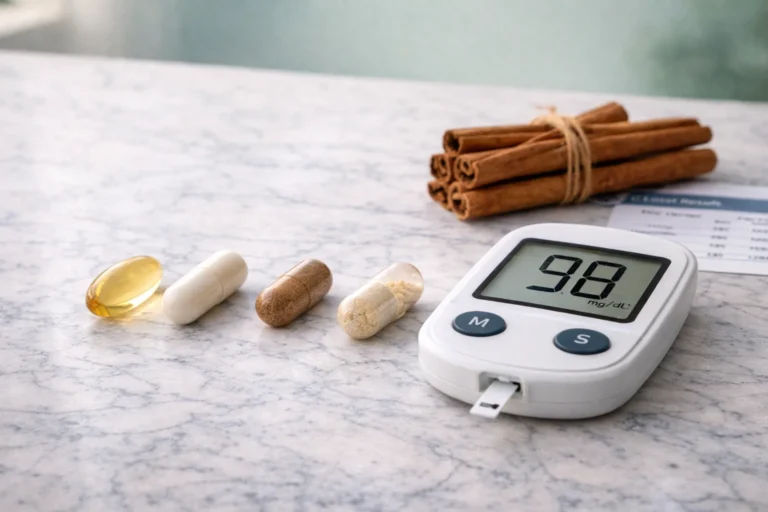

Vitamin D and Prediabetes: What a Study of 43,000 People Found
A meta-analysis pooling data from 43,559 people across nine randomized controlled trials found that vitamin D supplementation at 1,000 IU per day or more significantly reduced the risk of progressing from prediabetes to type 2 diabetes. That is not a small study. That is some of the strongest evidence we have for any single supplement in prediabetes prevention.
But the story is more nuanced than the headline suggests. The benefit was concentrated in people who were already vitamin D deficient, which, as it turns out, describes a large percentage of people with prediabetes. Here is what the research actually shows, what your vitamin D level should be, and whether supplementing makes sense for you specifically.
Key Takeaways
- A meta-analysis of 43,559 people across 9 RCTs found vitamin D supplementation (1,000+ IU/day) significantly reduced type 2 diabetes risk in prediabetic populations.
- The D2d Trial (2,382 people, NEJM 2019) found vitamin D3 at 4,000 IU/day reduced diabetes progression by 12% overall, and by significantly more in participants who started with low vitamin D levels.
- Vitamin D deficiency (under 20 ng/mL) affects an estimated 42% of American adults, and is more common in people with prediabetes and insulin resistance.
- Optimal blood level for blood sugar benefit: 40–60 ng/mL (100–150 nmol/L). Most people need 2,000–4,000 IU/day to reach and maintain this range.
- Vitamin D works best as part of a broader strategy. It is not a substitute for diet and exercise, but the evidence for its specific role in prediabetes is stronger than for most supplements.
The research on vitamin D and insulin resistance cited here draws on a 2012 meta-analysis published in PLOS ONE examining vitamin D supplementation and glycemic outcomes and the NIDDK prediabetes guidance.
What Did the 43,000-Person Study Actually Find?
The meta-analysis published in Nutrients (2020) synthesized data from nine randomized controlled trials involving 43,559 participants with prediabetes or at high risk of diabetes. The finding: vitamin D supplementation at doses of 1,000 IU per day or higher was associated with a statistically significant reduction in the risk of progressing to type 2 diabetes compared to placebo.
This was not a single study that could be a fluke. It was a pooled analysis of nine independent trials, each conducted separately in different countries, with different populations, and reaching a consistent direction of effect. That kind of replication is meaningful.
The effect size was not dramatic, progression to type 2 diabetes was not eliminated. But in the context of prediabetes prevention, where lifestyle interventions account for most of the benefit, adding a low-cost, low-risk supplement with demonstrated protective effect is a reasonable addition to an existing strategy.
The D2d Trial: The Clearest Evidence We Have
The most rigorous single study on vitamin D and prediabetes is the D2d (Vitamin D and Type 2 Diabetes) trial, published in the New England Journal of Medicine in 2019. It enrolled 2,382 adults with prediabetes and randomized them to either 4,000 IU of vitamin D3 per day or placebo for a median of 2.5 years.
The headline result: vitamin D reduced diabetes progression by 12% compared to placebo. On its own, that number sounds modest. But when the researchers looked at participants who started the trial with low vitamin D levels (under 12 ng/mL), the benefit was substantially larger. People who achieved higher blood vitamin D levels during the trial had meaningfully lower rates of progression.
The honest reading of D2d: vitamin D supplementation helps most when you are deficient. If your vitamin D level is already adequate, the added benefit is smaller. Testing before supplementing is not optional, it is the whole point.
Why Does Vitamin D Affect Blood Sugar?
The connection between vitamin D and blood sugar is not coincidental. There are at least three well-documented mechanisms:

n
1. Pancreatic beta cell function. Vitamin D receptors are expressed directly on pancreatic beta cells, the cells responsible for producing insulin. Research published in Endocrine Practice found that vitamin D activates genes involved in insulin synthesis and secretion. Low vitamin D directly impairs the beta cell’s ability to respond to rising blood glucose.
2. Insulin sensitivity. Vitamin D influences the expression of insulin receptors in muscle and fat tissue. Deficiency is associated with reduced insulin receptor density, which means cells respond less efficiently to insulin even when it is present, the core problem in prediabetes.
3. Inflammation. Chronic low-grade inflammation is a driver of insulin resistance. Vitamin D has established anti-inflammatory effects, including suppression of inflammatory cytokines that interfere with insulin signaling. Correcting deficiency reduces this inflammatory burden.
These mechanisms explain why the association between vitamin D deficiency and insulin resistance is so consistent across populations and study designs. It is not correlation without cause.
What Is the Right Vitamin D Level for Prediabetes?
Standard laboratory reference ranges call vitamin D “sufficient” at 30 ng/mL (75 nmol/L) or above. But the research on prediabetes and blood sugar points toward higher targets producing better outcomes.
| Blood Level (ng/mL) | Classification | Implication for Prediabetes |
|---|---|---|
| Under 20 | Deficient | Significantly elevated progression risk. Supplementation strongly indicated. |
| 20–29 | Insufficient | Suboptimal. Supplementation beneficial. Many people in this range have measurable insulin resistance impact. |
| 30–39 | Sufficient (lab standard) | Meets minimum threshold. Research suggests higher levels produce better metabolic outcomes. |
| 40–60 | Optimal (for metabolic health) | Target range associated with lowest diabetes progression risk in D2d and meta-analysis data. |
| Above 80 | Potentially excessive | No added benefit over 60 ng/mL. Toxicity risk at sustained levels above 100 ng/mL. |
The practical target: get tested first, then supplement to reach 40–60 ng/mL, and retest after 3 months to confirm you have arrived in that range.
How Much Vitamin D Should You Take for Prediabetes?
The D2d Trial used 4,000 IU of vitamin D3 per day, which is safe for most adults and was well-tolerated across 2.5 years of the study. The meta-analysis of 43,559 people found benefit starting at 1,000 IU per day. Most endocrinologists and researchers working in this area suggest 2,000 to 4,000 IU of vitamin D3 daily as a reasonable maintenance dose for adults with prediabetes who are deficient or insufficient.
A few important details on form and timing:
- D3, not D2. Vitamin D3 (cholecalciferol) raises blood levels approximately 87% more effectively than D2 (ergocalciferol). Always choose D3.
- Take with fat. Vitamin D is fat-soluble. Taking it with a meal containing fat increases absorption significantly. Breakfast with eggs or avocado works well.
- Add magnesium. Magnesium is required to convert vitamin D into its active form. Deficiency in magnesium, which is common, can limit the effectiveness of vitamin D supplementation.
- Retest after 90 days. A standard 25-OH vitamin D blood test confirms whether your dose is moving your level into the target range.
Can You Get Enough Vitamin D from Food?
Realistically, no. The highest dietary sources of vitamin D are fatty fish (salmon, mackerel, sardines) at 400–600 IU per 3-ounce serving, egg yolks at 40–50 IU each, and fortified foods like milk and orange juice at 100 IU per serving. Reaching 2,000 to 4,000 IU per day through food alone would require eating salmon at every meal.
Sun exposure is the other natural source, but it depends on skin tone, geography, season, and age (older skin produces vitamin D less efficiently). For most people with prediabetes in northern latitudes or with limited sun exposure, supplementation is the only practical route to adequate levels.

n
Should You Test Your Vitamin D Level?
Yes, before supplementing. A 25-hydroxyvitamin D (25-OH D) blood test is the standard measure. It is inexpensive and widely available. Your doctor can order it, or it is available through direct-to-consumer lab services.
Testing before supplementing matters because the dose needed to reach the 40–60 ng/mL target varies significantly by starting level. Someone at 15 ng/mL needs a higher dose and longer duration than someone already at 28 ng/mL. Testing also establishes a baseline so you can confirm progress after 90 days of supplementation.
Ask your doctor to include the 25-OH D test at your next prediabetes check-up alongside your A1C. For a list of the right questions to bring to that appointment, see our guide to the 6 questions to ask your doctor when diagnosed with prediabetes.
Where Vitamin D Fits in a Prediabetes Plan
Vitamin D is not a treatment for prediabetes. The Diabetes Prevention Program, the largest lifestyle intervention trial ever conducted, showed that diet and exercise reduce diabetes progression by 58%. No supplement trial has matched that outcome.
Where vitamin D fits: as a targeted correction if you are deficient, layered on top of the lifestyle foundation. The evidence suggests that correcting deficiency removes a biological obstacle that may be limiting how well your other interventions work. Insulin resistance is harder to reverse when your beta cells are impaired and your insulin receptors are under-expressed, both of which improve when vitamin D levels normalize.
Of all the supplements with clinical evidence in prediabetes, vitamin D and berberine have the strongest research backing. For the berberine evidence and how it compares, see our complete guide to berberine for blood sugar.
Frequently Asked Questions
Does vitamin D help with prediabetes?
Yes, based on clinical evidence. A meta-analysis of 43,559 people across nine randomized controlled trials found vitamin D supplementation at 1,000 IU per day or more significantly reduced the risk of progressing from prediabetes to type 2 diabetes. The D2d Trial (NEJM 2019) found 4,000 IU/day reduced progression by 12%, with greater benefit in participants who started with low vitamin D levels. The benefit is strongest in people who are vitamin D deficient, which describes a large proportion of people with prediabetes.
How much vitamin D should I take for prediabetes?
The D2d Trial used 4,000 IU of vitamin D3 per day, which was safe and well-tolerated over 2.5 years. Most research suggests 2,000 to 4,000 IU of D3 daily for adults with prediabetes who are deficient or insufficient. The right dose for you depends on your starting blood level, which is why testing before supplementing is important. Target a blood level of 40 to 60 ng/mL and retest after 90 days to confirm your dose is working.
What vitamin D level is optimal for blood sugar control?
Standard lab ranges call 30 ng/mL sufficient, but research on prediabetes and metabolic health points toward 40 to 60 ng/mL as the optimal target for blood sugar benefit. Levels below 20 ng/mL (deficient) are associated with significantly elevated diabetes progression risk and impaired insulin secretion. Levels above 80 ng/mL offer no additional benefit and increase toxicity risk at sustained levels above 100 ng/mL.
Why does vitamin D deficiency affect blood sugar?
Vitamin D receptors are expressed directly on pancreatic beta cells, which produce insulin. Deficiency impairs beta cell function and reduces insulin secretion in response to rising blood glucose. Vitamin D also influences insulin receptor density in muscle and fat tissue, affecting how efficiently cells respond to insulin. Additionally, vitamin D has anti-inflammatory effects that reduce inflammatory cytokines known to worsen insulin resistance.
Should I take vitamin D3 or D2 for prediabetes?
Always choose vitamin D3 (cholecalciferol) over D2 (ergocalciferol). Research shows D3 raises blood vitamin D levels approximately 87% more effectively than D2. Take it with a meal containing fat, as vitamin D is fat-soluble and absorption increases significantly with dietary fat. Adding magnesium to your routine also helps, as magnesium is required to convert vitamin D into its active form.
Sources: Zhang Y et al., meta-analysis of 9 RCTs, 43,559 participants, vitamin D and diabetes prevention in prediabetes (Nutrients, 2020). Pittas AG et al., D2d Trial, 2,382 adults with prediabetes, vitamin D3 4,000 IU/day vs placebo (NEJM, 2019). Alvarez JA, Ashraf A, role of vitamin D in beta cell function and insulin secretion (Endocrine Practice, 2010). Holick MF, vitamin D deficiency review (NEJM, 2007).