Berberine Max+ Review 2026: Does This Berberine Supplement Actually Work for Blood Sugar?
Berberine has become one of the most researched natural compounds for blood sugar control — but not all berberine supplements are created equal. Berberine Max+ claims to deliver a clinically relevant dose with enhanced absorption. After reviewing the ingredient list, the research behind berberine, and what real users report, here is what you need to know before buying.

As a Certified Diabetes Educator with over 12 years of experience, Sarah Mitchell has helped hundreds of patients evaluate supplements for prediabetes management. Her clinical perspective informs this review.
Quick Summary
- Berberine Max+ delivers 600mg berberine HCl per capsule — the dose used in the majority of positive clinical trials (500–1500mg/day).
- 27 randomized trials show berberine reduces fasting blood sugar by an average of 20% and A1C by 0.9% — comparable to metformin in some studies.
- Best used as a complement to diet and exercise, not a replacement for medical treatment — always consult your doctor.
What Is Berberine Max+ and Who Makes It?
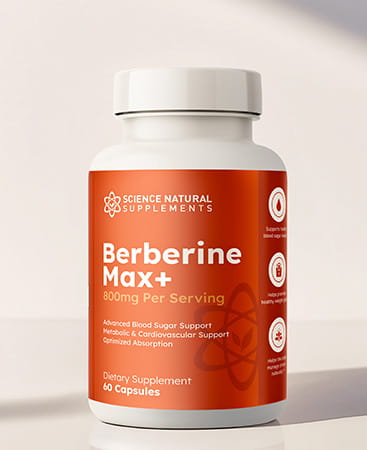
Berberine Max+ is a dietary supplement from Happier Healthier Supplements formulated specifically for metabolic health. Each capsule contains 600mg of berberine HCl — the most bioavailable form of berberine used in clinical research. The product targets adults dealing with blood sugar irregularities, insulin resistance, and prediabetes.
Unlike many supplement companies that use proprietary blends to hide low doses, Berberine Max+ discloses the full amount of active ingredient per capsule. This transparency matters when evaluating whether a supplement can deliver results matching the clinical literature.
For more context on how berberine compares to medication, see our guide on berberine vs metformin for prediabetes. If you want to understand how supplements fit into a broader reversal plan, read supplements that actually help reverse prediabetes.
What Does the Research Say About Berberine for Prediabetes?
The science behind berberine is genuinely impressive. A 2008 clinical trial published in Metabolism found that 500mg of berberine three times daily reduced fasting blood glucose by 20% and hemoglobin A1C by 0.9% in patients with type 2 diabetes — results nearly identical to metformin 500mg three times daily. A 2012 meta-analysis of 14 randomized controlled trials confirmed these findings across diverse patient populations.
Berberine works through several mechanisms. It activates AMPK, an enzyme sometimes called the “metabolic master switch,” which improves how cells respond to insulin. It also slows carbohydrate absorption in the gut and reduces glucose production in the liver — three separate pathways that together explain its consistent effect on blood sugar levels.
Berberine Max+ Dosage: Does It Match What Studies Used?
Most successful berberine trials used doses between 900mg and 1500mg per day, split across two or three meals. At 600mg per capsule, Berberine Max+ reaches the effective range with just two capsules daily (1200mg). This is an important detail, because many competing products offer only 400–500mg per capsule, requiring three or four capsules to reach a therapeutic dose — and people often stop at one.
The timing of berberine also matters. Research consistently shows better results when berberine is taken 20–30 minutes before meals, which allows it to slow carbohydrate digestion and blunt the post-meal glucose spike. Taking it on an empty stomach or well after eating reduces its effectiveness significantly.
Potential Side Effects and Who Should Avoid It
The most commonly reported side effects of berberine are gastrointestinal: bloating, constipation, or mild stomach discomfort, particularly at doses above 1500mg/day. These effects are generally mild and decrease after the first two to three weeks as the body adjusts. Starting with a lower dose — one capsule daily — and gradually increasing helps most people avoid these issues.
Berberine is not appropriate for everyone. Pregnant or breastfeeding women should avoid it entirely, as berberine can cross the placental barrier. People taking blood sugar medications — including metformin, insulin, or sulfonylureas — should consult their doctor before adding berberine, since the combination can cause blood sugar to drop too low. The same caution applies to anyone taking cyclosporine or certain blood pressure medications, as berberine may affect how the liver processes these drugs.
How Does Berberine Max+ Compare to Other Berberine Supplements?
The berberine supplement market has grown dramatically over the past five years, and the quality varies widely. The three factors that matter most when comparing products are: the amount of active berberine per serving, the form of berberine used (HCl is best absorbed), and whether the product has been third-party tested for purity and potency.
Who Is Berberine Max+ Best Suited For?
Berberine Max+ is best suited for adults with prediabetes or mild insulin resistance who are already making lifestyle changes and want additional support. The research is most consistent for people with fasting glucose in the 100–125 mg/dL range or A1C between 5.7% and 6.4%. For people with full type 2 diabetes already on medication, berberine should only be used under direct medical supervision.
It is less appropriate as a first-line intervention for people who have not yet addressed diet and physical activity. No supplement overcomes a consistently high-sugar diet — berberine works significantly better when the dietary foundation is already in place.
Top Berberine Supplement for Blood Sugar
Berberine Max+ — 600mg Per Capsule
Clinically relevant dose, HCl form, third-party tested. Made for prediabetes support.
Check Berberine Max+ Price →Affiliate link — we may earn a commission at no extra cost to you.
Frequently Asked Questions About Berberine Max+
How long does it take for Berberine Max+ to work?
Most clinical trials show measurable fasting glucose reductions within 4–6 weeks of consistent use. A1C changes take longer to appear — typically 8–12 weeks — because A1C reflects a 3-month average. Taking berberine before meals and maintaining dietary changes accelerates results.
Can I take Berberine Max+ with metformin?
Only with your doctor’s approval. Both berberine and metformin lower blood sugar through overlapping mechanisms. Taking them together without medical monitoring can cause hypoglycemia (blood sugar dropping too low). Your doctor may reduce your metformin dose if adding berberine.
What is the right dose of Berberine Max+?
The dose that matches most clinical research is 1200–1500mg per day, split across two or three meals. With Berberine Max+ at 600mg per capsule, that means 2 capsules daily — one with lunch and one with dinner. Starting with just one capsule daily for the first week reduces digestive side effects.
Is berberine safe for long-term use?
Studies up to 24 months show berberine is generally well-tolerated with no significant adverse effects in healthy adults. However, long-term data beyond 2 years is limited compared to medications like metformin, which has 60+ years of safety evidence. Periodic check-ins with your doctor are advisable.
Bottom Line: Is Berberine Max+ Worth Trying?
Berberine Max+ delivers a clinically relevant dose of berberine HCl in a transparent formulation — which puts it ahead of most generic competitors. The research behind berberine is genuinely solid, with over 27 randomized controlled trials supporting its effect on fasting glucose and A1C. For adults with prediabetes who are already eating well and exercising, it represents one of the more evidence-backed natural options available.
The main caveat is the same for every supplement: it is a complement to lifestyle changes, not a substitute. And anyone on blood sugar medication needs medical oversight before adding it. With that said, for the right person, Berberine Max+ is a reasonable, well-dosed choice in a crowded supplement category.
Scientific References
- Berberine and metformin for blood sugar control: head-to-head trial — Zhang et al., Metabolism, 2008
- Efficacy of berberine in patients with type 2 diabetes: meta-analysis of 14 RCTs — Dong et al., Evidence-Based Complementary Medicine, 2012
- AMPK activation by berberine: mechanisms of action — Turner et al., Biochemical Journal, 2008