
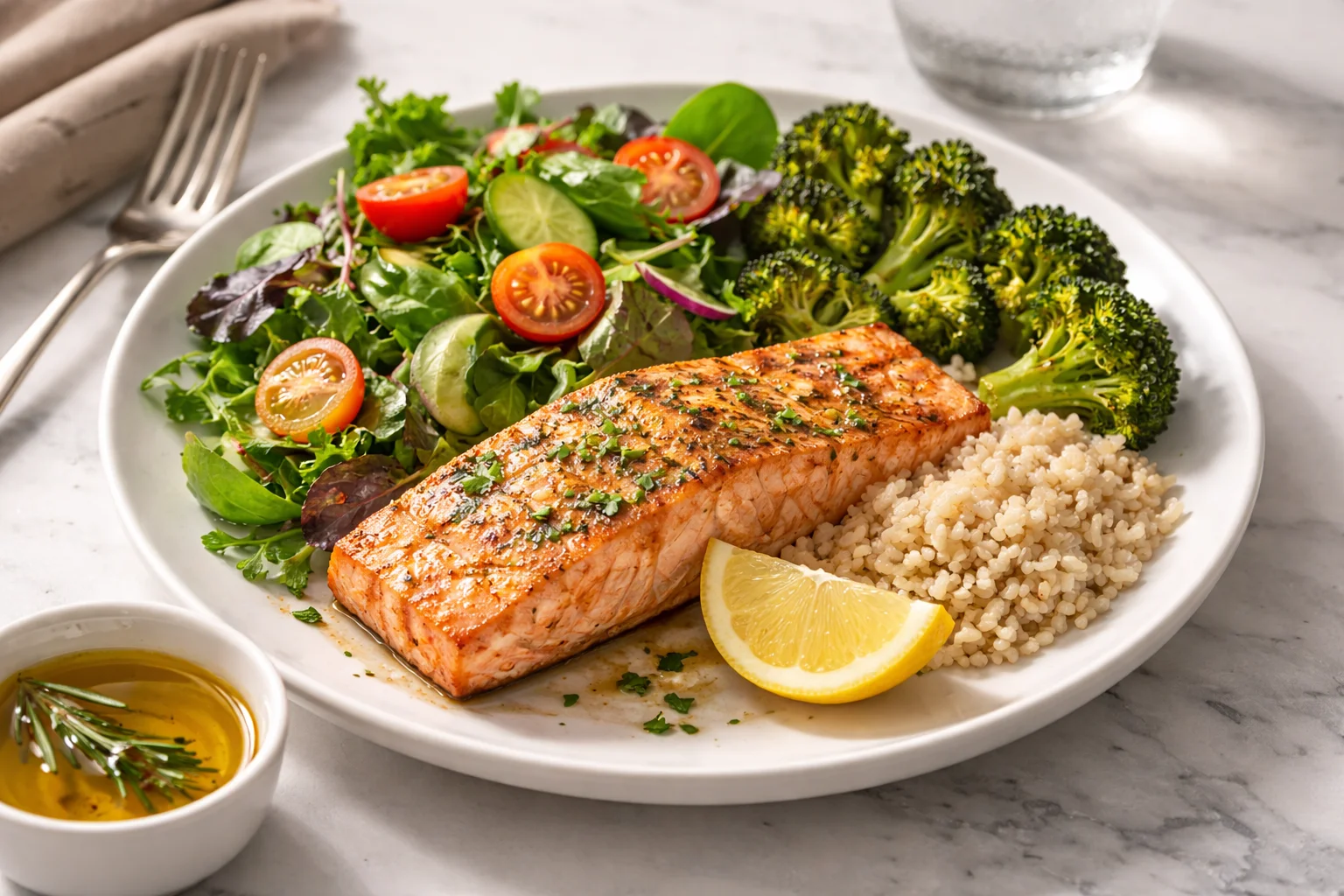
What to Eat (and Avoid) with Prediabetes: The Honest Guide
What to Eat (and Avoid) with Prediabetes: The Honest Guide
Nearly 96 million American adults have prediabetes, and most don’t know it (CDC, 2023). Here’s what the statistics don’t tell you: what you eat over the next 90 days can move your blood sugar in either direction, toward type 2 diabetes or away from it. If you’ve been recently diagnosed with prediabetes, the most powerful tool you have right now isn’t medication. It’s your food choices. This guide cuts through the conflicting advice and tells you exactly what the evidence says, no fad diets, no extreme restrictions.
Diet is the foundation of blood sugar management. For the full five-lever approach that includes movement, sleep, and stress, read the guide on how to reverse prediabetes naturally.
- The Mediterranean diet significantly reduces HbA1c across 9 randomized controlled trials in 1,337 adults, with reductions up to 0.53% vs. low-fat diets (meta-analysis 2024)
- Each 10% increase in ultra-processed food intake raises diabetes risk by 13% (meta-analysis, January 2025)
- Losing just 5–7% of body weight (the Diabetes Prevention Program target) significantly reduces progression risk, endorsed by ADA 2025
- You don’t need to eliminate carbs, fiber-rich carbs actively protect against blood sugar spikes
- Aggressive dietary changes can lower A1C by 0.5–1.5% within just 90 days
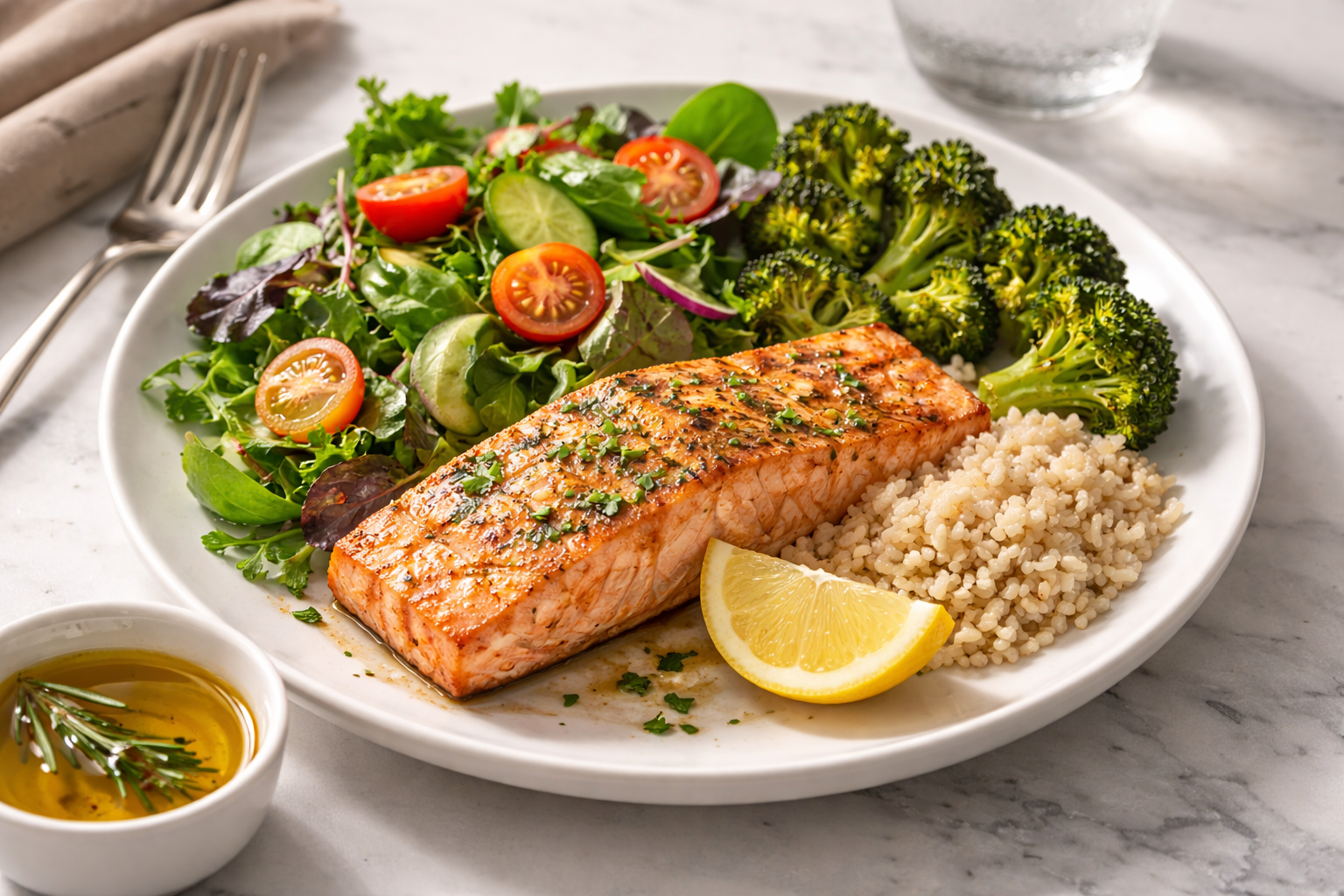
What Can You Actually Eat with Prediabetes?
When I started rebuilding my meals, I didn’t cut carbs entirely. I swapped refined ones for fiber-rich whole foods and paired every meal with protein. Within six weeks my fasting glucose dropped 18 points, and I never felt like I was on a restrictive diet.
More than you think. A high-fiber, plant-forward diet that prioritizes non-starchy vegetables, legumes, whole grains, and lean protein gives your body steady fuel without the blood sugar swings. A 2025 systematic review published in Cureus confirmed that dietary fiber interventions produce significant improvements in fasting plasma glucose, HbA1c, and postprandial blood glucose, the three markers your doctor watches most closely. Fiber-rich carbs aren’t the enemy. Stripped, processed carbs are.
Think of the prediabetes plate less as a list of restrictions and more as a priority system. Fiber slows glucose absorption. Protein blunts post-meal spikes. Healthy fats improve insulin sensitivity and keep you full. The table below maps each food group to your best choices, and what makes them metabolically protective.
| Food Group | Best Choices | Why It Helps |
|---|---|---|
| Non-starchy vegetables | Spinach, broccoli, kale, zucchini, bell peppers, cauliflower | High fiber, minimal glucose impact, rich in magnesium |
| Legumes | Lentils, chickpeas, black beans, kidney beans, edamame | Low glycemic index (28–32), protein + fiber combined |
| Whole grains | Steel-cut oats, barley, quinoa, whole wheat bread, farro | Slower digestion, sustained energy, beta-glucan fiber |
| Lean protein | Salmon, sardines, chicken breast, eggs, tofu, Greek yogurt | Zero carbs to spike blood sugar; increases satiety |
| Healthy fats | Extra-virgin olive oil, avocado, almonds, walnuts, flaxseed | Slows glucose absorption; reduces insulin resistance |
| Low-GI fruit | Berries, apples, pears, oranges, cherries, grapefruit | Fiber + antioxidants offset natural sugar content |
| Beverages | Water, unsweetened green or black tea, black coffee | No blood sugar impact; green tea may improve insulin sensitivity |
Notice what’s not on the restricted list: whole fruit, moderate whole grains, or healthy starches like sweet potato. The goal isn’t to eat as few carbs as possible, it’s knowing which carbs work with your metabolism and which work against it. To understand the specific A1C targets you’re aiming for with these changes, see our guide to prediabetes A1C levels explained.
A 2025 systematic review in Cureus found that dietary fiber interventions produced significant improvements in fasting plasma glucose, HbA1c, and postprandial blood glucose in people with prediabetes and diabetes. The strongest effects were seen with viscous soluble fibers found in oats, barley, and legumes, practical, affordable foods available at any grocery store.
Which Foods Should You Avoid with Prediabetes?
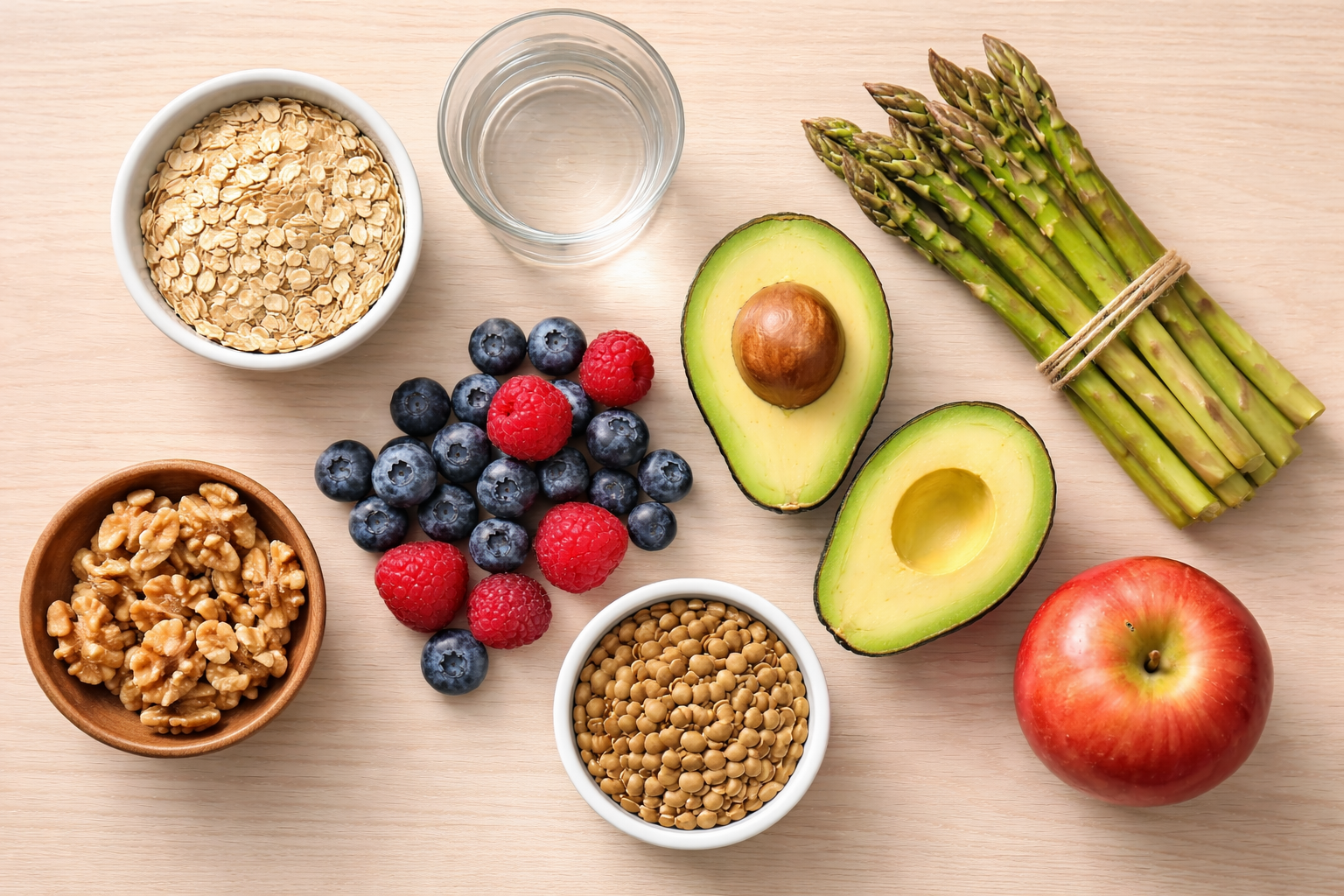
According to a January 2025 meta-analysis of longitudinal studies (PubMed, 2025), people with the highest ultra-processed food consumption faced a 24% higher risk of developing type 2 diabetes (HR 1.24, 95% CI 1.14–1.34) compared to those with the lowest intake. Each 10-percentage-point increase in processed food as a share of daily calories raised diabetes risk by 13%, independent of total calorie intake. That’s not a small effect. It rivals the impact of skipping physical activity entirely.
What counts as “ultra-processed”? The NOVA classification system, the framework used in most current research, defines it as industrial food formulations with five or more ingredients, typically including emulsifiers, artificial flavors, modified starches, and color additives. Think: packaged snack cakes, sweetened breakfast cereals, flavored yogurt drinks, frozen dinners, fast food, and most products sold in crinkle-cut bags.
Beyond ultra-processed food, refined carbohydrates warrant particular attention. White bread, white rice, and regular pasta have had their fiber stripped away during processing. Glucose from these foods enters your bloodstream fast. A large prospective study of 132,373 participants across 21 countries found that white rice consumption was independently associated with increased type 2 diabetes risk (PMC, 2020). The foods to limit most aggressively:
- Sugar-sweetened beverages, soda, sweet tea, energy drinks, fruit juice
- White bread, white rice, regular pasta, and crackers
- Packaged snacks: chips, cookies, granola bars, flavored popcorn
- Processed meats: hot dogs, most deli meats, sausage with added sugars
- Sweetened breakfast cereals (including many marketed as “healthy” or “whole grain”)
- Fried fast food and trans-fat-containing products
- Fruit-flavored yogurt and sweetened dairy drinks
Here’s a useful reframe: most Americans already know these foods aren’t great. What the new UPF research does is quantify the harm concretely enough that the trade-off feels real. You don’t need perfection, you need a consistent reduction. Even cutting ultra-processed food from 60% of your diet to 40% produces a measurable shift in diabetes risk.
A January 2025 meta-analysis of longitudinal studies found that compared to the lowest consumers, people with the highest ultra-processed food intake had a 24% greater risk of developing diabetes (HR 1.24, 95% CI 1.14–1.34). Each 10-percentage-point increase in ultra-processed food as a share of daily calories independently raised diabetes risk by 13%, regardless of total caloric intake.
Does the Mediterranean Diet Work for Prediabetes?
It’s one of the most studied dietary patterns in the world, and for prediabetes, the evidence is consistently positive. A meta-analysis of nine randomized controlled trials involving 1,337 adults, with data compiled through October 2024, found that Mediterranean diet interventions significantly reduced HbA1c compared to control diets, with some comparisons showing reductions up to 0.53 percentage points versus low-fat diet groups (Nutrients, 2024). For someone starting at a 5.8% A1C, even a 0.3% shift can move the needle meaningfully toward the normal range.
What makes the Mediterranean diet especially practical for prediabetes is that it isn’t a rigid protocol, it’s a flexible eating pattern. You’re not counting macros or hitting exact percentages. You’re shifting toward certain food categories while stepping back from others. The core elements:
- Abundant vegetables and legumes, at minimum, half of every plate
- Whole grains over refined grains, barley, farro, bulgur, whole wheat bread, oats
- Fish at least twice a week, especially fatty fish: salmon, mackerel, sardines
- Extra-virgin olive oil as the primary fat, replacing butter, vegetable oil, or margarine
- Nuts and seeds daily, a small handful of almonds, walnuts, or pumpkin seeds
- Limited red meat, a few servings per month rather than per week
- Minimal sweets and processed food, reserved for occasions, not daily defaults
Does this sound expensive? It doesn’t have to be. Canned sardines, dried lentils, olive oil, seasonal vegetables, and plain oats are among the most affordable items in any American grocery store. The Mediterranean diet’s real strength isn’t a list of exotic superfoods, it’s a pattern that aligns nearly perfectly with what the evidence shows works for insulin sensitivity and glucose control. Studies also show better long-term adherence compared to strict low-carb or low-fat protocols, because it doesn’t require eliminating entire food groups.
A 2024 meta-analysis of nine randomized controlled trials involving 1,337 adults found that Mediterranean diet interventions significantly reduced HbA1c compared to low-fat and standard control diets. Reductions in some comparisons reached 0.53 percentage points, a clinically meaningful shift for anyone in the prediabetes range. The effect was consistent across people with established type 2 diabetes and those at high risk.
How Much Do Carbohydrates Really Matter?
More than anything else, the quality of your carbohydrates determines how your blood sugar responds to a meal, not the quantity. Lentils have a glycemic index (GI) of 29, while white bread scores 75. Both are technically carbohydrates. Their effect on your blood sugar is completely different. The chart below shows the GI of seven common foods, a measure of how fast each one raises blood glucose on a 0–100 scale.
What drives the difference between lentils and white bread? Fiber. When fiber stays structurally intact, as it is in whole grains and legumes, it forms a physical barrier in your small intestine that slows how fast glucose enters your bloodstream. When fiber is stripped out through milling or processing, that barrier is gone and blood sugar rises sharply. This is why swapping white rice for lentils isn’t just a diet recommendation, it’s a change in the actual physiology of how your body processes that meal.
Does this mean you need to go low-carb? No. Multiple clinical trials find that low-carb and moderate-carb diets produce similar A1C results when overall food quality is matched. The evidence consistently points to carb quality as the driver, not carb quantity. Whole-food carbohydrates eaten alongside protein or fat produce a much more blunted glucose response than refined carbs eaten alone.
Glycemic index (GI) measures how fast a specific food raises blood glucose on a scale of 0–100. Lentils score 29; white bread scores 75. The difference matters because two meals with identical carbohydrate gram counts can produce dramatically different two-hour blood glucose responses depending on fiber content, a critical variable for anyone managing prediabetes.
Does Meal Timing and Portion Size Affect Blood Sugar?
They do, but not in the complicated way diet culture usually suggests. You don’t need precise eating windows or to weigh every gram of food. Two simple strategies cover most of the benefit: the plate method and post-meal movement. The plate method, recommended by both the ADA and the CDC, works like this: fill half your plate with non-starchy vegetables, a quarter with lean protein, and a quarter with a fiber-rich carbohydrate. That’s the whole framework.
Why does plate structure matter? Because the order and proportion of macronutrients at a meal affects how fast glucose enters your bloodstream. Studies on meal sequencing, eating vegetables and protein before carbohydrates, consistently show a 20–30% reduction in peak post-meal glucose when you eat in that order, even with the exact same foods. It’s a timing advantage you can use at any restaurant or home meal without changing what you order.
Post-meal movement is the other piece. A 10-minute walk after eating has been shown to reduce post-meal blood sugar more effectively than a single 30-minute morning workout, because your muscles are actively clearing glucose from your bloodstream during the exact window when it peaks (typically 30–90 minutes after eating). No gym membership required. Just move within an hour of your biggest meal.
On weight: the landmark Diabetes Prevention Program trial, the evidence base the ADA’s current guidelines draw from, identified 5–7% weight loss as the key threshold for preventing progression. But modest changes matter most. As we cover in our piece on reversing prediabetes without major weight loss, even losing 10–14 pounds at 200 lbs produces measurable metabolic improvements, you don’t need to reach an ideal BMI or lose dramatic amounts before seeing blood sugar benefits.
The landmark Diabetes Prevention Program (DPP) trial, and the ADA guidelines that adopted its findings, identifies 5–7% body weight reduction as the key threshold for preventing progression from prediabetes to type 2 diabetes. For a 180-pound person, that’s roughly 9–13 pounds. Research consistently shows this modest target, not dramatic weight loss, is the threshold where metabolic improvements become clinically meaningful.

A 3-Day Starter Meal Plan for Prediabetes
The best meal plan is the one you’ll actually stick with. This 3-day framework uses common, affordable ingredients available at any grocery store. Each day follows the plate method: half non-starchy vegetables, quarter lean protein, quarter smart carbs. No calorie counting. No weighing portions. No specialty health food required.
- Day 1
- Breakfast: Steel-cut oats with blueberries, walnuts, and a pinch of cinnamon
- Lunch: Large salad with chickpeas, cucumber, cherry tomatoes, olive oil and lemon
- Dinner: Baked salmon with roasted broccoli and zucchini, small side of brown rice
- Snack: Apple slices with a tablespoon of almond butter
- Day 2
- Breakfast: Two scrambled eggs with spinach and half an avocado
- Lunch: Lentil soup with a slice of whole grain bread and side salad
- Dinner: Grilled chicken thigh with sautéed kale, roasted sweet potato wedges
- Snack: Small handful of almonds and a few cheese cubes
- Day 3
- Breakfast: Plain full-fat Greek yogurt with mixed berries and chia seeds
- Lunch: Black bean bowl with diced bell peppers, corn, and a dollop of Greek yogurt
- Dinner: Canned sardines or tuna on whole grain toast with sliced tomatoes and arugula
- Snack: Celery sticks with hummus
Notice what’s missing: no obsessive measuring, no exotic ingredients, no expensive health food store runs. These are real meals that fit into a real schedule. Start with one day. Repeat what works. The goal isn’t a perfect week, it’s a consistently better pattern than before.
Frequently Asked Questions About the Prediabetes Diet
Can I eat fruit with prediabetes?
Yes. Whole fruit, not fruit juice, is safe and beneficial for most people with prediabetes. The fiber in whole fruit slows glucose absorption, and berries in particular have a low glycemic index (20–40) while delivering antioxidants linked to better insulin sensitivity. Fruit juice is different: it spikes blood sugar quickly because the fiber has been stripped away in processing.
Is a low-carb diet the best approach for prediabetes?
Not necessarily. Multiple studies find that low-carb and Mediterranean diets produce similar A1C reductions at 6–12 months when adherence is matched. The evidence consistently points to carb quality, not quantity, as the key variable. Swapping refined carbs for fiber-rich alternatives often delivers the same metabolic benefit without the psychological burden of strict carb counting.
How fast can diet changes actually lower my A1C?
Research suggests aggressive dietary changes can lower A1C by 0.5–1.5 percentage points within 90 days, since A1C reflects a rolling 3-month blood sugar average. The fastest-acting changes, cutting sugar-sweetened beverages and ultra-processed food while adding fiber, typically show up in your next bloodwork cycle. Small, consistent changes compound quickly.
Do I need to work with a dietitian?
The ADA’s 2025 guidelines recommend individualized medical nutrition therapy from a registered dietitian for people with prediabetes, especially those with complex health histories or multiple dietary restrictions. Most insurance plans cover 3–5 sessions per year. If you’re not sure what to ask your doctor, see our list of questions to bring to your next prediabetes appointment.
What to Do Next
Prediabetes isn’t a life sentence, it’s a window. The choices you make in the next few months can determine whether your blood sugar trends toward type 2 diabetes or back toward normal. The evidence is unusually clear: cut ultra-processed food, add fiber, choose carbs based on quality rather than quantity, and use the Mediterranean pattern as your framework. None of this requires eating perfectly.
What it requires is consistency. Start with the easiest swap first, oatmeal instead of cereal, sparkling water instead of soda, a 10-minute walk after dinner. Small, stacked changes compound into measurable A1C shifts within 90 days. The biology is on your side once you stop feeding the problem.
Diet is the foundation. Some people also explore natural supplementation to support the process. Of all the available options, berberine has the strongest clinical evidence for blood sugar, with trial data comparable to low-dose metformin.
n
For answers to the most common questions about prediabetes eating, including portions, timing, and which carbs to cut first, see Prediabetes Diet Questions Answered.