

Just Diagnosed with Prediabetes? Here’s Exactly What to Do in the Next 30 Days
If you just left your doctor’s office with the word “prediabetes” echoing in your head, take a breath. You’re not alone, you’re not broken, and you’re not “almost diabetic.” You’ve actually been handed something most people never get: a clear warning with time to act on it.
According to the CDC, roughly 96 million American adults, about 1 in 3, have prediabetes. More than 80% don’t even know it. You do. That knowledge is the first step in reversing it.
This guide walks you through exactly what to do in the next 30 days, week by week, without panic diets, without expensive gadgets, and without giving up everything you love.
TL;DR, What to Do Right Now
- Prediabetes means your A1C is between 5.7% and 6.4%, it is reversible for most people.
- A 2025 Nature Medicine study found about 1 in 4 people reverse prediabetes without losing weight.
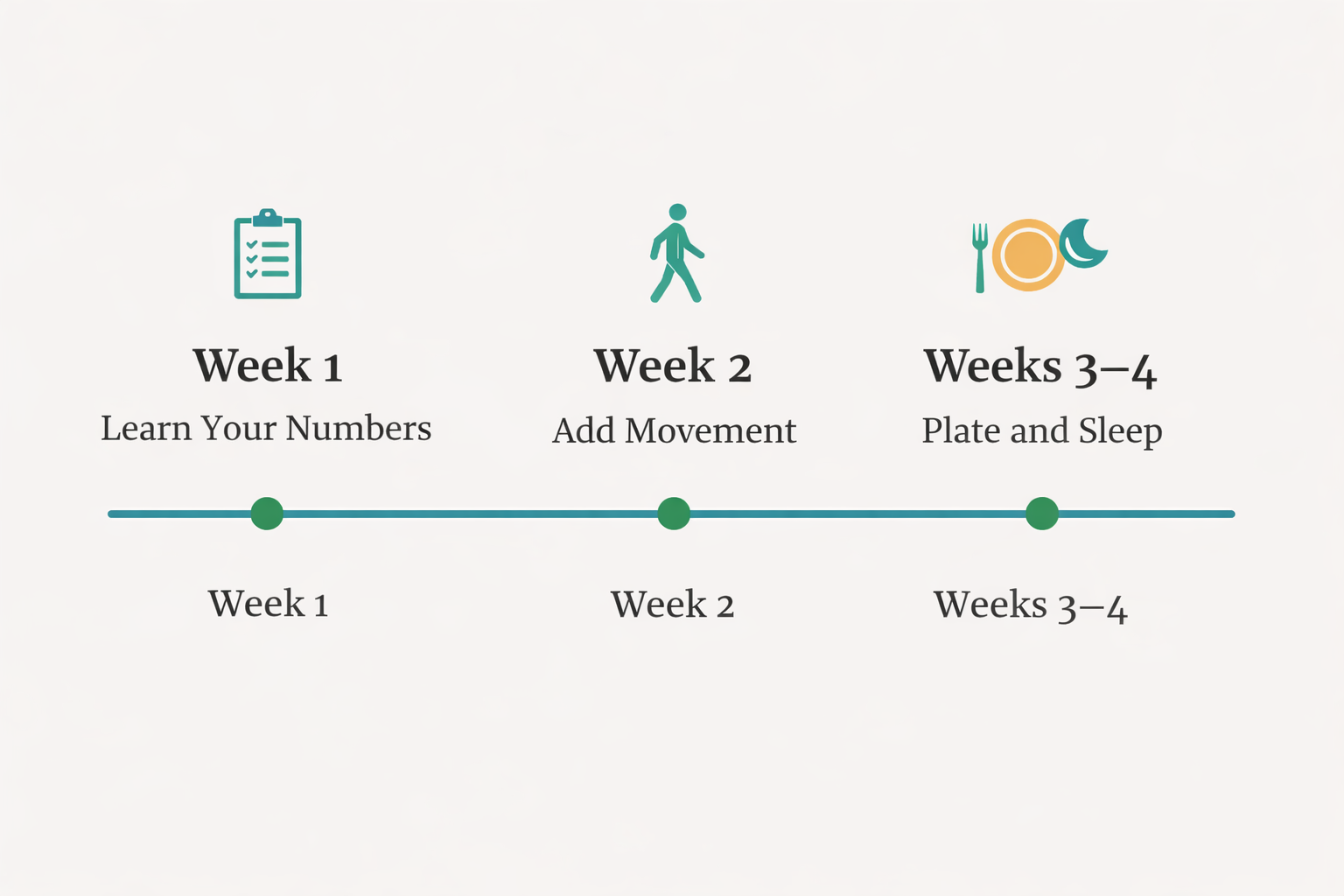
- Week 1: learn your numbers and cut liquid sugar. Week 2: add post-meal walks. Weeks 3–4: rebuild your plate and your sleep.
- Skip crash diets, random supplements, and daily weigh-ins, they backfire.
- Re-test your A1C in 3 to 6 months to measure progress.
First, Take a Breath, What Prediabetes Actually Means
I remember the exact moment I got my diagnosis. I left the clinic with a pamphlet, no real plan, and a lot of anxiety. The first 30 days felt overwhelming until I broke it down into one small change per week. That structure is what finally made things manageable for me.
Prediabetes is not a disease. It’s a signal. It means the insulin in your body is working harder than it used to, and your blood sugar is sitting in a gray zone, higher than normal, but not yet in the diabetic range. The good news: that gray zone is where you have the most power.
The Numbers Behind Your Diagnosis
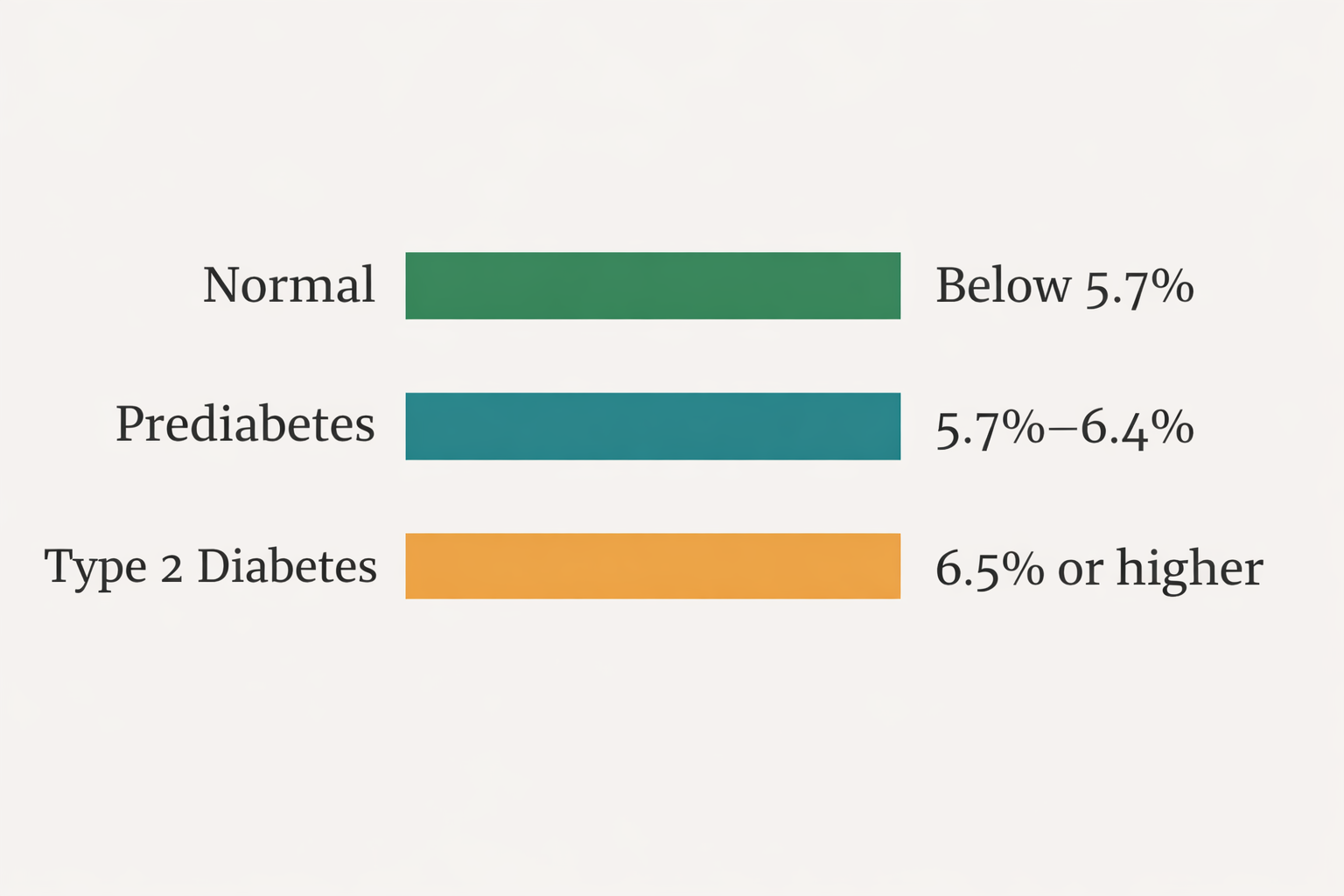
The American Diabetes Association defines the ranges like this:
- Normal: A1C below 5.7%, Fasting glucose below 100 mg/dL
- Prediabetes: A1C 5.7% to 6.4%, Fasting glucose 100 to 125 mg/dL
- Type 2 diabetes: A1C 6.5% or higher, Fasting glucose 126 mg/dL or higher
If your number is 5.8% or 6.1% or even 6.3%, you are still firmly in the range where diet, movement, and sleep can bring you back to normal. Many people do it in under a year.
Why 96 Million Americans Are in Your Shoes
Prediabetes has quietly become one of the most common health conditions in the country. Rising stress, sleep debt, ultra-processed foods, and sedentary work all push insulin sensitivity in the wrong direction. You did not cause this alone, and you are not a statistical outlier. You are, in fact, in the majority.
The Good News Your Doctor May Not Have Mentioned
Most doctors have 15 minutes per appointment. That’s rarely enough time to share the hopeful research. Here are two findings worth knowing.
You may not need to lose weight to reverse it. A 2025 study published in Nature Medicine by researchers at the University of Tübingen (Birkenfeld and colleagues) found that about 1 in 4 people with prediabetes returned to normal blood sugar independent of significant weight loss. Improving insulin sensitivity through sleep, movement, and food quality mattered more than the number on the scale for a meaningful subgroup.
Lifestyle changes cut your risk by more than half. The landmark Diabetes Prevention Program (DPP) trial showed that structured lifestyle changes reduced the progression from prediabetes to type 2 diabetes by 58%, and by 71% in adults over 60. That’s a bigger effect than the medication used in the same study.
If the idea of needing to lose 30 pounds before you feel hopeful has been weighing on you, read this next: You don’t need to lose weight to reverse prediabetes, here’s what the 2025 research shows.
Your 30-Day Prediabetes Action Plan
The next 30 days are not about perfection. They’re about direction. Here’s a week-by-week plan that’s realistic for someone who works, has a family, and can’t overhaul their life overnight.
Week 1: Learn Your Numbers and Stop the Bleeding
This week is about information and one big swap. Don’t change ten things at once.
- Request your full lab results. Ask your doctor’s office to email you the full panel: A1C, fasting glucose, lipid panel, and fasting insulin if it was run. Knowing the exact number matters.
- Cut liquid sugar completely. Soda, sweetened coffee drinks, fruit juice, sweet tea, and flavored lattes spike blood sugar faster than almost anything else. Replace them with water, unsweetened tea, or black coffee.
- Keep eating normally otherwise. Don’t start a restrictive diet this week. Just remove the liquid sugar and observe how you feel.
Week 2: Add Movement That Actually Works
You don’t need a gym membership or a Peloton. You need a pair of shoes and ten minutes.
- Walk 10 minutes after each main meal. Research shows post-meal walks can blunt the blood sugar spike by 12 to 22%. Three short walks beat one long one.
- Aim for 7,000 to 7,500 steps a day. You don’t need 10,000. Studies show most of the cardiometabolic benefit kicks in by 7,500.
- Add two short strength sessions. Even 15 minutes of bodyweight squats, wall push-ups, and a few dumbbell exercises twice a week improves insulin sensitivity measurably.
Weeks 3 and 4: Build the Plate and the Sleep Habit
- Half plate non-starchy vegetables. Leafy greens, broccoli, peppers, cucumbers, tomatoes, zucchini, fill half the plate before anything else.
- Eat protein first. Start your meal with the protein and vegetables, then the starch. This single habit lowers the post-meal glucose spike in most people.
- Swap refined for whole. White bread to sourdough or 100% whole grain. White rice to brown rice or quinoa. Sugary yogurt to plain Greek yogurt with berries.
- Protect 7 hours of sleep. Just one week of poor sleep reduces insulin sensitivity by about 25%. A consistent bedtime may be the single most underrated prediabetes tool.
- Manage stress in small doses. Chronic stress raises cortisol, which raises blood sugar. Five minutes of slow breathing, a walk outside, or a hobby you actually enjoy counts.
What NOT to Do in Your First 30 Days
- Don’t jump into an extreme diet. Full keto, carnivore, or intermittent fasting on day one tend to backfire. People crash within 3 weeks and end up worse than before.
- Don’t skip meals. Skipping breakfast or lunch often spikes blood sugar later. Consistent, balanced meals stabilize insulin better than long fasts at this stage.
- Don’t buy every supplement you see on social media. Some have real evidence; most are marketing. Focus on food, sleep, and movement for the first 30 days before spending a cent on pills or powders.
- Don’t weigh yourself daily. Weight fluctuates 2 to 4 pounds a day from water alone. Weekly is plenty.
- Don’t panic if you slip. One pizza night won’t undo your progress. Consistency over 90 days matters far more than any single meal.
When to Check Back with Your Doctor
Plan to re-test your A1C in 3 to 6 months. That’s the window where lifestyle changes show up in the bloodwork. Earlier than 3 months and the number hasn’t had time to move (A1C reflects a 3-month average). Before you go back, prepare your 6 questions to ask your doctor about prediabetes.
Call your doctor sooner if you notice any of these: unusual thirst that won’t quit, frequent urination at night, blurred vision, unexplained weight loss, or persistent numbness or tingling in your hands or feet.
Frequently Asked Questions
Can prediabetes be reversed in 30 days?
A1C reflects a 3-month average of blood sugar, so your official number won’t change in 30 days. However, your fasting glucose, energy, sleep quality, and post-meal blood sugar can improve noticeably within the first month. The 30-day plan is about building habits that show up on your labs at the 3 to 6 month re-test.
What should I eat for breakfast with prediabetes?
Prioritize protein and fiber, minimize refined carbs. Good options include eggs with vegetables, Greek yogurt with berries and nuts, or steel-cut oats topped with seeds and a small amount of fruit. Avoid sugary cereals, pastries, and sweetened flavored yogurts.
Do I need to stop eating carbs if I have prediabetes?
No. You don’t need to cut carbs entirely. Focus on the type and order: choose whole grains, legumes, and vegetables over refined flour and sugar, and eat protein and vegetables before the starch portion of your meal. Most people reverse prediabetes without going low-carb.
Is prediabetes a disease?
Prediabetes is not a disease. It’s a condition, a warning stage, where blood sugar is higher than normal but not high enough for a type 2 diabetes diagnosis. For most adults it’s reversible through diet, movement, and sleep changes.
How long does it take to reverse prediabetes naturally?
Most people who reverse prediabetes do so within 6 to 12 months of consistent lifestyle changes. Some see A1C drop into the normal range in as little as 3 to 4 months. Sleep, post-meal walks, and reducing refined carbs are the biggest levers.
Your Next Step
Now that you have a 30-day plan, the next thing to understand is the number that’s driving all of this: your A1C. Read next: Prediabetes A1C Levels Explained, What Your Number Really Means and How to Move It.
If you are exploring natural supplements alongside lifestyle changes, one stands apart for its clinical backing: berberine for blood sugar, what the research actually shows.
Sources: CDC National Diabetes Statistics Report 2024. Birkenfeld AL et al. Nature Medicine 2025. Knowler WC et al. Diabetes Prevention Program. NEJM 2002. Paluch AZ et al. Lancet Public Health 2022.
If you are over 50, symptoms can be subtler than expected. See the full breakdown in Prediabetes Symptoms in Adults Over 50: What to Watch For.
Before your next appointment, it helps to know what your doctor may not have time to cover. See What Doctors Wish Prediabetes Patients Knew Before Leaving the Office.