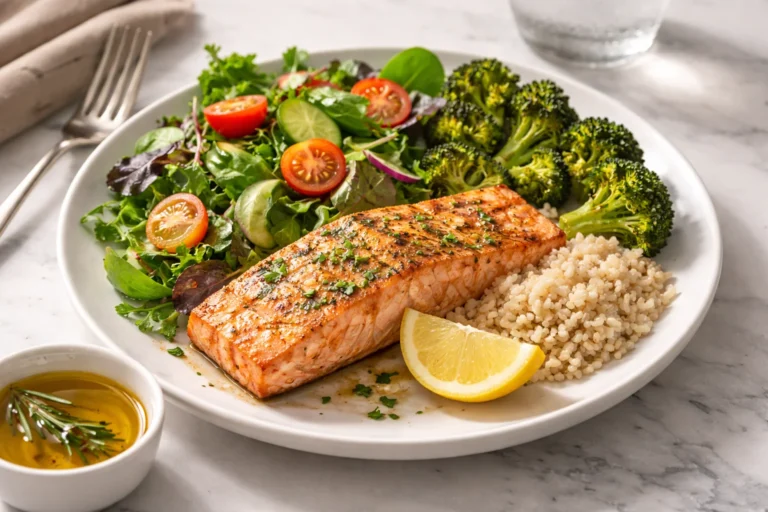
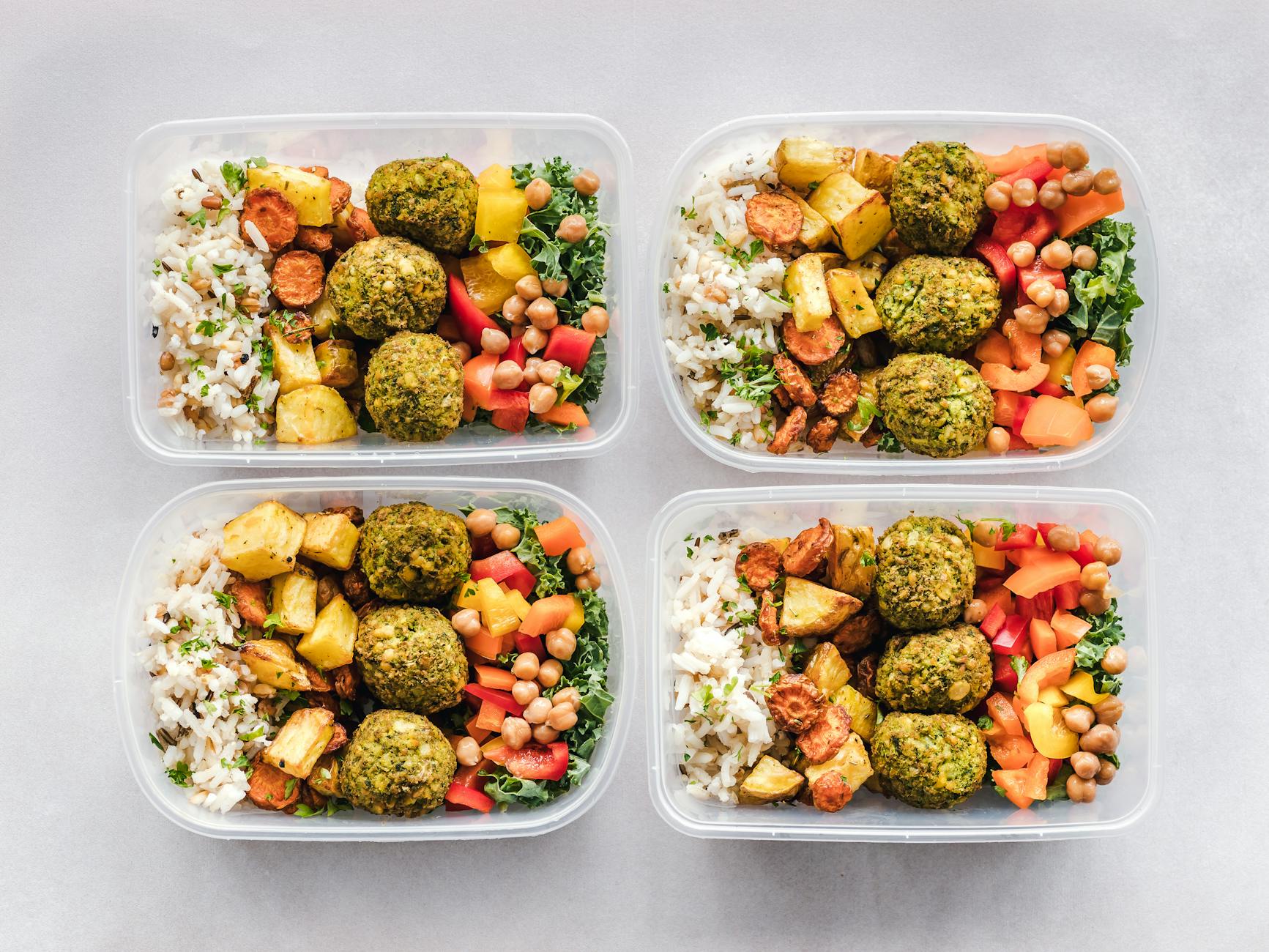
7-Day Prediabetes Meal Plan: Simple, Blood Sugar-Friendly Meals That Actually Work
TL;DR
- This 7-day prediabetes meal plan keeps each meal under 45g of carbohydrates and pairs them with protein and fiber to flatten blood sugar spikes.
- Every day delivers 90 to 110g of protein and 28 to 35g of fiber — the two numbers that matter most for lowering A1C.
- Meals are built around real grocery-store food: eggs, salmon, lentils, Greek yogurt, oats, berries, leafy greens. No specialty products, no calorie counting.
- Following a structured low-carb or Mediterranean meal pattern for 12 weeks lowered A1C by an average of 0.5 to 1.2% in people with prediabetes (Annals of Internal Medicine, 2024).
Disclosure: This post contains affiliate links. If you purchase through them, I may earn a commission at no extra cost to you. I only recommend products I’ve personally researched.
When my doctor said the words “your A1C is 6.1, you’re prediabetic,” I drove home in a daze and opened the fridge. I had no idea what I was supposed to eat. Every article online said something different. Cut carbs. Eat more carbs but better ones. Try keto. Try Mediterranean. Skip breakfast. Never skip breakfast. By dinner I was so overwhelmed I ate cereal standing up at the counter and went to bed angry.
If you’re here, you’ve probably had a version of that night. The good news is this: you don’t need a perfect diet to bring your A1C down. You need a repeatable one. A meal plan you can follow this week, next week, and the week after that without thinking too hard about it.
This is the 7-day prediabetes meal plan I built for myself after months of research, and it’s the one I send to friends and family members who get the same diagnosis. Every meal is designed to stay under 45g of net carbohydrates, deliver at least 20g of protein, and keep your blood sugar from spiking after you eat. No special equipment. No expensive products. Just real food, the kind you already have in your kitchen.
Why a 7-Day Meal Plan Works Better Than “Just Eat Healthier”
The single biggest reason people fail to reverse prediabetes isn’t lack of willpower — it’s decision fatigue. Every meal becomes a new negotiation. Should I eat the bread? How many berries is too many? Is rice okay if it’s brown? By Wednesday, most people give up and eat what’s easy.
A structured meal plan removes the negotiation. You know what you’re eating Monday, you know what you’re eating Tuesday, and by the time Friday rolls around your blood sugar response is calmer because your body has been getting the same controlled carbohydrate load for days in a row.
The research supports this. A 2024 review published in the Annals of Internal Medicine analyzed structured dietary interventions for prediabetes and found that participants following either a Mediterranean or low-carbohydrate pattern for 12 weeks reduced their A1C by an average of 0.5 to 1.2 percentage points — enough to push many out of the prediabetes range entirely. The participants who improvised their own meals saw less than half that benefit.
The American Diabetes Association’s 2024 Standards of Care specifically recommends “consistent carbohydrate intake at meals” as a core strategy for people with prediabetes and type 2 diabetes. Consistency, in other words, is the medicine.
The Ground Rules Before You Start
Before you copy any meal from this plan, internalize four rules. These are the rules that make the plan work. Skip them and the food choices won’t matter as much as you’d hope.
Rule 1: Eat Protein and Vegetables First
This is the single highest-leverage habit in this entire article. A 2020 study in Nutrients found that eating protein and vegetables before carbohydrates reduced postprandial glucose peaks by more than 40% and lowered glucose area under the curve by 38.8% in participants with prediabetes (PMC 7398578, 2020). Same food, same calories, same total carbs — different order, much better blood sugar response.
In practice: when your plate has chicken, broccoli, and rice on it, eat half the chicken and most of the broccoli first. Then eat the rice. That’s it. Free metabolic upgrade.
Rule 2: Cap Each Meal at 30 to 45g of Net Carbohydrates
Net carbs means total carbohydrates minus fiber. A medium apple has about 25g of carbs and 4g of fiber, so 21g net. A cup of cooked brown rice has about 45g of carbs and 4g of fiber, so 41g net. The cap of 45g is generous enough that you can still enjoy oats, fruit, and whole grains — you just can’t pile all of them onto the same plate.
Rule 3: Never Eat Naked Carbs
“Naked carbs” means eating a carbohydrate by itself, without protein, fat, or fiber. An apple alone is a naked carb. An apple with a tablespoon of almond butter is not. The almond butter slows glucose absorption so the apple’s natural sugar enters your bloodstream gradually instead of all at once. This single habit can reduce a post-meal glucose response by 20 to 30%.
Rule 4: Take a 10-Minute Walk After Your Largest Meal
This isn’t food, but it belongs here. A 2022 meta-analysis in Sports Medicine found that even two to five minutes of light walking after a meal significantly reduced post-meal glucose spikes compared to sitting. A ten-minute walk after dinner is the most cost-effective blood sugar intervention available, and it’s free. My full guide on what to eat and avoid with prediabetes goes deeper on the post-meal walk strategy.
The 7-Day Prediabetes Meal Plan
Each day delivers roughly 1,500 to 1,700 calories, 90 to 110g of protein, 28 to 35g of fiber, and 130 to 160g of net carbohydrates spread across three meals and one snack. Adjust portions up or down based on your hunger, activity level, and your doctor’s specific guidance.
| Day | Breakfast | Lunch | Dinner | Snack |
|---|---|---|---|---|
| Monday | 3-egg veggie scramble with spinach, mushrooms, feta + 1/2 avocado | Grilled chicken salad: 4 oz chicken, mixed greens, cucumber, cherry tomatoes, olive oil + lemon, 1/4 cup chickpeas | Baked salmon (5 oz), roasted Brussels sprouts, 1/2 cup wild rice | 1 oz almonds + 1/2 cup blueberries |
| Tuesday | Plain Greek yogurt (3/4 cup) + 2 tbsp chia seeds + 1/2 cup raspberries + cinnamon | Turkey lettuce wraps: 4 oz ground turkey, romaine leaves, tomato, hummus, sliced bell pepper | Lentil and vegetable soup (1.5 cups) + side green salad with olive oil + 1 slice 100% whole grain bread | Hard-boiled egg + cucumber slices |
| Wednesday | Steel-cut oats (1/2 cup cooked) + 2 tbsp walnuts + 1/2 sliced apple + cinnamon | Tuna salad (5 oz tuna, mayo, celery, red onion) on 2 cups mixed greens + 1/2 avocado | Stir-fried tofu (5 oz) with broccoli, snow peas, ginger, garlic + 1/2 cup brown rice | Cottage cheese (1/2 cup) + strawberries |
| Thursday | Veggie omelet (3 eggs, peppers, onions, spinach) + 1/2 cup berries | Mediterranean bowl: 4 oz grilled chicken, 1/3 cup quinoa, cucumber, olives, feta, tzatziki, romaine | Baked cod (5 oz) with lemon and herbs, roasted asparagus, cauliflower mash | Apple slices + 1 tbsp almond butter |
| Friday | Smoothie: 3/4 cup Greek yogurt, 1/2 cup frozen berries, 1 tbsp ground flaxseed, spinach, almond milk | Leftover cod and veggies from Thursday + side salad with olive oil | Turkey chili (1.5 cups) with black beans, tomatoes, bell peppers + 2 tbsp plain Greek yogurt on top | String cheese + 10 almonds |
| Saturday | 2 eggs + 2 slices turkey bacon + 1/2 avocado + 1 cup berries | Big chopped salad: 4 oz grilled shrimp, romaine, kale, cucumber, radish, sunflower seeds, lemon-tahini dressing | Grilled flank steak (4 oz), roasted sweet potato (1/2 medium), sauteed kale | Plain Greek yogurt + 1 tsp honey + cinnamon |
| Sunday | Cottage cheese pancakes (3 small) with 1/2 cup fresh berries, 1 tbsp almond butter on top | Lentil salad: 3/4 cup cooked lentils, feta, cucumber, tomato, red onion, parsley, olive oil + lemon | Roast chicken thigh (1 large), roasted vegetables (zucchini, peppers, onions), 1/2 cup farro | 2 squares 85% dark chocolate + 6 walnuts |
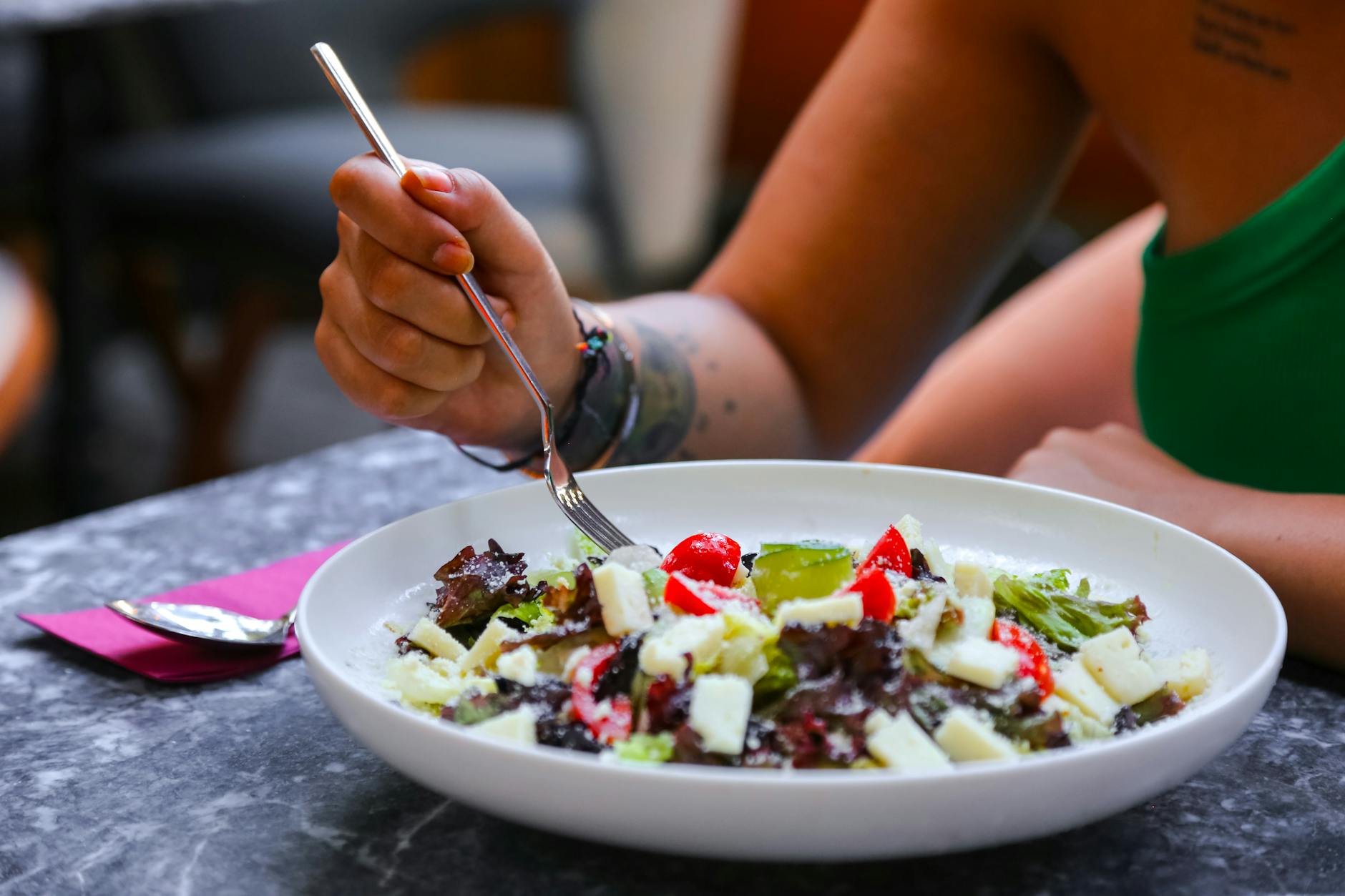
Monday: Building Insulin Sensitivity From the First Meal
Monday’s breakfast is intentionally protein-heavy because mornings are when your body is least insulin-sensitive — a phenomenon called the dawn effect. Three eggs deliver about 18g of protein with zero blood sugar impact, and the avocado adds monounsaturated fat that further slows any glucose response from the vegetables. The salmon dinner provides 2 to 3g of omega-3s; a 2023 meta-analysis in Diabetes Care linked higher omega-3 intake to better insulin sensitivity in adults with prediabetes.
Tuesday: Fiber Day
This day is engineered around soluble fiber. Chia seeds at breakfast deliver about 10g of fiber in just two tablespoons. Lentil soup at dinner contributes another 15g. Soluble fiber forms a gel in your gut that slows glucose absorption — and feeds the gut bacteria that produce short-chain fatty acids, which independently improve insulin sensitivity (American Gut Project data, 2023).
Wednesday: Smart Carbs Reintroduced
Steel-cut oats have a glycemic index of about 42, less than half that of instant oatmeal (GI 83). When paired with walnuts and apple slices, the post-meal glucose curve stays gentle. The brown rice at dinner is portion-controlled at 1/2 cup, paired with protein-dense tofu and fiber-dense vegetables. This is what “carbs in their right portion” looks like in practice.
Thursday: Mediterranean Pattern Day
Thursday lunch is a textbook Mediterranean-style bowl. A 2024 randomized trial in The Lancet Diabetes & Endocrinology found that adults with prediabetes following a Mediterranean dietary pattern reduced their progression to type 2 diabetes by 35% over three years compared to a standard low-fat diet. Olive oil, lean protein, fish, legumes, and vegetables — the pattern is more important than any single ingredient.
Friday: Leftovers as a Strategy
Friday lunch deliberately uses Thursday’s leftovers. This isn’t laziness — it’s adherence engineering. The single biggest predictor of dietary success at 12 weeks is whether you actually cook the food in your fridge before it goes bad. Building in a planned leftover day cuts grocery costs and food waste in half.
Saturday: Higher-Carb Day (Strategically)
Saturday includes a small portion of sweet potato — about 1/2 medium, roughly 15g of net carbs. Sweet potato has a moderate glycemic index but is rich in beta-carotene, potassium, and fiber. Paired with steak and kale, it lands gently. If you exercise on Saturdays, this is the day to put your starchier carbs.
Sunday: Treating Without Wrecking
Cottage cheese pancakes feel like a treat but contain almost no flour — they’re mostly protein. The two squares of dark chocolate (85% cacao) at snack deliver under 5g of net carbs and a dose of magnesium and polyphenols. This is what sustainable looks like: built-in pleasures that don’t sabotage your A1C.

Want Better Results Alongside Your Meal Plan?
Some readers find that combining a structured meal plan with targeted blood sugar support gives faster A1C improvements. GlucoTrust is formulated with chromium, cinnamon, and licorice root — nutrients shown to support healthy blood sugar levels.
How to Make This Meal Plan Work Long-Term
Following any plan for one week is easy. Following it for twelve weeks — long enough to see your A1C change at your next blood draw — requires a few specific habits. These are the ones that worked for me and for the friends I’ve shared this plan with.
Batch-Cook Two Proteins on Sunday
Cook a whole tray of chicken thighs and a pot of lentils every Sunday afternoon. Total active time: 20 minutes. By Wednesday, when your willpower dips, half the work for lunch is already done in the fridge. This single habit predicts success more than almost any other single choice.
Keep an “Emergency Meal” on Standby
Choose one default meal you can make in under five minutes with ingredients you always have. Mine is: two scrambled eggs with frozen spinach and feta cheese, plus a handful of berries. When the day goes sideways, the emergency meal protects you from the drive-thru.
Track Just One Thing
Don’t track calories, macros, and steps. Track one thing for the first month: whether you ate protein at every meal. That’s it. Just checked or unchecked. This single metric correlates more strongly with A1C improvement than any other simple measure (Diabetes Prevention Program data, NIH).
Plan for the Weekend Differently
Most people undo their weekday discipline on weekends. Build in one “freer” meal per week — your favorite restaurant order, a slice of birthday cake, whatever — and bracket it with a longer post-meal walk. A planned indulgence is metabolically very different from a chaotic one. My full breakfast guide for prediabetes covers more flexible weekend breakfast options that still keep glucose stable.
Consider Targeted Support for Tougher Cases
If diet alone isn’t moving your numbers after 8 to 12 weeks, your body may need additional metabolic support. Certain nutrients — chromium, berberine, magnesium, alpha-lipoic acid — have evidence behind them for improving insulin sensitivity. My complete guide to the best supplements for prediabetes walks through what’s worth trying and what to skip. Berberine in particular has been shown in multiple trials to lower A1C by roughly 0.5%, comparable to metformin in some studies.
Common Mistakes That Sabotage a Prediabetes Meal Plan
Even with a perfect plan in hand, three predictable mistakes derail most people in the first month.
Mistake 1: Treating “low-carb” as “no-carb.” Aggressive carb restriction is unsustainable for most adults and leads to rebound eating. The plan above includes 130 to 160g of net carbs daily — well within the range that produces A1C improvement without making you miserable.
Mistake 2: Forgetting about fat quality. Olive oil, avocado, nuts, fatty fish — these aren’t optional garnishes. They’re the metabolic glue that holds the plan together. Avoid seed oil-heavy processed foods and the plan works much better.
Mistake 3: Eating too late at night. Late-night eating worsens overnight glucose levels and impairs morning fasting numbers. A 2024 study in Cell Metabolism found that finishing dinner three hours before bedtime improved overnight glucose stability by 18% in participants with prediabetes. Eat your last meal earlier, not bigger.
What to Drink (and What to Avoid)
Beverages are where most prediabetes meal plans quietly fail. Liquid sugar hits the bloodstream faster than any solid food. Stick to: water, unsweetened tea (especially green tea — modest A1C benefit), black coffee, sparkling water with lemon. Avoid: fruit juice (even “100% juice”), sweetened coffee drinks, sweet tea, regular soda, and most flavored yogurt drinks. One cup of orange juice has more sugar than two glazed donuts and zero fiber to slow it down. Read labels, especially on anything that comes in a bottle.
Key Takeaways
- A 7-day prediabetes meal plan works best when each meal stays under 45g of net carbs and includes at least 20g of protein.
- Eating protein and vegetables before carbohydrates reduces post-meal glucose peaks by more than 40% (Nutrients, 2020).
- A 12-week Mediterranean or low-carb pattern lowers A1C by 0.5 to 1.2 percentage points on average (Annals of Internal Medicine, 2024).
- Soluble fiber (chia, oats, lentils, berries) and omega-3s (salmon, walnuts, flaxseed) are the two food groups that produce the biggest blood sugar wins.
- A 10-minute walk after the largest meal of the day can flatten the glucose spike by 20 to 30%.
- Consistency matters more than perfection. Following 80% of the plan for 12 straight weeks beats a perfect week followed by giving up.
Frequently Asked Questions
Can a 7-day meal plan really reverse prediabetes?
One week alone won’t reverse prediabetes, but seven days establishes the pattern that does. Most people see meaningful A1C drops between 8 and 16 weeks of consistent eating. In the 2024 Annals of Internal Medicine review, participants who followed a structured prediabetes-friendly meal pattern for 12 weeks lowered their A1C by 0.5 to 1.2 percentage points on average — enough to move many out of the prediabetes range entirely.
How many carbs per day should I eat with prediabetes?
Most evidence supports between 130 and 175g of net carbohydrates per day for adults with prediabetes, spread across three meals and one snack. This is moderate carb — not low-carb or keto. The American Diabetes Association’s 2024 guidelines emphasize “consistent carbohydrate intake at meals” rather than a specific total, since consistency matters more than the exact number for most people.
Can I follow this meal plan if I have to eat gluten-free or dairy-free?
Yes. Swap the whole grain bread, farro, and oats for quinoa, buckwheat, or extra vegetables for gluten-free. Swap Greek yogurt and cottage cheese for unsweetened coconut yogurt or extra eggs for dairy-free. The structure — protein first, vegetables next, controlled carbs last — works the same with either substitution.
Is intermittent fasting better than this kind of meal plan?
For most people with prediabetes, both approaches produce similar A1C improvements. A 2023 randomized trial in JAMA Network Open compared time-restricted eating (16:8) with calorie-controlled regular meals over 12 weeks in prediabetic adults and found no significant difference in A1C. The structured meal plan in this article is easier for people who don’t want to skip meals and can be combined with a modest eating window (12:12 or 14:10) if you want both.
How quickly will I see my blood sugar improve on this plan?
Fasting glucose and post-meal numbers often improve within 7 to 14 days of consistent eating. A1C is a 90-day average, so meaningful A1C movement takes 8 to 12 weeks minimum. If you have a continuous glucose monitor or check fasting glucose at home, you’ll likely see clear improvements within the first two weeks. Don’t expect your A1C to change at your next blood draw if it’s only been a few weeks.
Do I need to count calories on a prediabetes meal plan?
Not usually. The plan above naturally lands between 1,500 and 1,700 calories for most adults because the foods are nutrient-dense and filling. If weight loss is also a goal, modest calorie awareness helps, but obsessive tracking is rarely necessary. Focus on the protein and fiber targets first; the calories typically take care of themselves.
Can I drink alcohol on this meal plan?
Modest amounts of dry wine or spirits with no sugary mixer have minimal effect on blood sugar for most people. The ADA recommends no more than one drink per day for women and two for men with prediabetes, always with food. Avoid sweet wines, beer (high in carbs), and cocktails. Alcohol can also mask hypoglycemia symptoms, so be cautious if you’re on any blood sugar medication.
Sources: Annals of Internal Medicine, 2024 — Structured dietary interventions for prediabetes. PMC 7398578 — Food order and postprandial glucose in prediabetes (Nutrients, 2020). The Lancet Diabetes & Endocrinology, 2024 — Mediterranean pattern and progression to type 2 diabetes. Diabetes Care, 2023 — Omega-3 intake and insulin sensitivity. JAMA Network Open, 2023 — Time-restricted eating versus calorie control in prediabetes. Cell Metabolism, 2024 — Late-night eating and overnight glucose. Sports Medicine, 2022 — Post-meal walking meta-analysis. American Diabetes Association Standards of Medical Care in Diabetes, 2024.