

Does Walking After Meals Really Lower Blood Sugar? (What the Research Says)
Short answer: yes, and the research is stronger than most people realize. A 2023 systematic review and meta-analysis published in Sports Medicine found that post-meal walking produced a meaningful reduction in blood sugar spikes compared with sitting still, and that the sooner you start after eating, the greater the benefit. For adults with prediabetes, that small habit can blunt the glucose spikes that quietly push A1C upward year after year.
If you’ve been told to “exercise more” after a prediabetes diagnosis and felt overwhelmed, this is good news. You don’t need a gym. You don’t need a step goal. You need about 10 minutes, a pair of comfortable shoes, and the willingness to skip the couch right after meals.
Walking after meals is one of the most effective single habits for blood sugar control. See how it fits into the complete strategy in the guide on how to reverse prediabetes naturally.

Key Takeaways
- Walking 2 to 15 minutes after a meal lowers postprandial glucose more than any other timing.
- The sweet spot starts in the first 15 minutes after eating, when glucose is rising fastest.
- Three short 15-minute walks (one after each meal) improved 24-hour glucose control in older adults with impaired glucose tolerance.
- You don’t need speed. A “talkable pace” (conversational) is enough to activate glucose-using muscles.
- Consistency beats intensity. Daily short walks outperform occasional long ones for A1C.
How Does Walking After Meals Lower Blood Sugar?
The first habit I built after my diagnosis was a 10-minute walk after dinner. I tracked my glucose before and after for two weeks and the post-meal spikes dropped almost every time. It is the single simplest thing I did that actually moved my numbers.
According to the American Diabetes Association’s 2025 Standards of Care, “interrupting prolonged periods of sitting with 15 minutes of walking after meals” improves overall glycemic control in adults at risk of type 2 diabetes.
Here’s what’s happening inside your body. When you eat a meal with carbohydrates, your digestive system breaks them into glucose, which floods your bloodstream within about 15 to 60 minutes. In a healthy system, insulin shuttles that glucose into muscle and liver cells. In prediabetes, that system is slower and less efficient. Glucose lingers, spikes higher, and stays elevated longer.
Walking changes that math. When you contract your leg muscles, they pull glucose directly out of the bloodstream, and they do this without needing much insulin. Muscles have a back-door mechanism (called GLUT4 translocation) that activates during movement. You’re literally using up the sugar before it has a chance to sit around.
This is why timing matters more than duration. A 10-minute walk right after eating beats a 45-minute workout two hours later, at least for taming that specific meal’s glucose spike.
The Research: How Much Does Walking Actually Lower Blood Sugar?
A 2023 systematic review and meta-analysis in Sports Medicine titled “After Dinner Rest a While, After Supper Walk a Mile?” analyzed multiple randomized trials and found a moderate-to-strong effect size (SMD = 0.55) for post-meal walking reducing glucose excursions compared with sitting still, a clinically meaningful difference that many prescription interventions fail to match (Engeroff et al., Sports Medicine, 2023).
That’s a meaningful number. For context, many prescription medications are approved based on smaller effects on post-meal glucose.
A separate 2013 study in Diabetes Care, still one of the cleanest experiments on this topic, tested older adults at risk for impaired glucose tolerance. Participants who took three 15-minute walks (one after breakfast, lunch, and dinner) had significantly better 24-hour glucose control than those who did a single 45-minute walk either in the morning or evening. Same total walking time. Very different results (DiPietro et al., Diabetes Care, 2013).
A 2025 study in Scientific Reports confirmed this precisely: a 10-minute walk immediately after a glucose load produced a peak blood glucose of 164.3 mg/dL vs. 181.9 mg/dL in those who sat still, a statistically significant difference (p = 0.028). Waiting 30 minutes before starting the walk eliminated the benefit entirely (Scientific Reports, 2025).
Typical glucose response: walk vs. no walk
Both curves start at the same fasting glucose. The sitting curve climbs higher and stays elevated. The walking curve rises more gently, peaks lower, and comes back down faster. Over months, that’s the difference between a stable A1C and a creeping one.
When Is the Best Time to Start Walking After a Meal?
A 2024 review in Nutrients on exercise prescription for postprandial glucose concluded that exercise initiated within 15 minutes of eating had the greatest acute effect on glucose control, and that the benefit fades the longer you wait.
Here’s the practical timeline:
- 0 to 15 minutes after eating, glucose is starting to rise. This is the best window to start walking. Even standing up and clearing the table helps.
- 15 to 45 minutes after eating, glucose is near peak. Walking here still helps, but you’re reacting instead of preventing.
- 60+ minutes after eating, the spike has already done its work. Walking is still good for general health, but the acute glucose benefit is smaller.
If you’ve just finished dinner and feel like sitting, that’s your body’s signal to do the opposite. You don’t have to walk far. Around the block is enough.
How Long Should the Walk Be?
The CDC recommends 150 minutes a week of moderate activity like brisk walking for adults with prediabetes. Spread across the week, that’s about 30 minutes a day, but it doesn’t have to happen all at once.
Here’s what the research supports:
- 2 to 5 minutes, better than zero. Useful if you’re at a restaurant, at work, or short on time. Expect a modest drop in peak glucose.
- 10 to 15 minutes, the sweet spot. Most studies showing meaningful glucose reductions use this range. Easy to fit into daily life.
- 15 to 20 minutes after each meal, the gold standard. Three short walks a day will cover the CDC’s weekly activity target and give you three glucose-control windows.
If 15 minutes feels like a lot, start with 5 and add a minute each week. The habit matters more than the number.

How Fast Should You Walk?
The ADA defines moderate-intensity walking as a pace where you can talk but not sing comfortably. That’s roughly 2.5 to 3.5 miles per hour for most adults, or about 100 steps per minute.
You don’t need to push harder than that. Research shows that light to moderate post-meal walking produces the strongest glucose-lowering effect, likely because muscle contractions at any meaningful intensity activate glucose uptake. Walking too fast after eating can actually cause digestive discomfort without extra benefit.
A useful rule: if someone could hear you breathing from across the room, you’re probably going too hard. Ease back.
What About Walking Before Meals?
Walking before meals has real benefits too, it improves insulin sensitivity and supports weight management. But the 2023 Sports Medicine meta-analysis was clear: for controlling the glucose spike from that specific meal, walking after is more effective than walking before.
If you can only fit in one walk a day, schedule it after your largest carb meal. For most people, that’s lunch or dinner. You’ll get the biggest glucose benefit from that single 15-minute investment.
Is Walking as Effective as Other Exercise for Blood Sugar?
Strength training, cycling, swimming, and jogging all improve glucose control. But walking has advantages for adults with prediabetes:
- Low injury risk. Joint-friendly for adults 45-70.
- No equipment. Shoes and a sidewalk.
- Highly sustainable. The best exercise is the one you’ll actually do.
- Easy to pair with meals. You can’t really “time” a gym session to lunch.
If you enjoy other forms of exercise, do those too. Walking after meals isn’t a replacement for strength training or cardio, it’s a different tool aimed at a specific problem: post-meal glucose spikes.
What If You Face Obstacles to Walking After Meals?
“I work at a desk and can’t leave the office.” Walk the hallway, take the long way to the restroom, pace on a phone call, or use stairs. Even indoor steps count.
“It’s raining / too cold / too hot.” Indoor malls, covered walking tracks, treadmills at 2.5 mph, or walking laps around your own house all work. The intensity bar is low.
“I’m too full after a big meal.” Eat slightly less, or start with a very slow 5-minute walk. You can build from there. Discomfort usually means the meal was too large, not that walking is wrong.
“My knees hurt.” Walking is usually easier on knees than sitting, but if pain is a real barrier, try pool walking or a recumbent bike for 10 minutes after meals instead. The goal is muscle contraction, not steps.
For more on why small daily habits beat dramatic changes, see our guide on reversing prediabetes without losing weight.
How to Actually Build the Habit
The biggest barrier isn’t the walk. It’s getting up from the table. Try this:
- Pair it with a cue. The last bite of dinner = shoes on. Make it automatic.
- Start with one meal. Pick your biggest meal and only walk after that one for two weeks.
- Keep shoes visible. At the door, not in a closet. Friction kills habits.
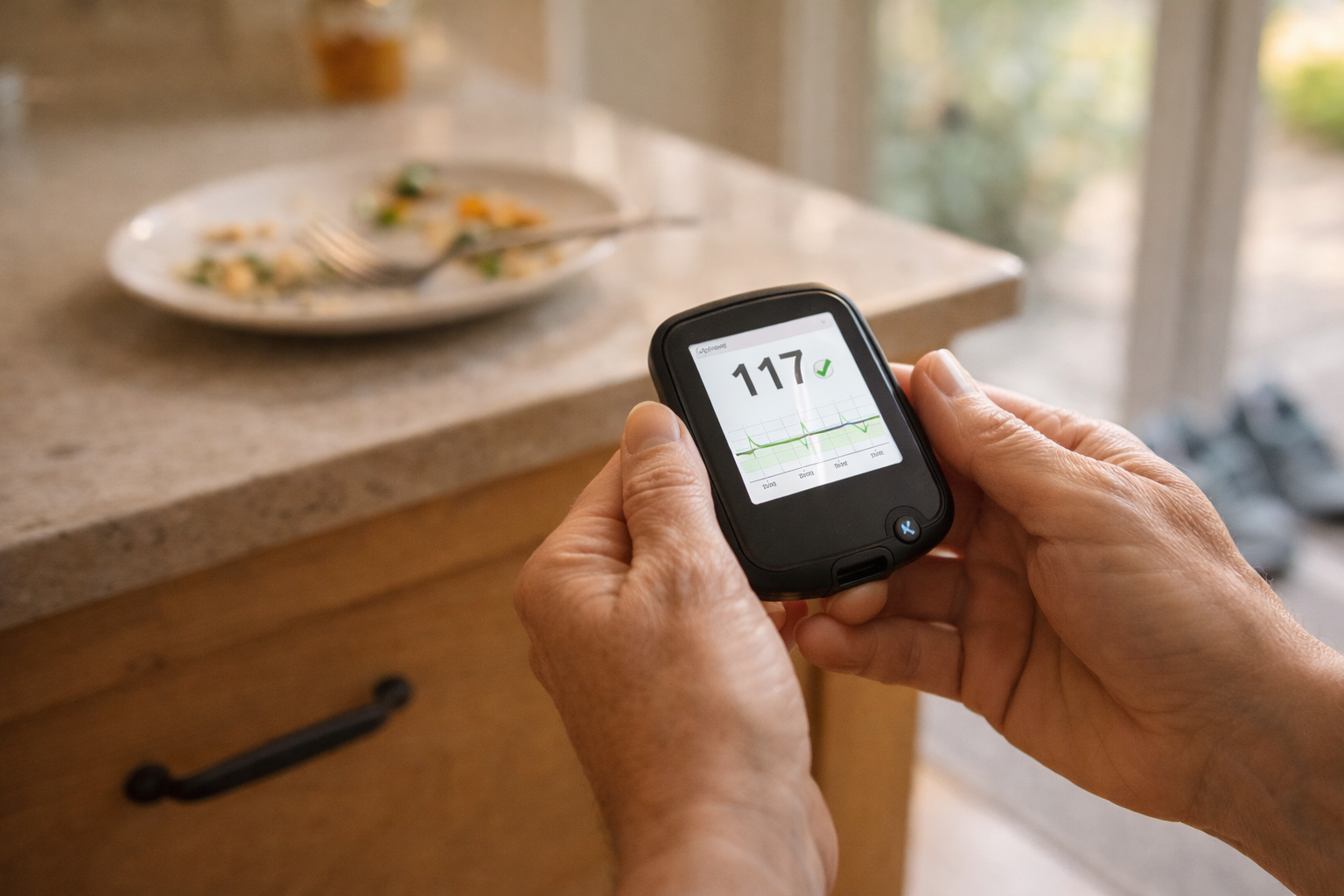
- Track one number. If you have a glucose meter, check before the meal and 60 minutes after. Seeing the difference is motivating.
- Don’t wait for motivation. Walking for 5 minutes on a day you don’t feel like it counts more than 30 minutes on a day you already felt great.
If you were recently diagnosed and don’t know where to start, our just-diagnosed-with-prediabetes guide walks through the first 30 days. You can also review what your numbers actually mean in our A1C levels explained article, and prep smart questions to ask your doctor.
What Results Can You Expect From Post-Meal Walking?
Week 1: Post-meal glucose readings (if you measure) are often noticeably lower within a few days.
Weeks 2-4: Energy tends to improve. Digestion feels smoother. You may sleep better.
Month 3: This is when most people see meaningful A1C changes at their next blood test, assuming the habit sticks. A drop from 6.2 to 5.8, for example, is completely achievable on walking alone for many people.
Month 6+: Insulin sensitivity improves. Fasting glucose often drops. For many adults with prediabetes who combine post-meal walking with modest dietary changes, A1C returns to the normal range.
This isn’t a miracle. It’s biology, done consistently.
What to Do Next
Walking after meals is one of the most-studied, lowest-cost, highest-leverage habits for blood sugar control in prediabetes. The research is consistent: even 10 minutes helps, the first 15 minutes after eating is the best window, and a casual pace is enough. You don’t need to change anything else to see results, though if you do, the results compound.
The real question isn’t whether it works. It’s whether you’ll put on your shoes tonight after dinner.
Walking works best as part of a broader strategy. If you are also exploring natural supplementation, berberine has the strongest clinical evidence of any natural blood sugar supplement, with trial data showing effects comparable to low-dose metformin.
nn
Frequently Asked Questions
How long should I walk after eating to lower blood sugar?
Research shows 10 to 15 minutes of light-to-moderate walking after a meal produces the most consistent glucose reductions. Even 2 to 5 minutes helps if that’s all you have. The biggest benefit comes from starting within 15 minutes of finishing the meal.
Does walking after meals help with prediabetes specifically?
Yes. The ADA’s Standards of Care specifically recommend interrupting sitting with 15-minute post-meal walks for adults at risk of type 2 diabetes. Studies in adults with impaired glucose tolerance show measurable improvements in 24-hour glucose control and A1C over time.
Is it better to walk before or after meals?
For controlling the glucose spike from a specific meal, walking after is more effective. Walking before meals still has benefits for insulin sensitivity and general health. If you only walk once a day, do it after your largest carbohydrate meal.
How soon after eating should I walk?
As soon as comfortable, ideally within 15 minutes of finishing your meal, since glucose typically peaks 30 to 60 minutes after eating. Waiting longer reduces the glucose-lowering effect of the walk.
What pace should I walk to lower blood sugar?
A conversational, moderate pace is enough, around 2.5 to 3.5 miles per hour. You should be able to talk in full sentences but not sing comfortably. Walking too fast after a meal can cause digestive discomfort without added glucose benefit.